THE BEAUTY OF TEMPORARY LIGHT
VENICE; I was a young fiancée of another century when we took a nighttime gondola ride in the pitch black sweetness of air passing under bridges with sounds of an oar splashing into water and an aria from our gondolier breaking the velvety waves. We had our whole lives before us. (Many moons ago)
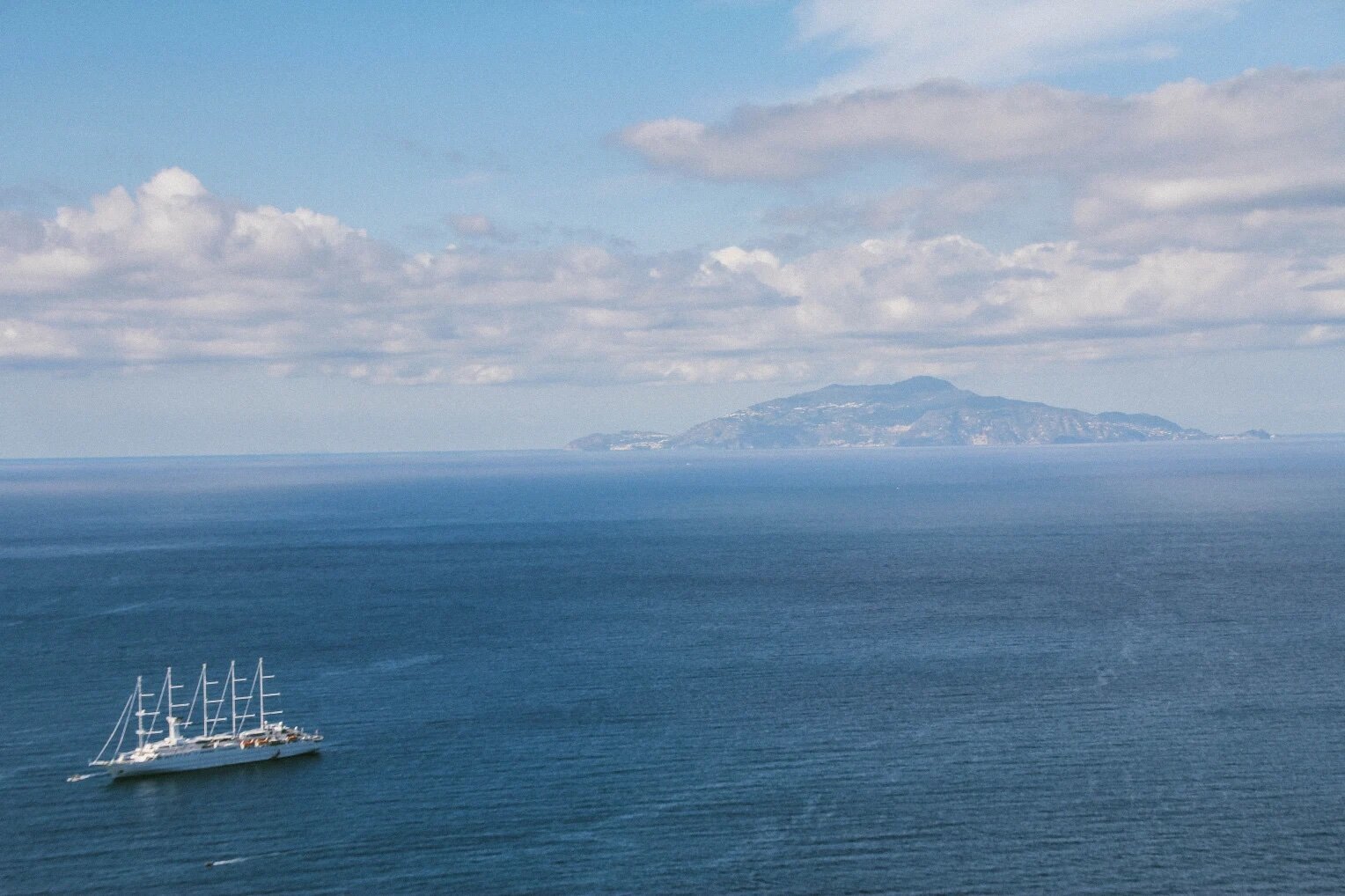
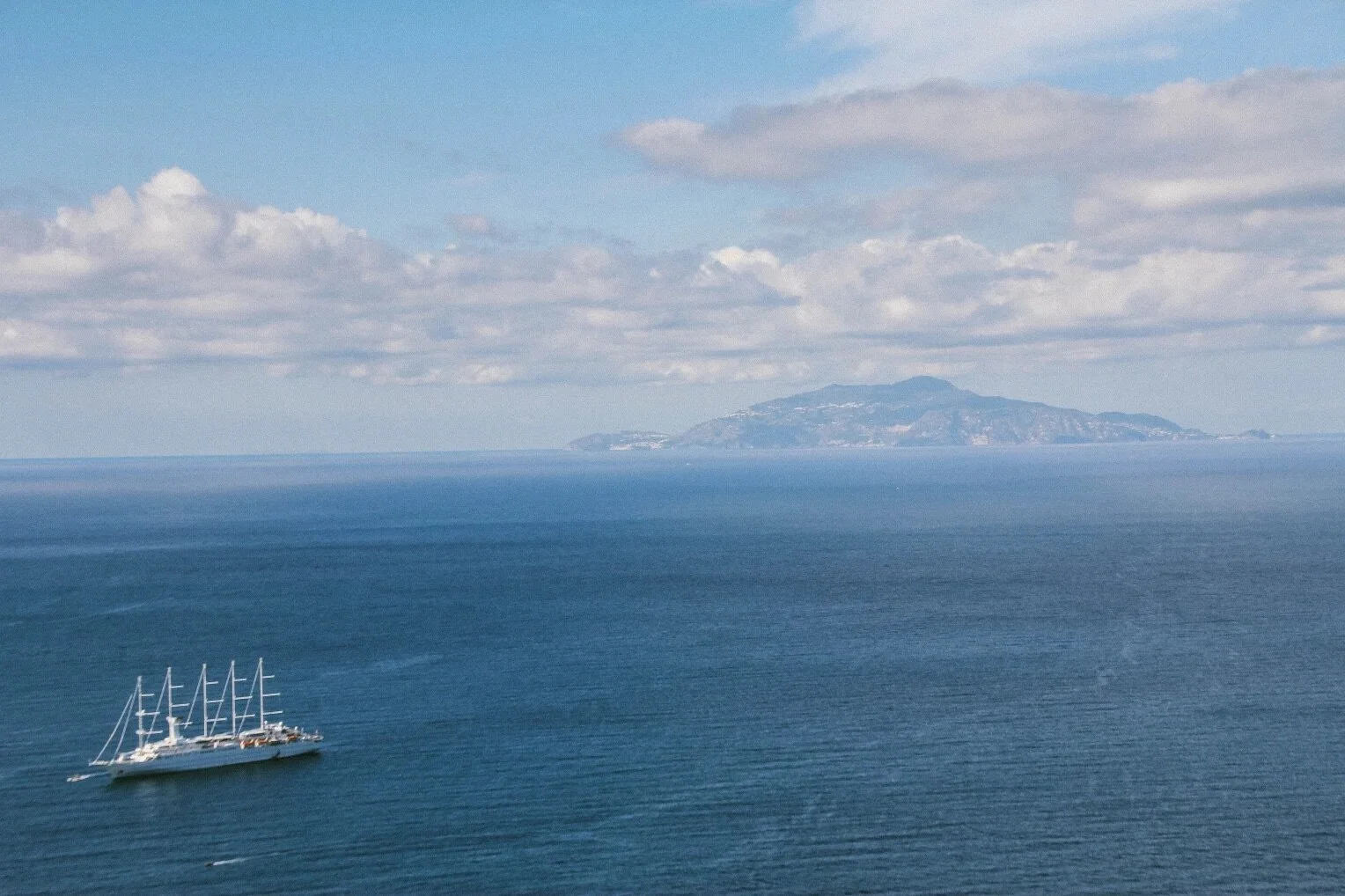
We’d be in Sorrento right now, checked into our hotel, he’d go for a swim, and I’d check the view from our room. I’d see his flash of green eyes from the veranda, smiling up at me. We’d have buffalo mozzarella and bread for lunch, and go in search of a cafe.
If only he had lived.
Written in 2018

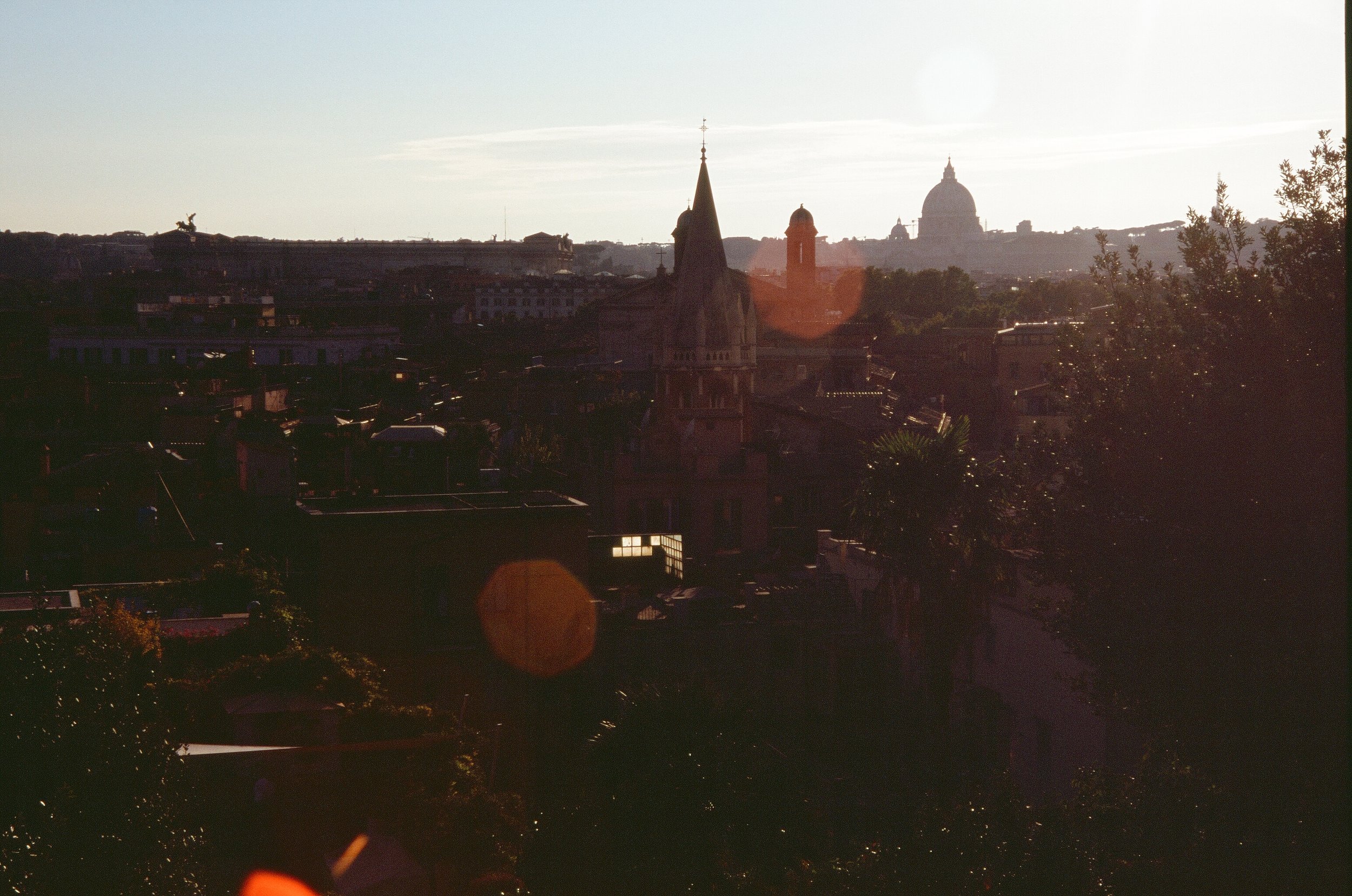
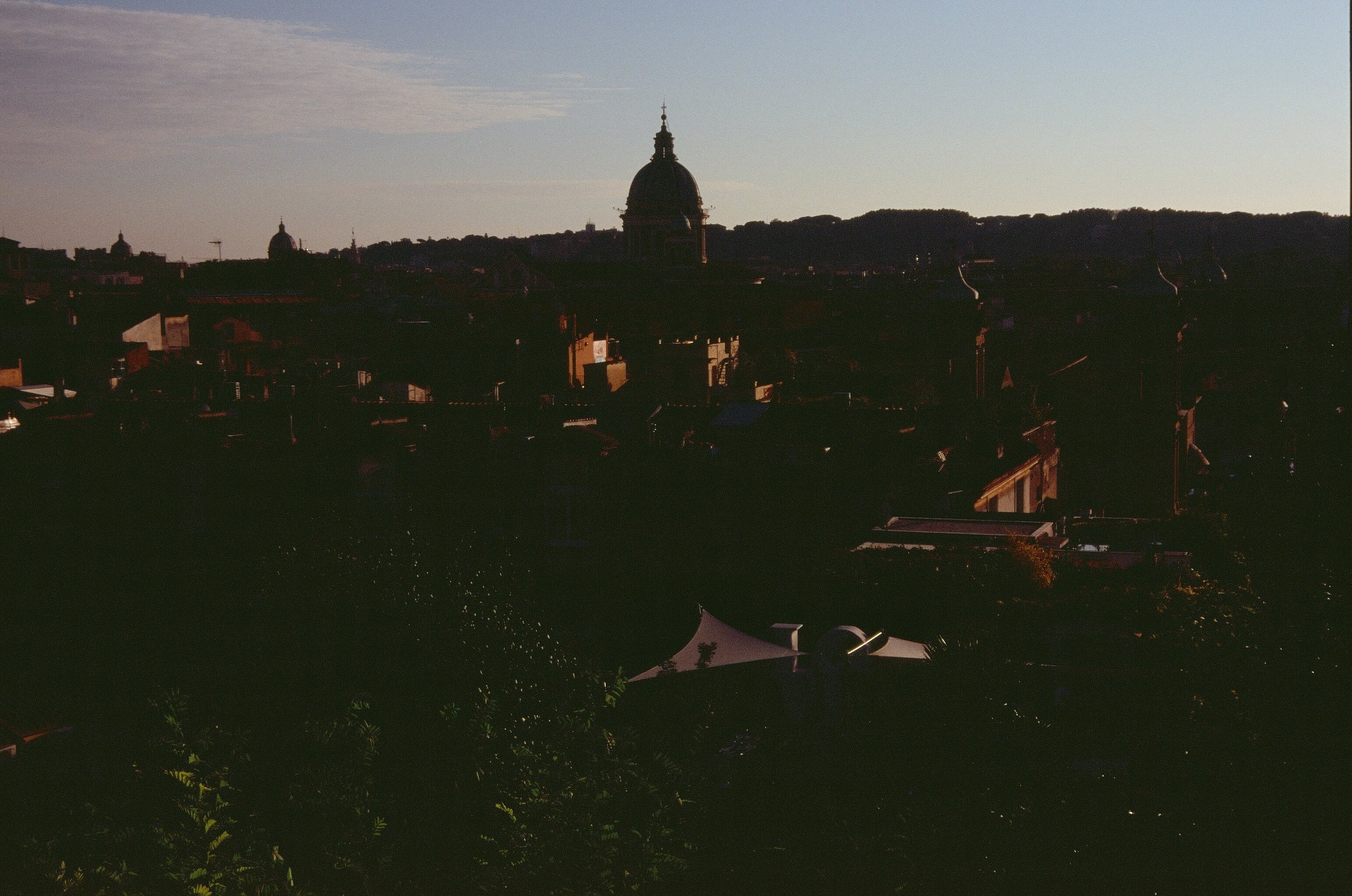
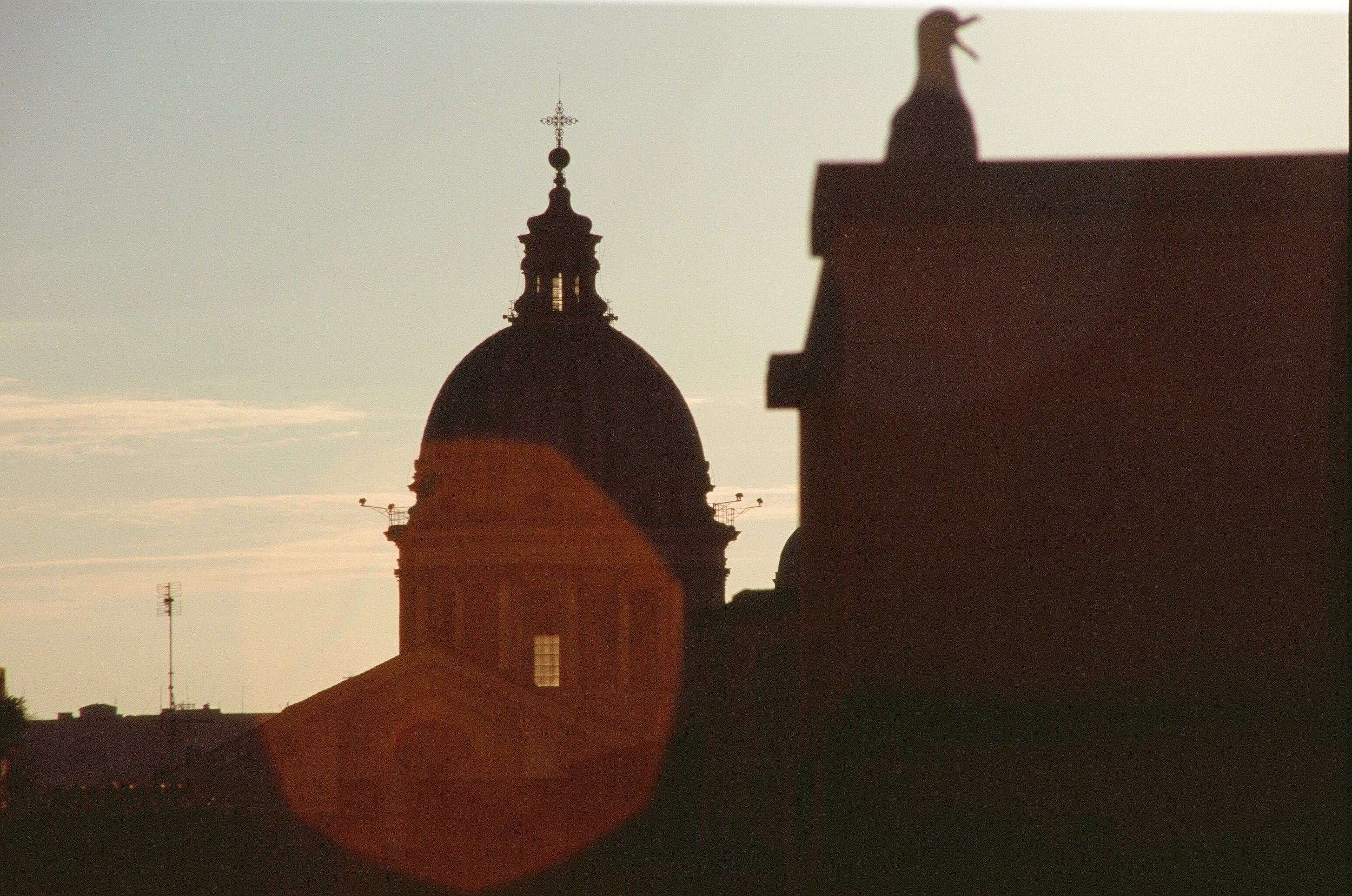
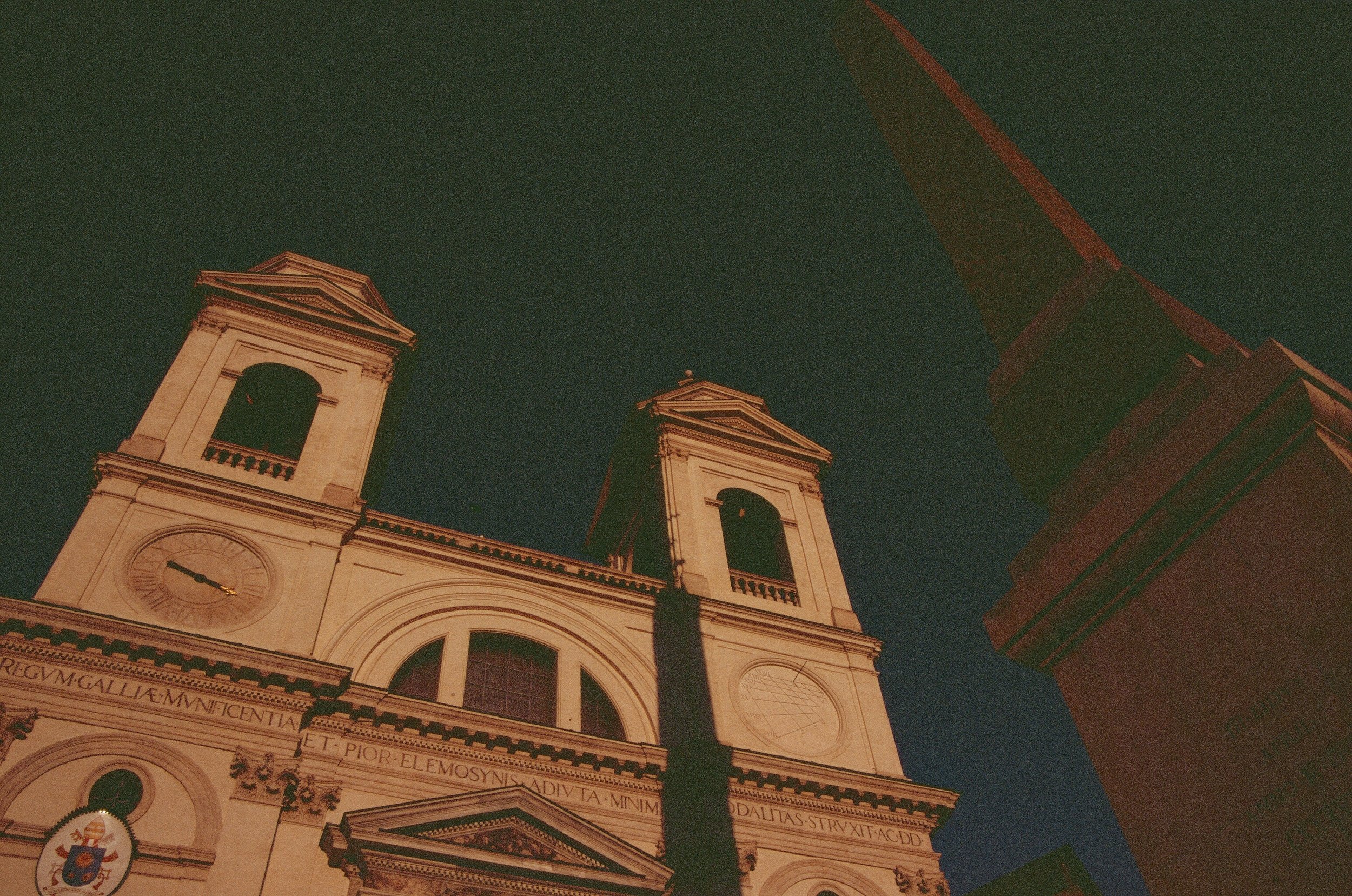
CineFilm walks of autumn sunset views in Rome / pincio to piazza di spagna


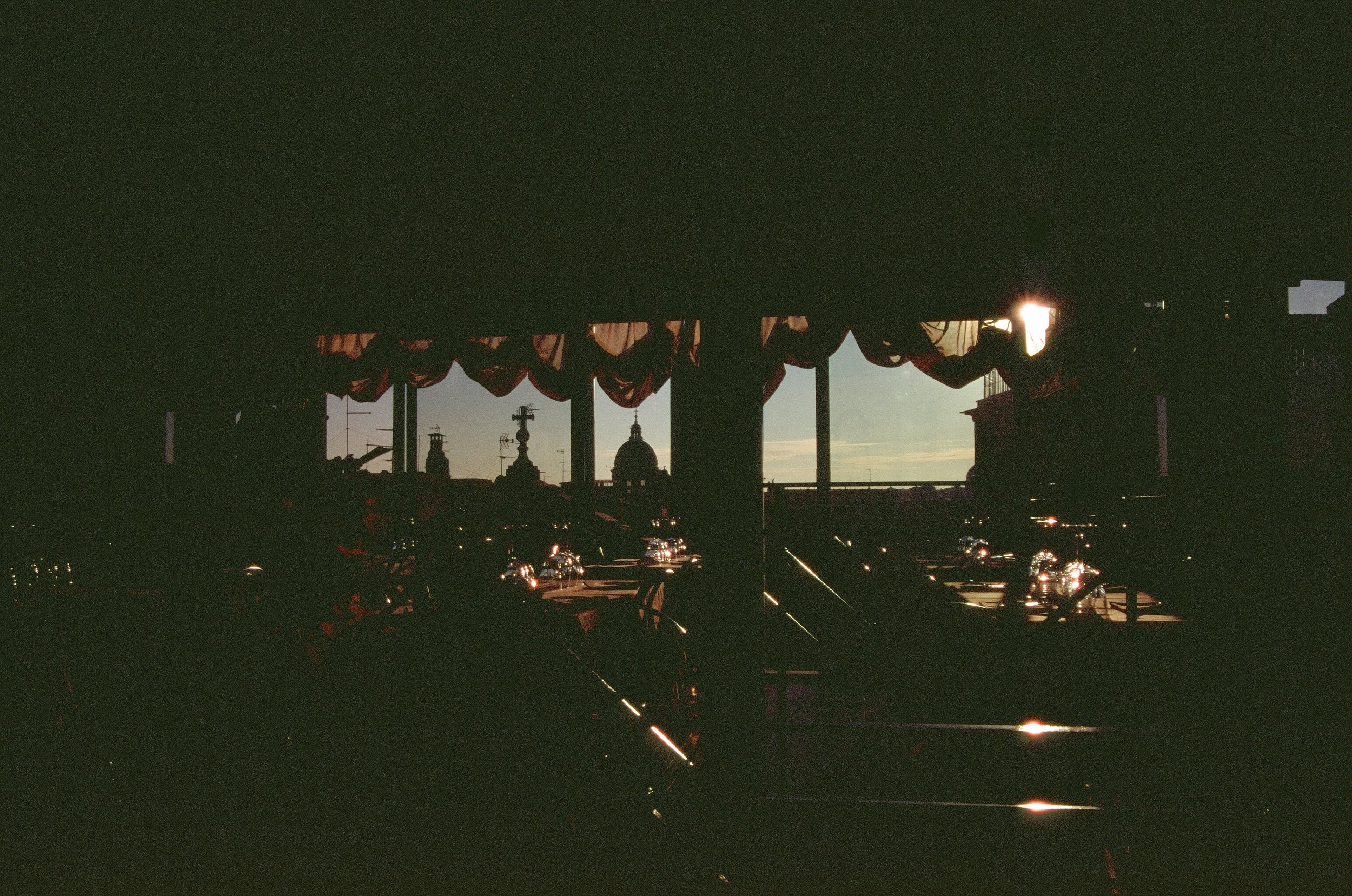
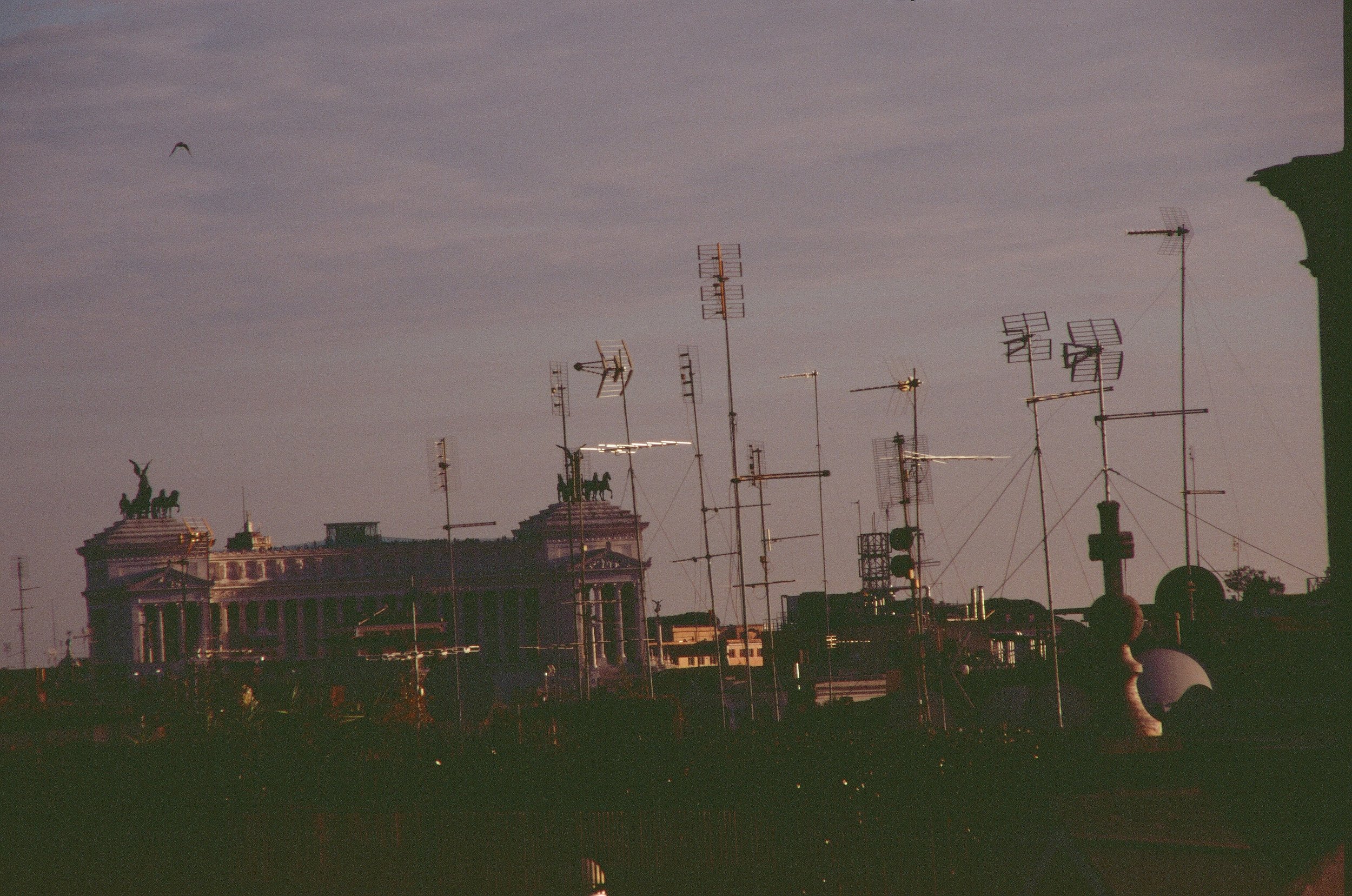
Walking through Rome on my last trip with my husband before we lost him I caught the glimmering light in velvet black shadow as the golden hour dropped into an evening slumber. One of the best sunset walks is through the Villa Borghese park and gardens to the Pincian Hill overlooking the Piazza del Popolo, and then take a left and admire the lowslung sun shimmering on the edge of every object and through every window of cafes, villas, apartments, churches, and shops, and at a later distance, on the ruins and cupolas sprinkled all over the horizon. Walk down towards the French Church at the top of the Piazza di Spagna, take a peek inside at its beauty, and then turn down the Spanish Steps, the white marble now washed in gold, and follow your heart into the city. This moment is eternal. I hope to feel him again in the atoms of the sunshine again one day. Our loves return to us in fleeting moments of life when we awake to their presence there the whole time.

Capaccio, Salerno, Italia and her Grecian Marble of Paestum, a Greek colony of temples predating the Roman Empire
The hamlet of Capaccio, found in the region of Salerno, located far down the boot in Campania, (about two hours or so from Sorrento), is a charming little town near the Greek ruins of Paestum.
There are silent stone churches with slants of light pouring into the shadows through stained glass and open windows shaped as doves and olive branches, each path of gold against black an evocation for peace in an undiscoverable darkness. Silence except for birds and echoing footsteps accompany you a foreigner in a foreign place. The solitude is universal in its unspoken language. You are welcome to sit and contemplate, or walk softly in cold corners under towering stretchs of wood and stone, somehow cradling us in its distance. A transitory connection to prayers whispered in the heart, undecipherable to human ears. How many gods have been called in how many temples on these grounds? Hera, Ceres, Athena, Poisedon, Christ, the Lord Himself, or the Madonna? Outside, a rush of sunshine, warmth on the skin, a grumbling in the stomach, a need to affirm we are still among the living. Fruit and pizza and coffee beckon across the way, and in a little shop in Capaccio we find local juicy figs floating in local honey, and figs woven together stuffed with regional almonds, in beautiful little packages we later brought home with us.
Just recently I gave Rian’s brother that last bundle we had been saving for the holidays… Rian would have wanted him to savor the taste of Italia, a place he’s never been, a place he never fell in love with as Rian and I had twenty years ago, and kept returning to. I gave it to him with Barolo and dark chocolate and champagne, I wanted him to taste a small glimpse into this magical world we had so long found ourselves enchanted with. He loved them. I thought of Rian smiling somewhere as if he could watch us somehow.
Bringing what we loved about this country is something we both so long felt driven to do. He would bring endless bags of chocolates and special Sicilian cookies for his friends at his office, and for family and close friends, after each trip back. Sometimes I would bring wines difficult to find in the states, or handmade liquers, and serve them at the holidays we hosted together for so long.
To share with others even a spark or a glimpse of the reason for our longing and our love for an otherworldy place, combined with tales of what we experienced and learned, kept us going until the next return. One day I suppose I shall return too, without him beside me as I wish, but with his ashes, with his memory, and with his energy still felt in the world, and set the remains afloat in the seas and lands he loved so deeply he broke through the mystery of Italia better than I ever could. And he took that mystery with him beyond. And here I am, as ever, in love with beauty I cannot dissect or take into me, I can only love from afar… as if in a dream. Perhaps life is the dream, and death a waking up? A return to the fold of everything seen and felt here through a veil.
There is that charming church write about above in the heart of the town of Salerno, and also a large cloistered monastery and cathedral, long with a fascinating museum of Clasiccal Antiquity, mostly containing the remnants (some vey much intact) of Paestum, a Greek colony in Italia pre-dating the founding of Rome. It is located on the coast of the Tyrrhenian Sea in Magna Graecia (southern Italy). The ruins of Paestum are famous for their three ancient Greek temples in the Doric order, dating from about 600 to 450 BC. It was named Poseidonia (Ancient Greek: Ποσειδωνία) but was was eventually conquered by the local Lucanians and later the Romans. The Lucanians renamed it to Paistos and the Romans gave the city its current name.
The Paestum, or “Pesto” temples are some of the most intact ruins on the mainland of Italia, and their being Greek in nature only lends to their charm and mystery. The pastoral setting of Paestum leads one to get a feeling for the atmosphere of another era, millennia ago. Everything is beautiful in the town and most especially in the large park where the Grecian marble stands against all odds of weather, war, and time. One can find shade under tall olive trees and smell hints of lemon trees in the air as they walk among the dead and the stone of a culture and a people who no longer exist, and yet we feel some mysterious connection to, even to this day.
TO VISIT PAESTUM (with stops along the way in the city centers)
click here: http://www.museopaestum.beniculturali.it/i-templi/?lang=en
PAESTUM IS LOCATED AT Via Magna Graecia, 918, 84047 Paestum SA, Italy
Opened: 1952
Hours: Opens 8:30AM (VARIES) to sunset, with special evening extended openings to view the ruins at night.
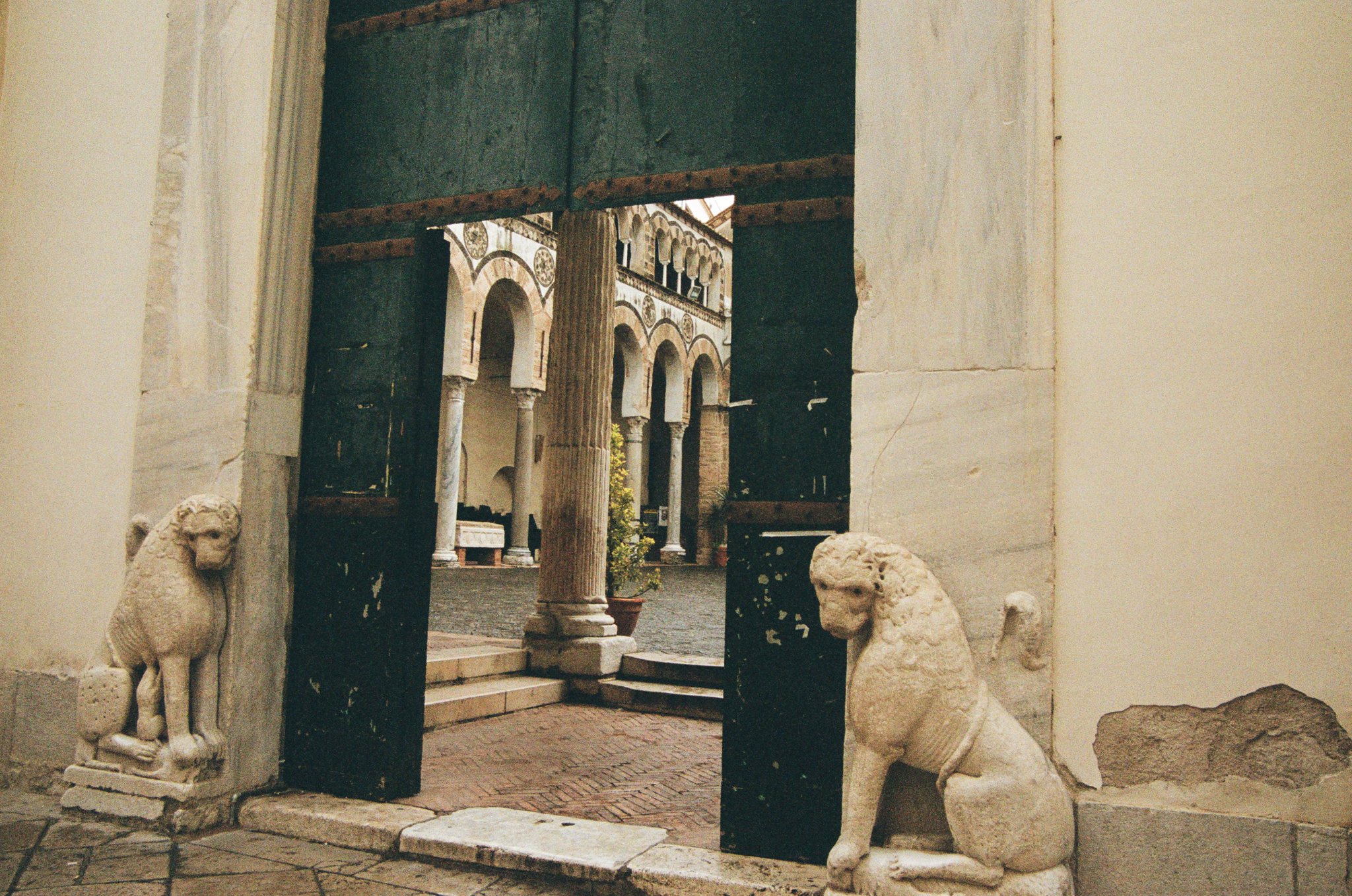
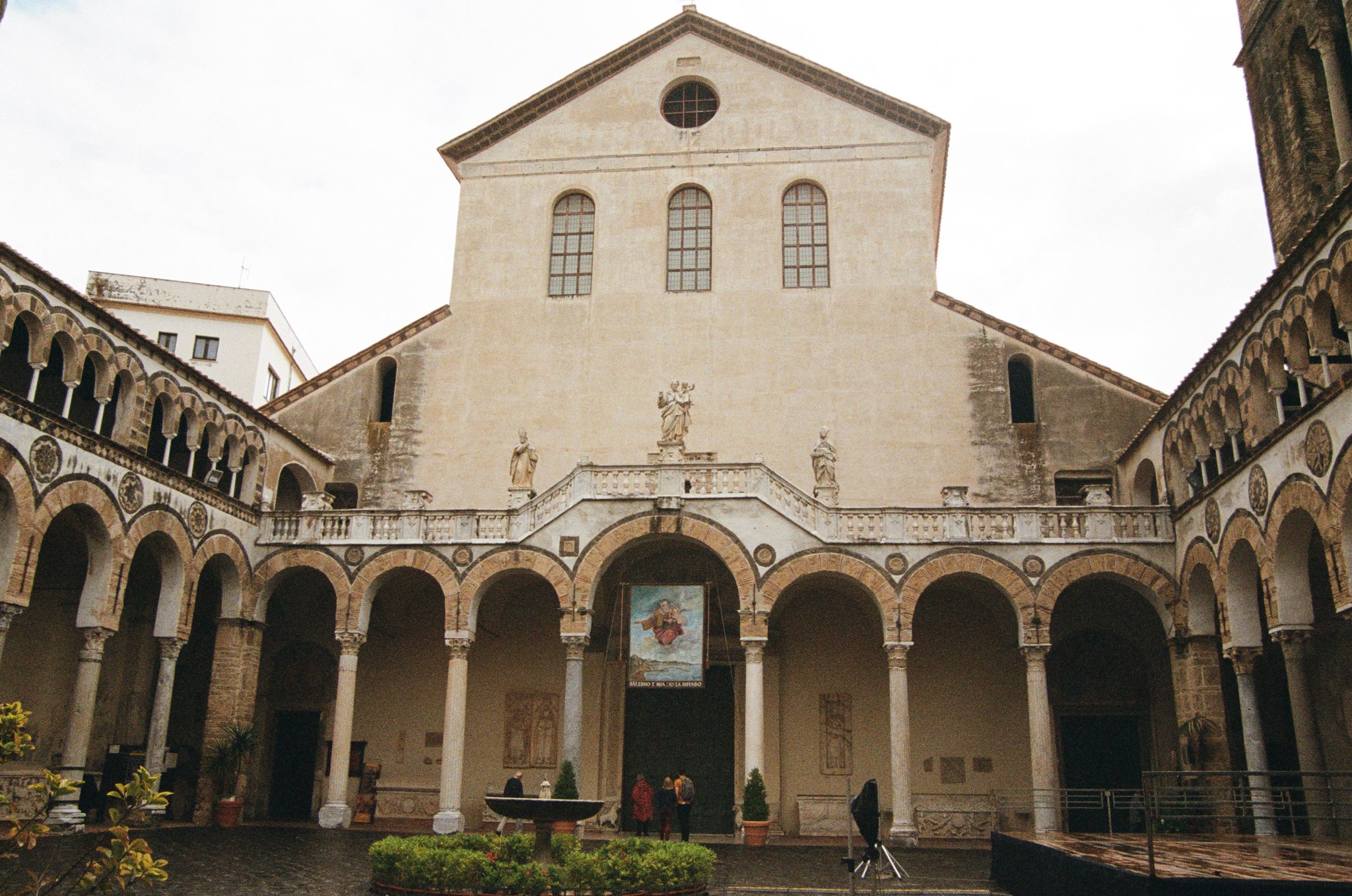
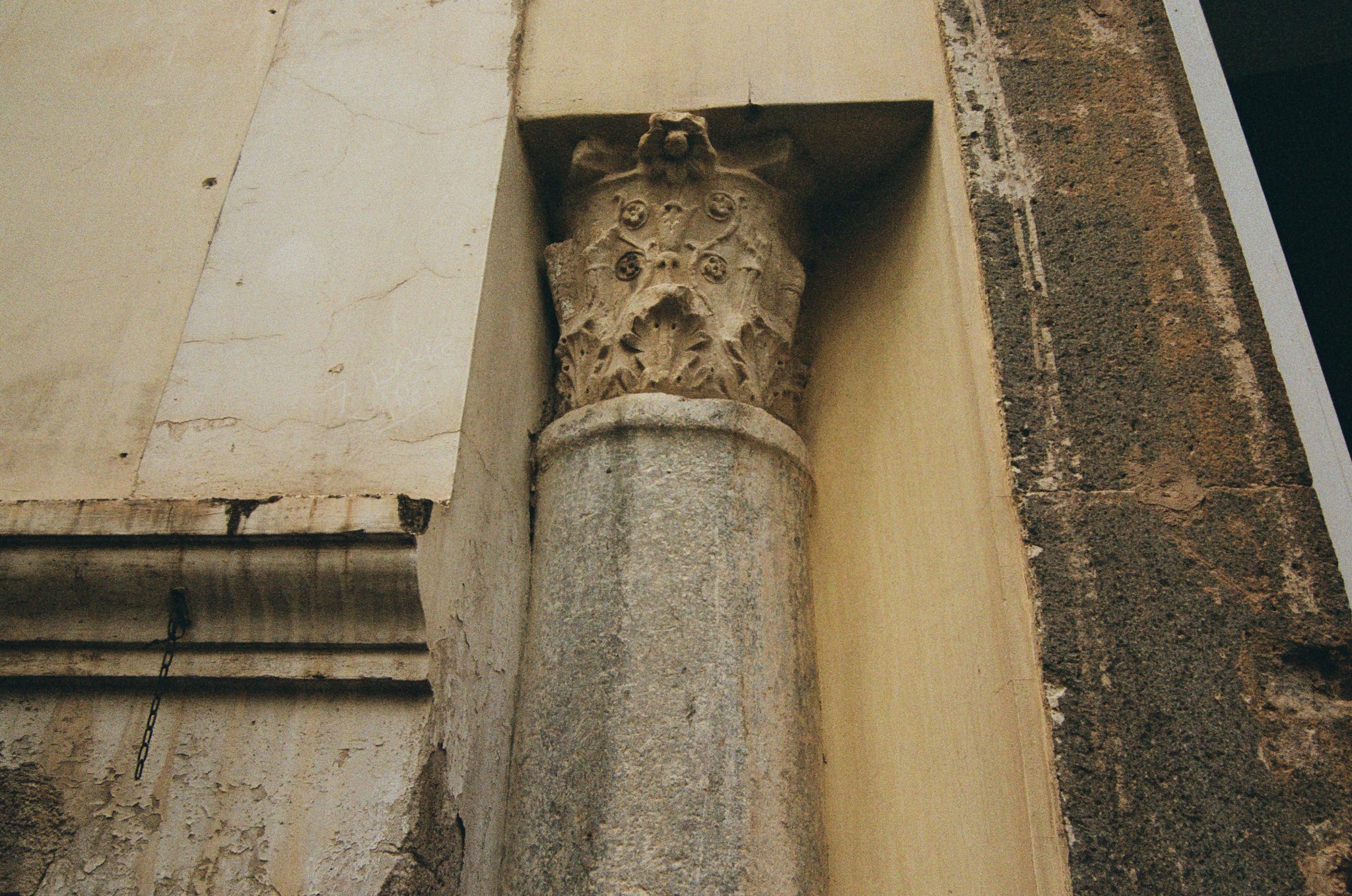
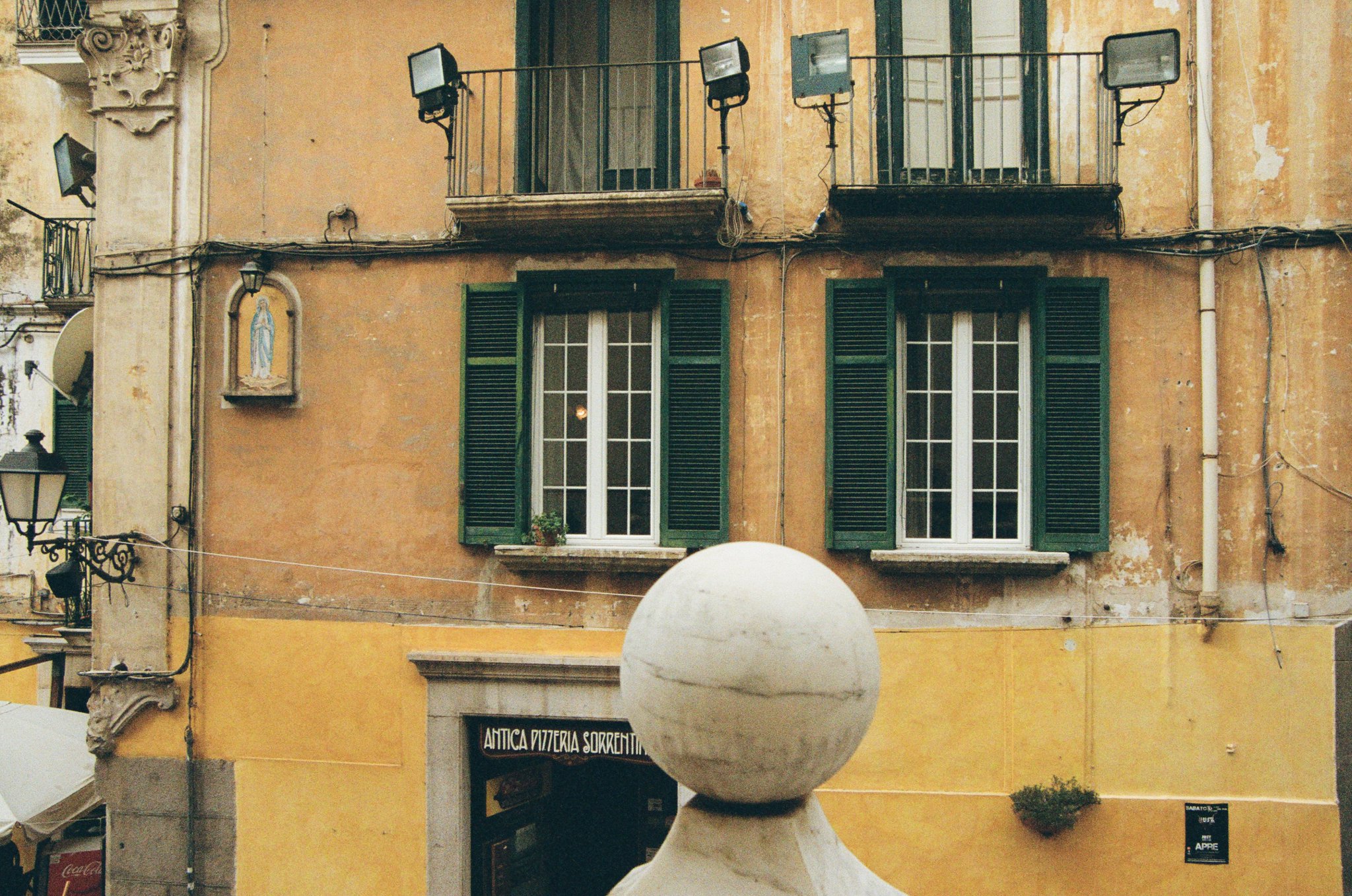
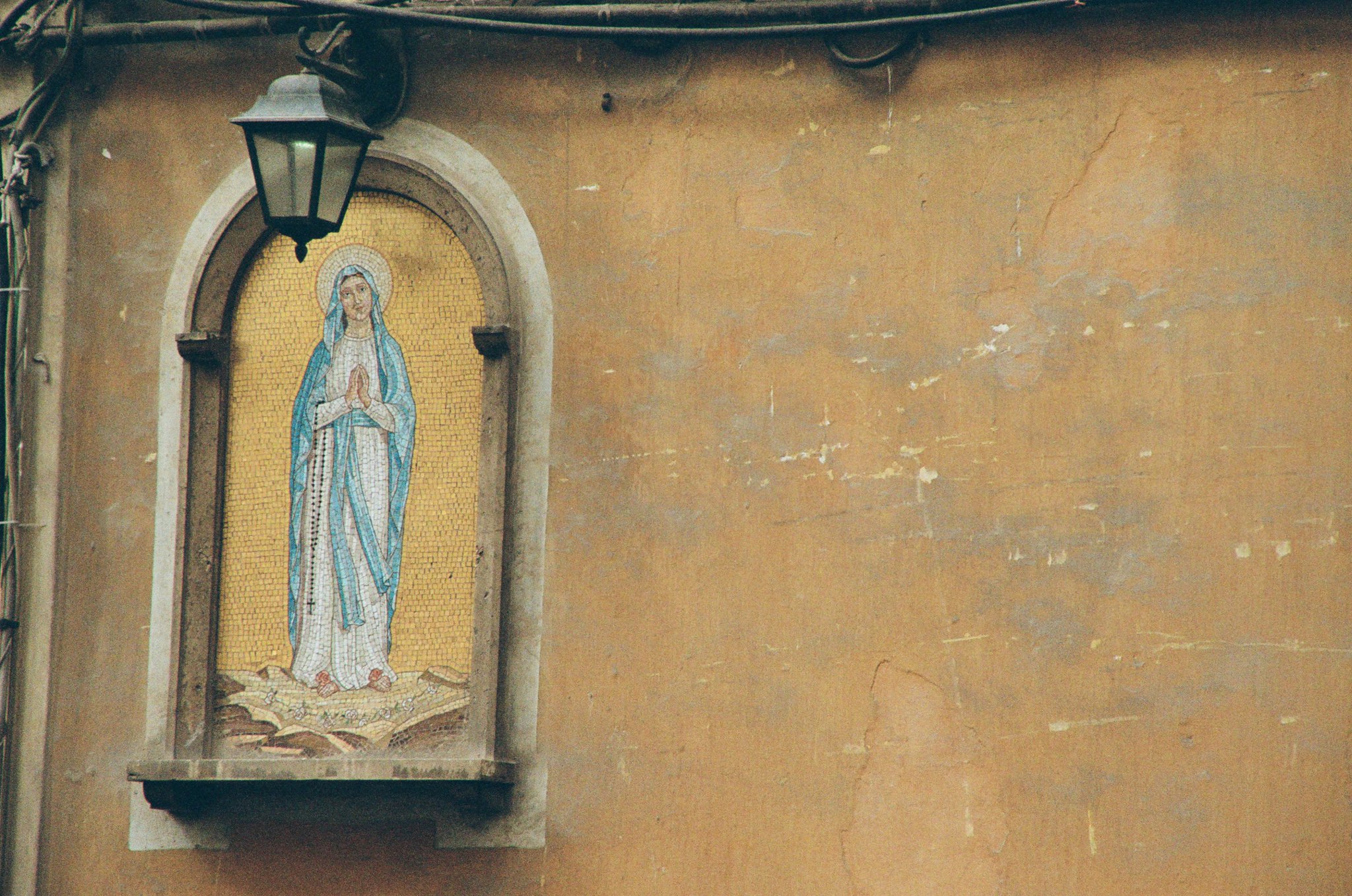
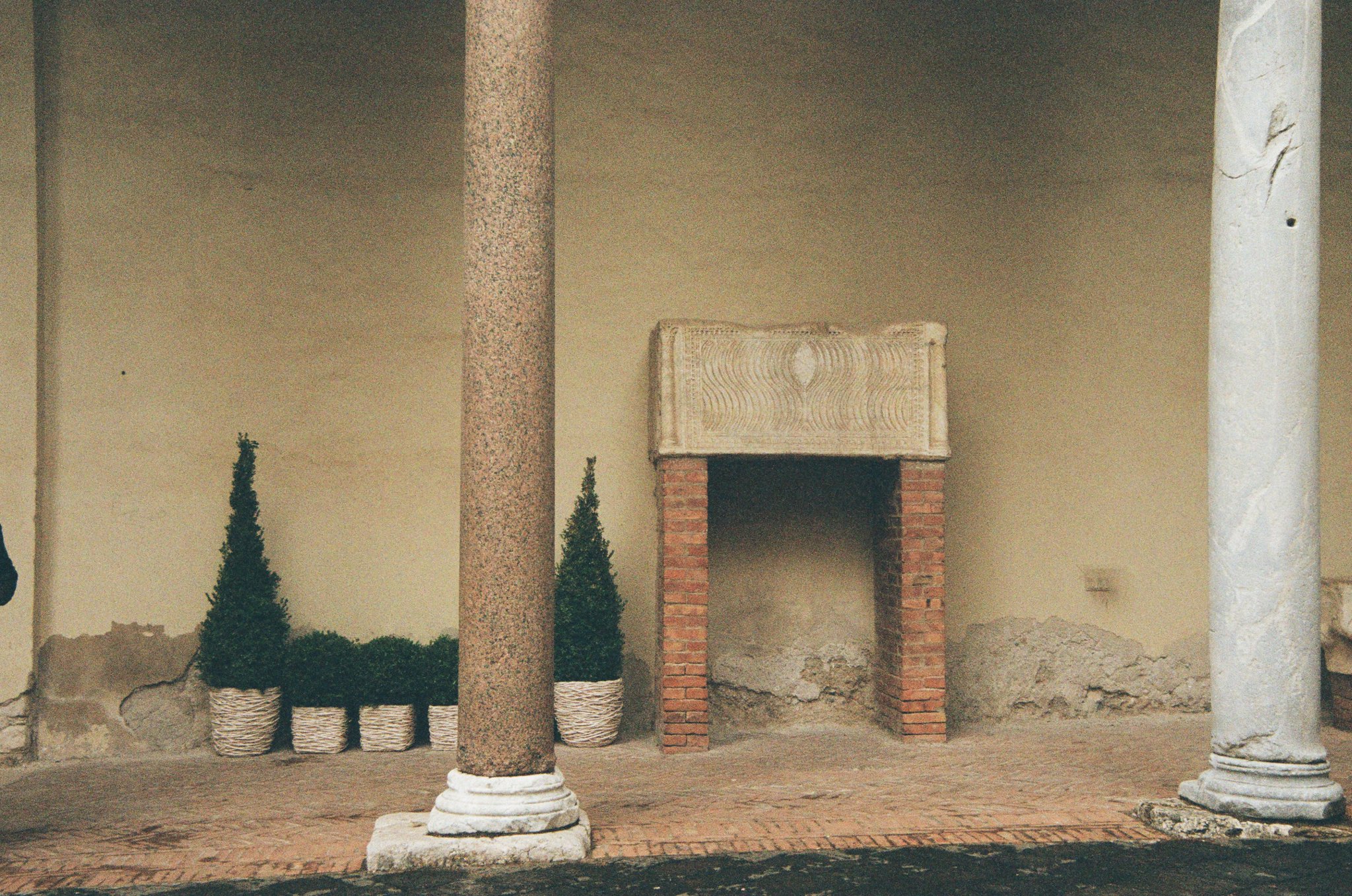
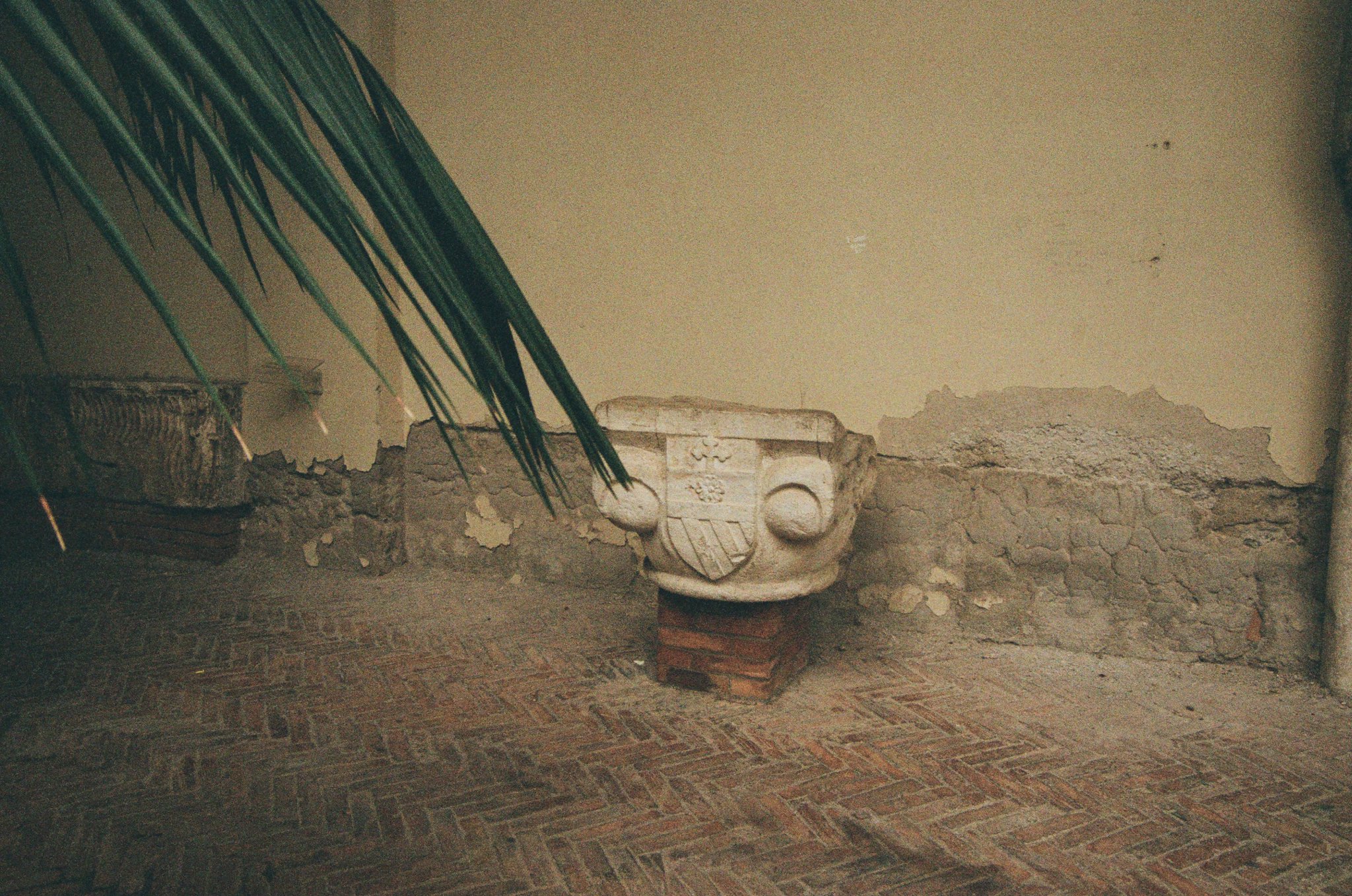
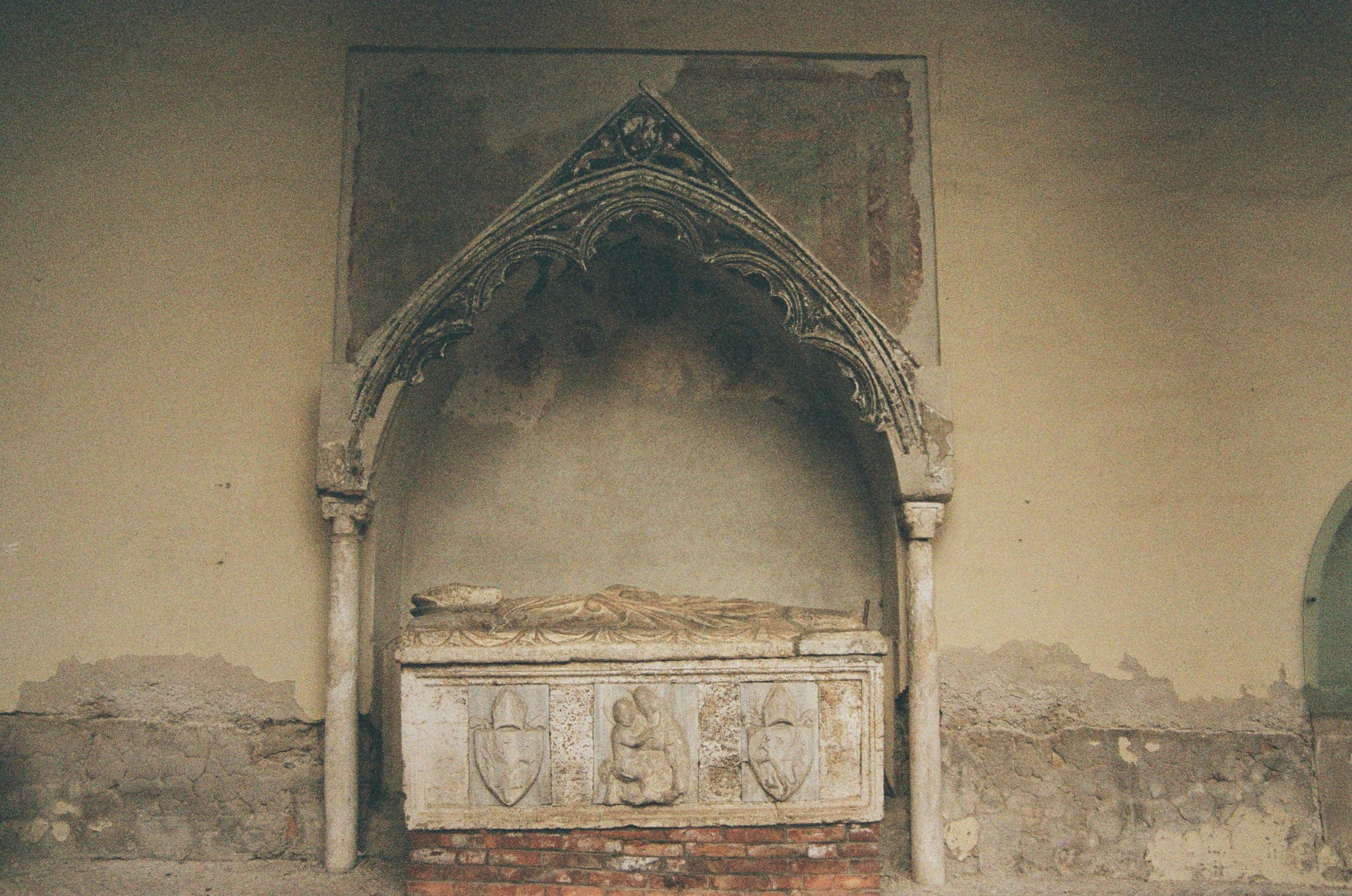
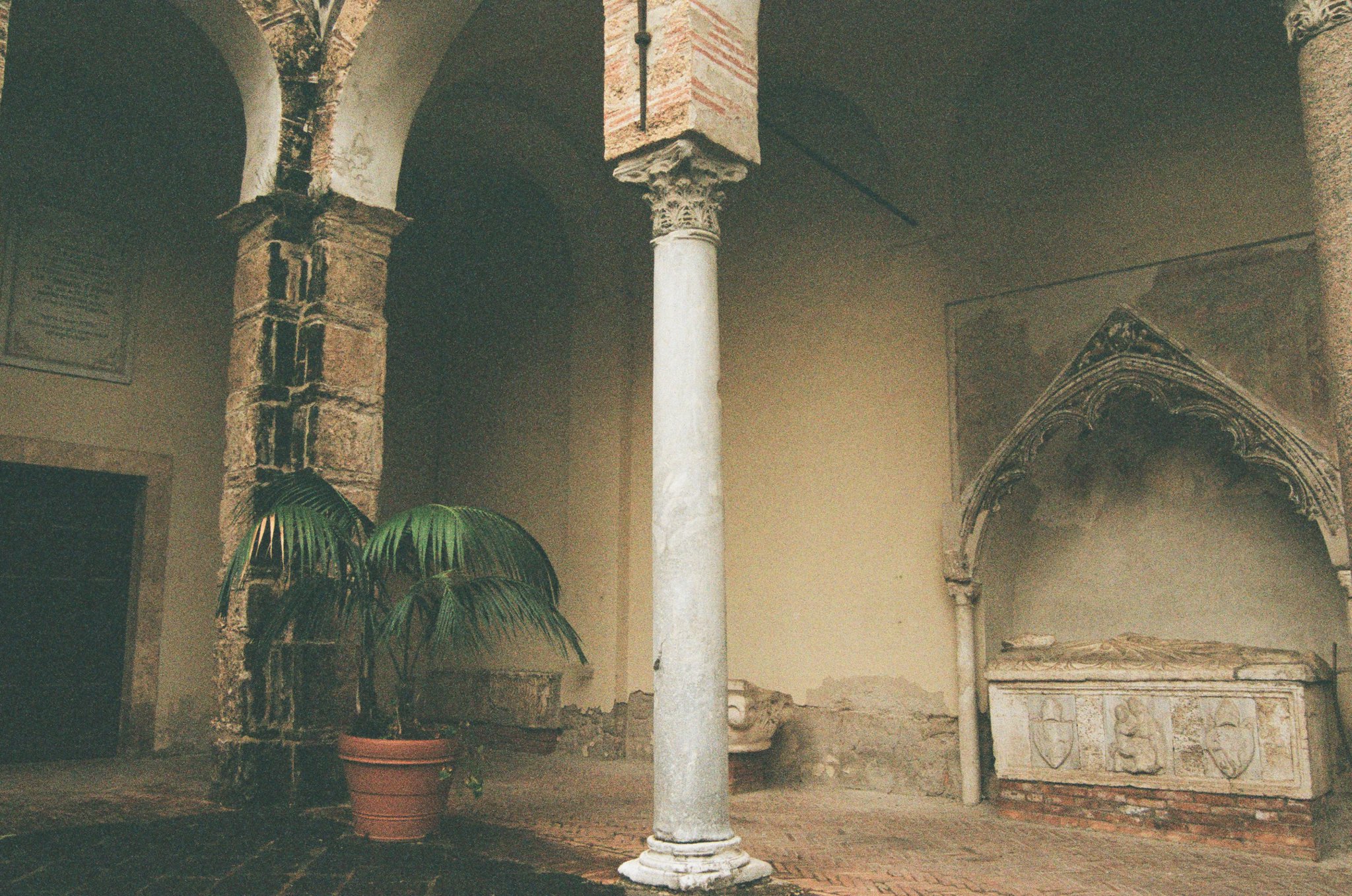
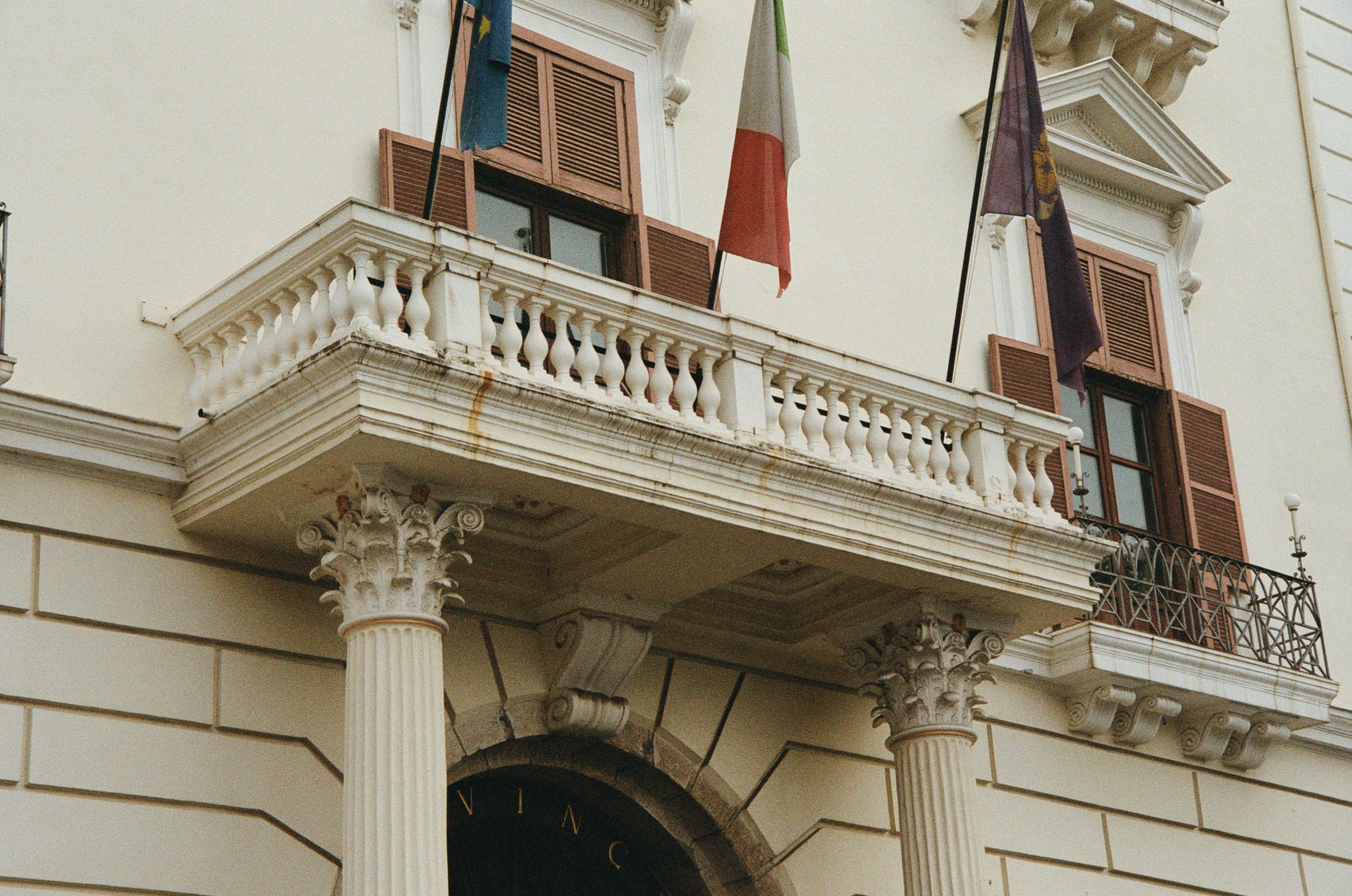
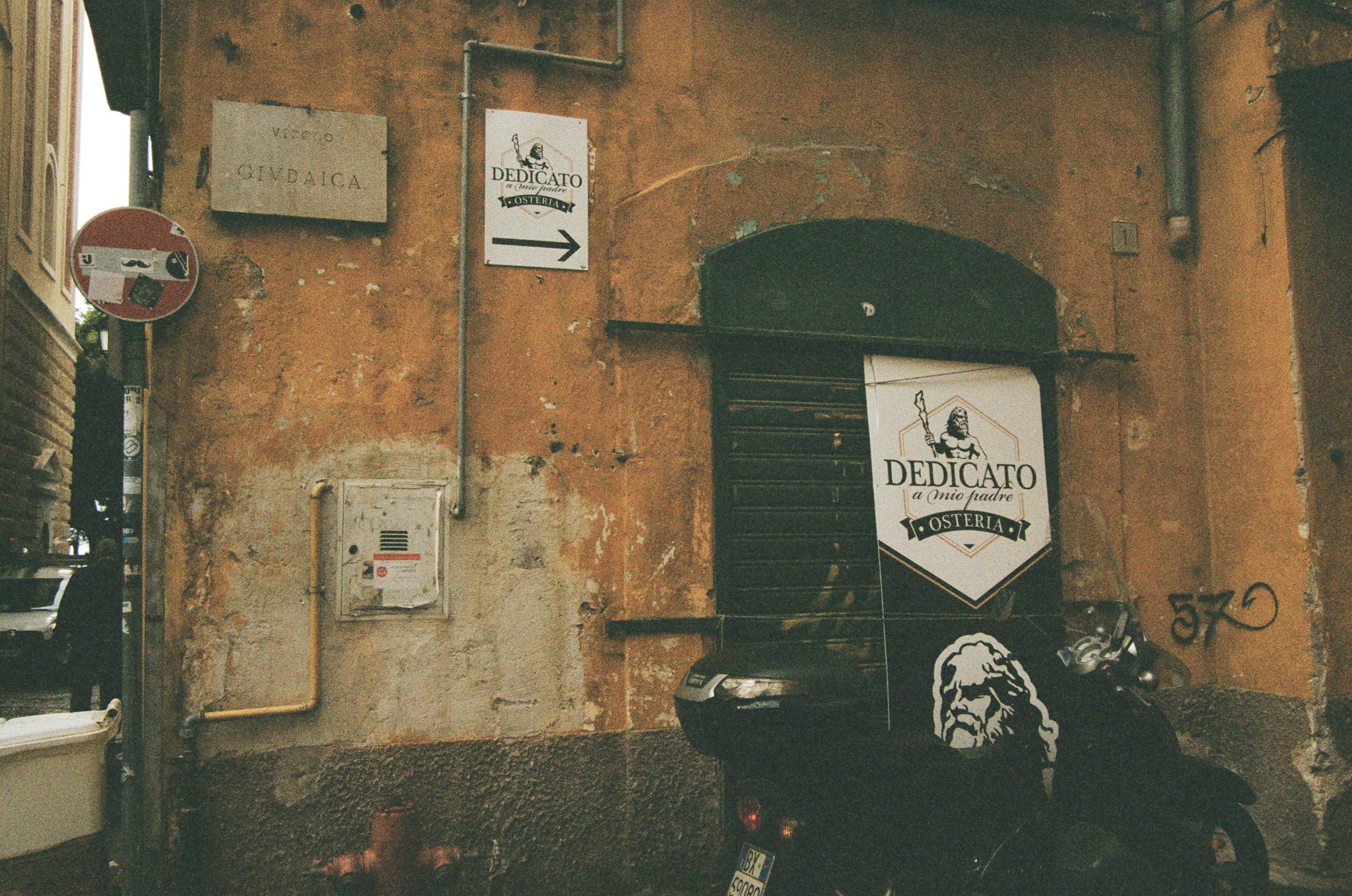
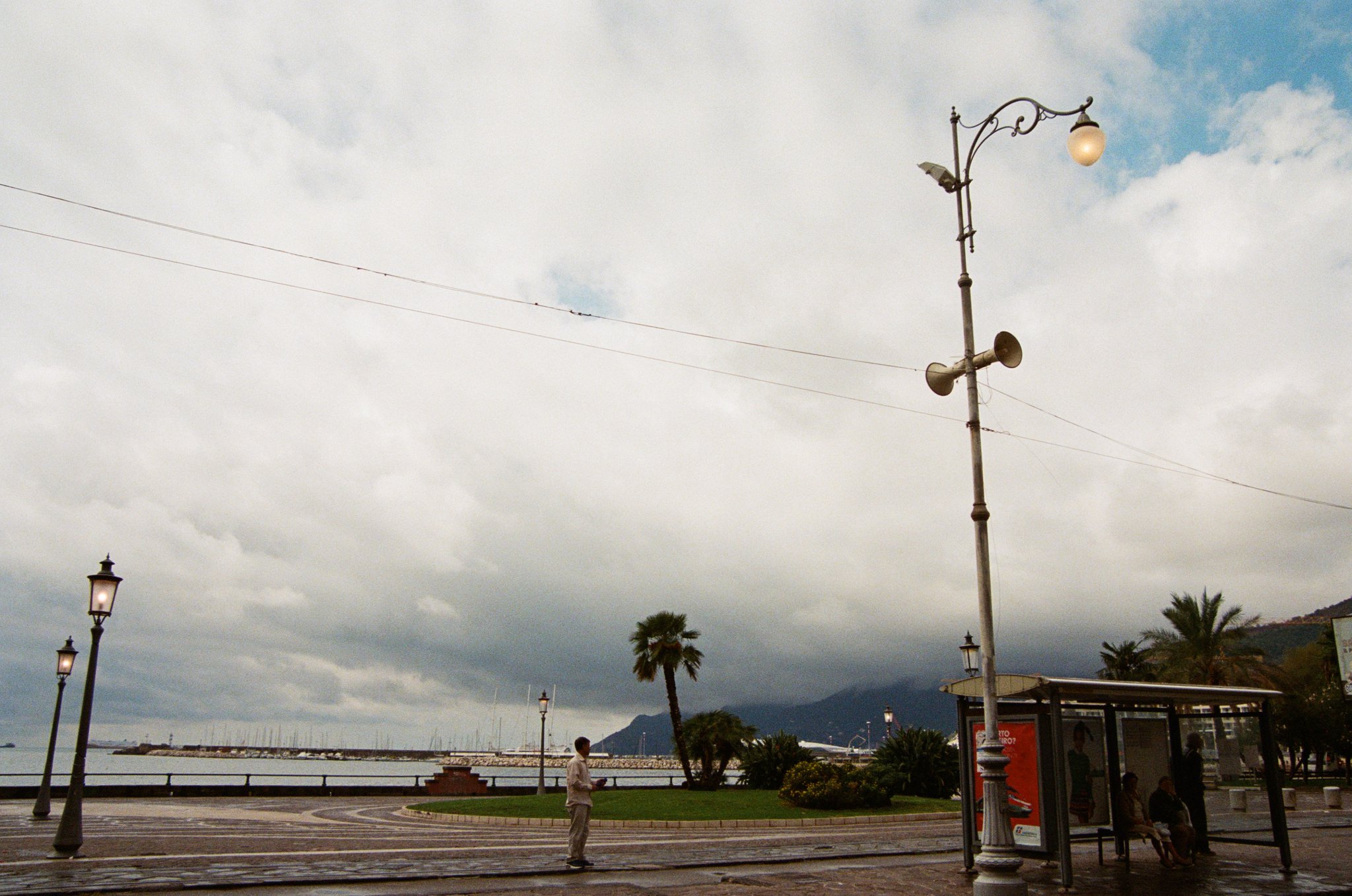
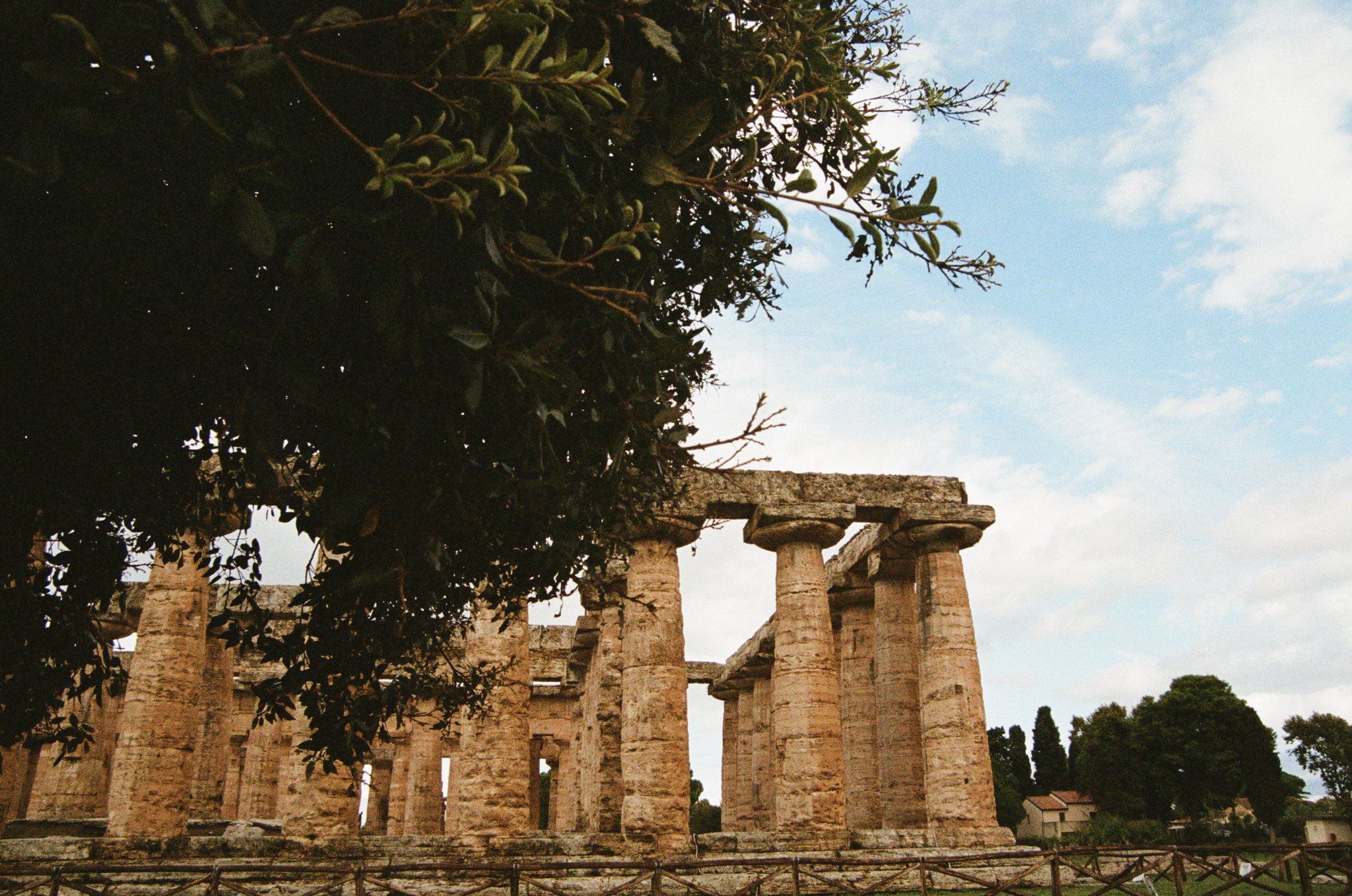
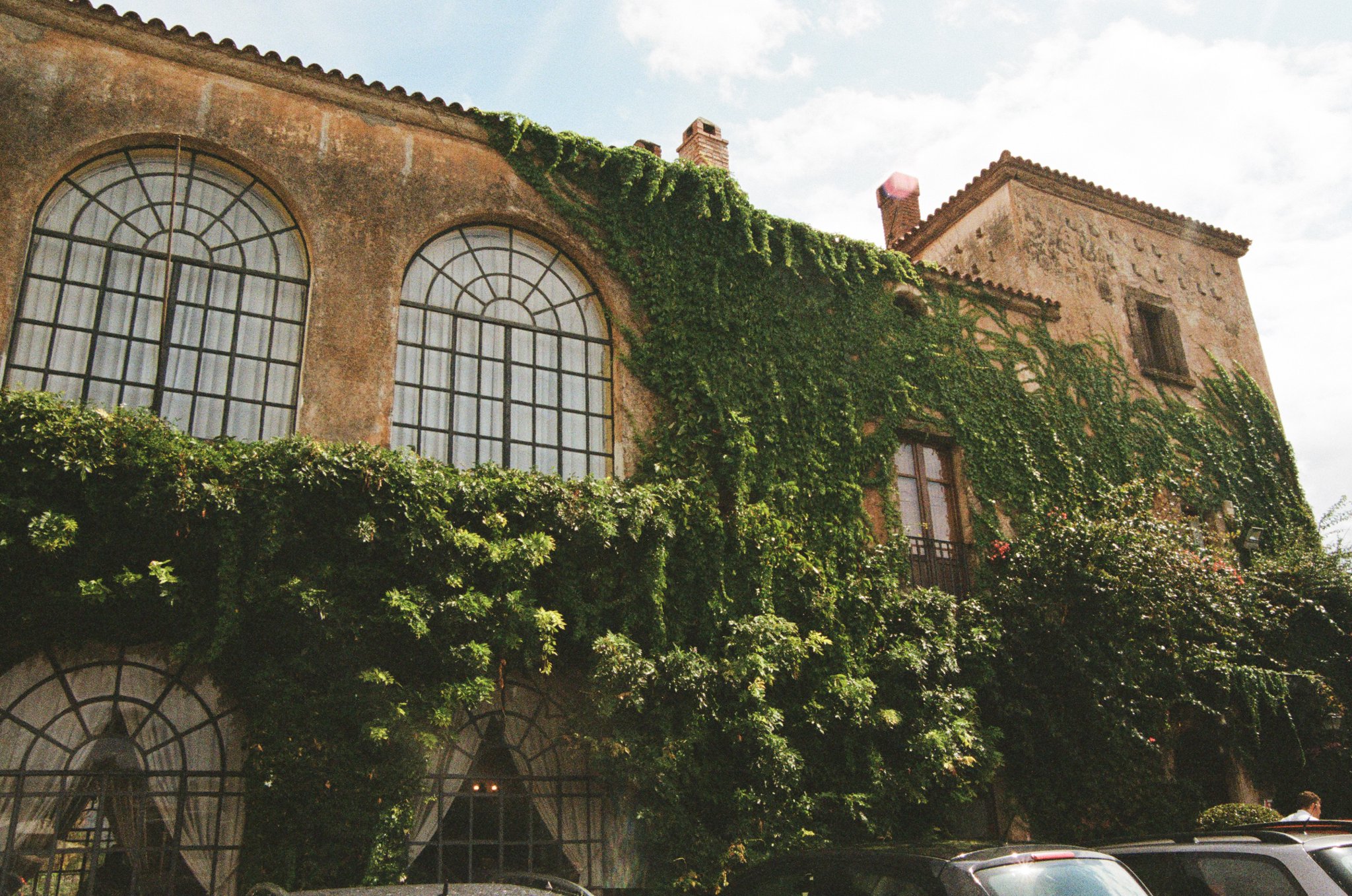
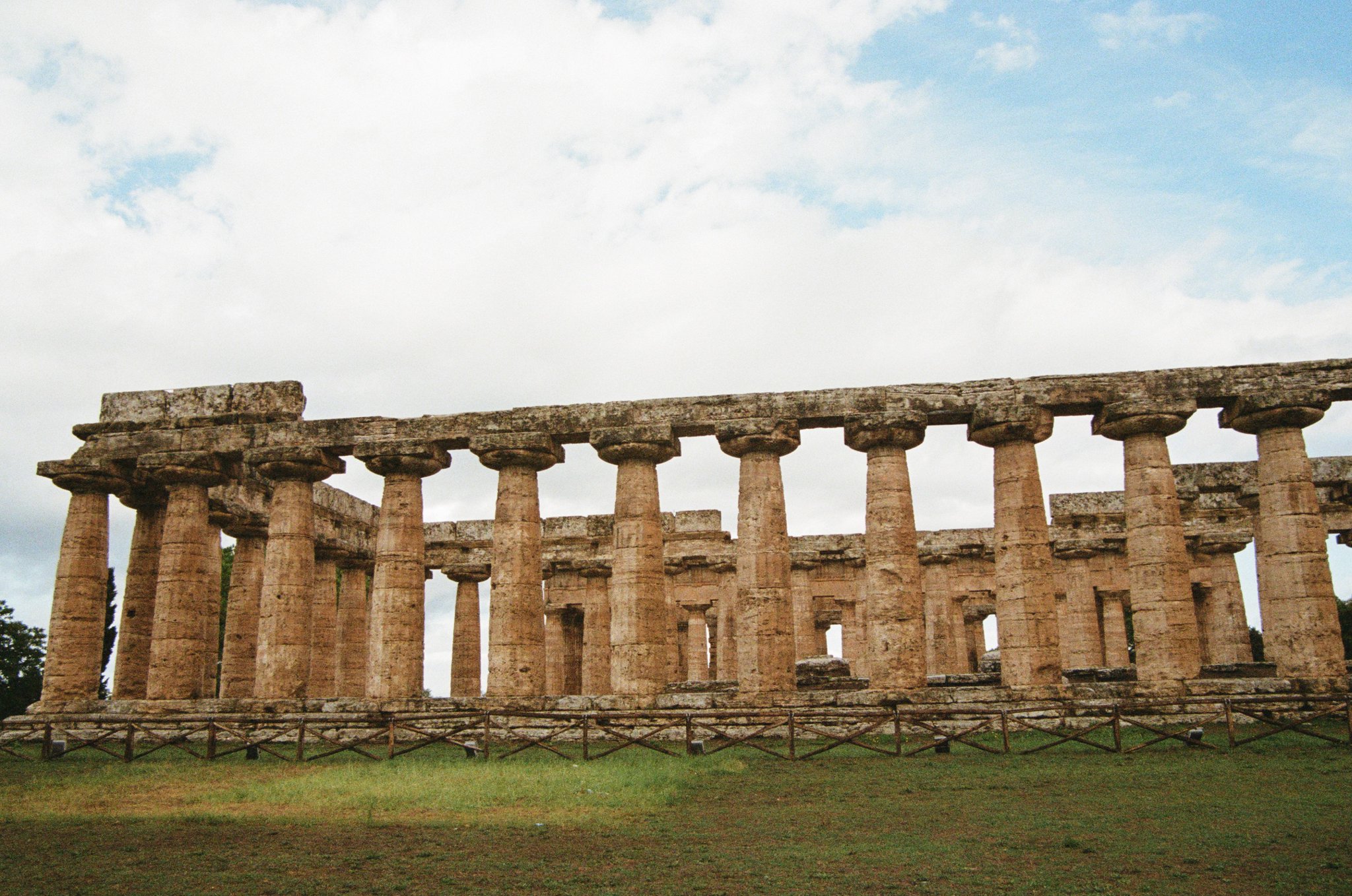
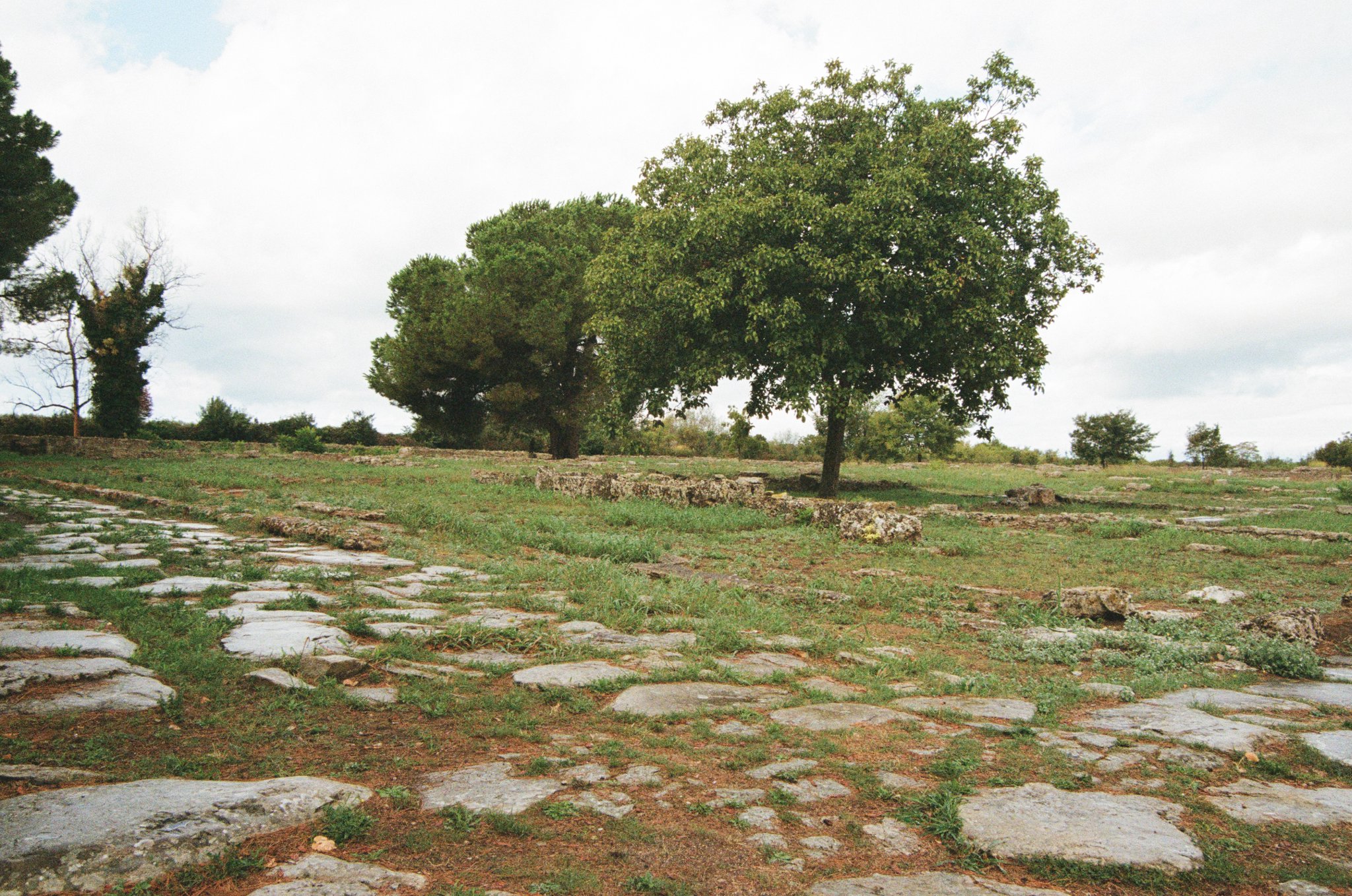
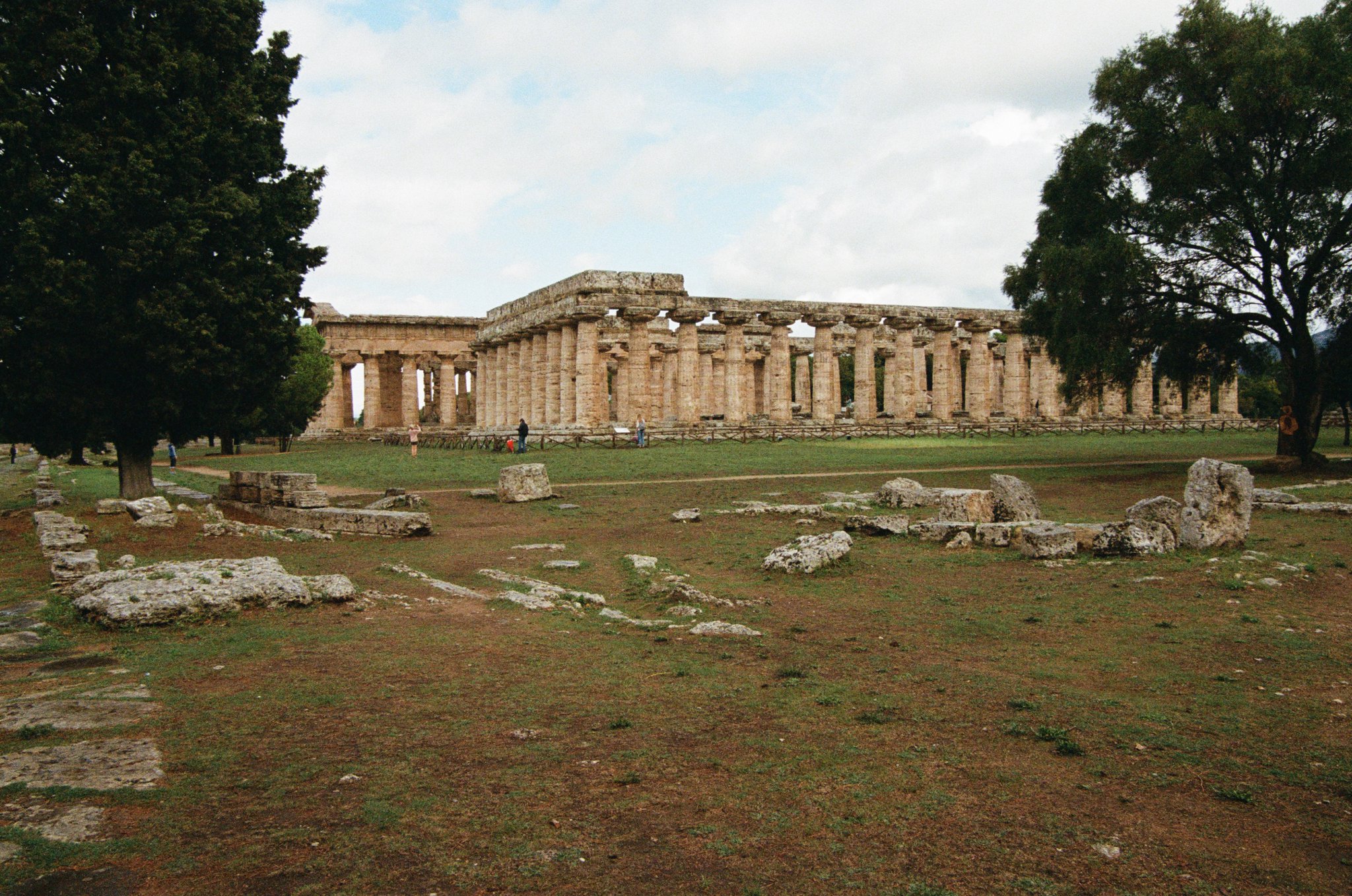
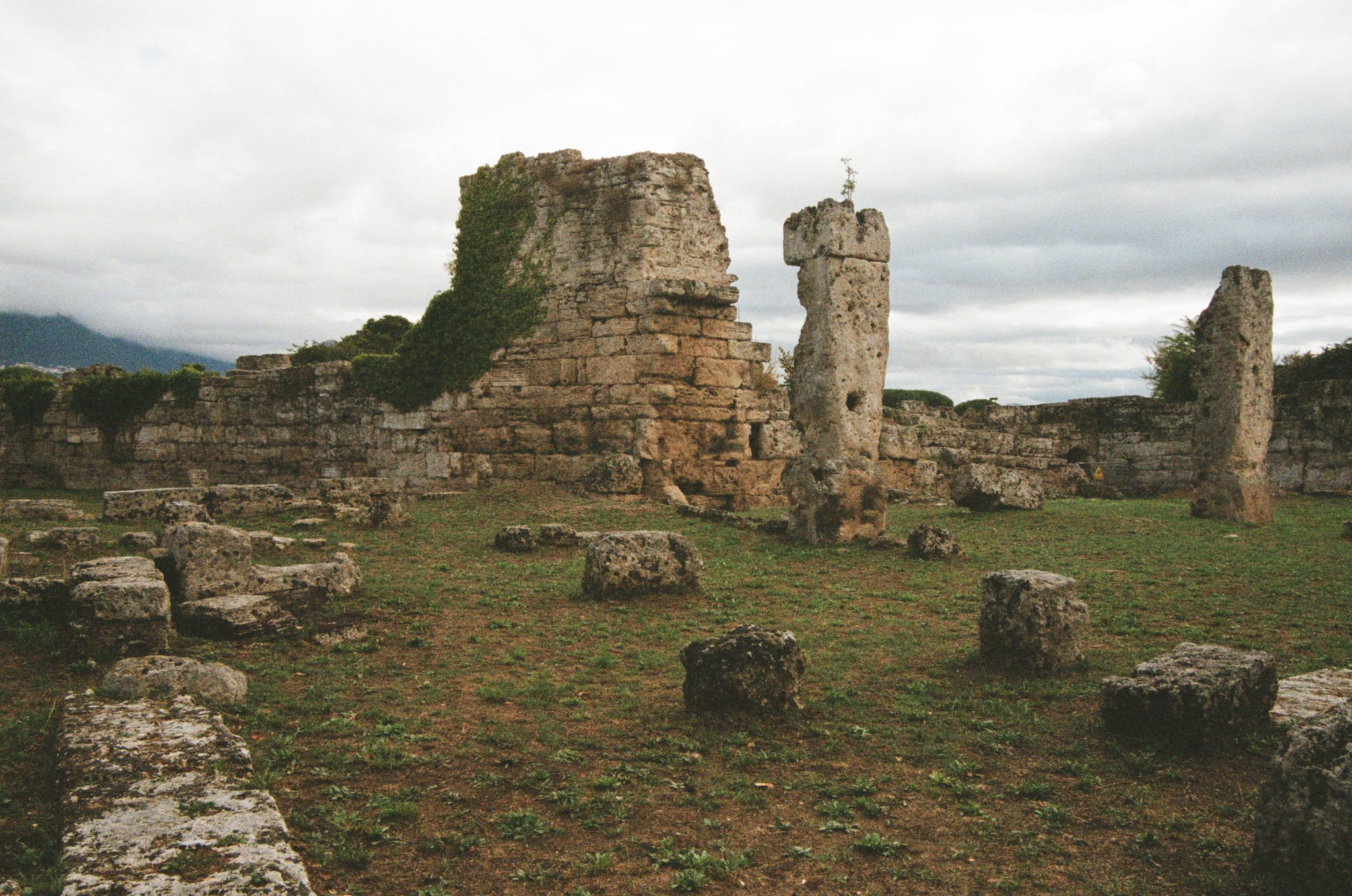
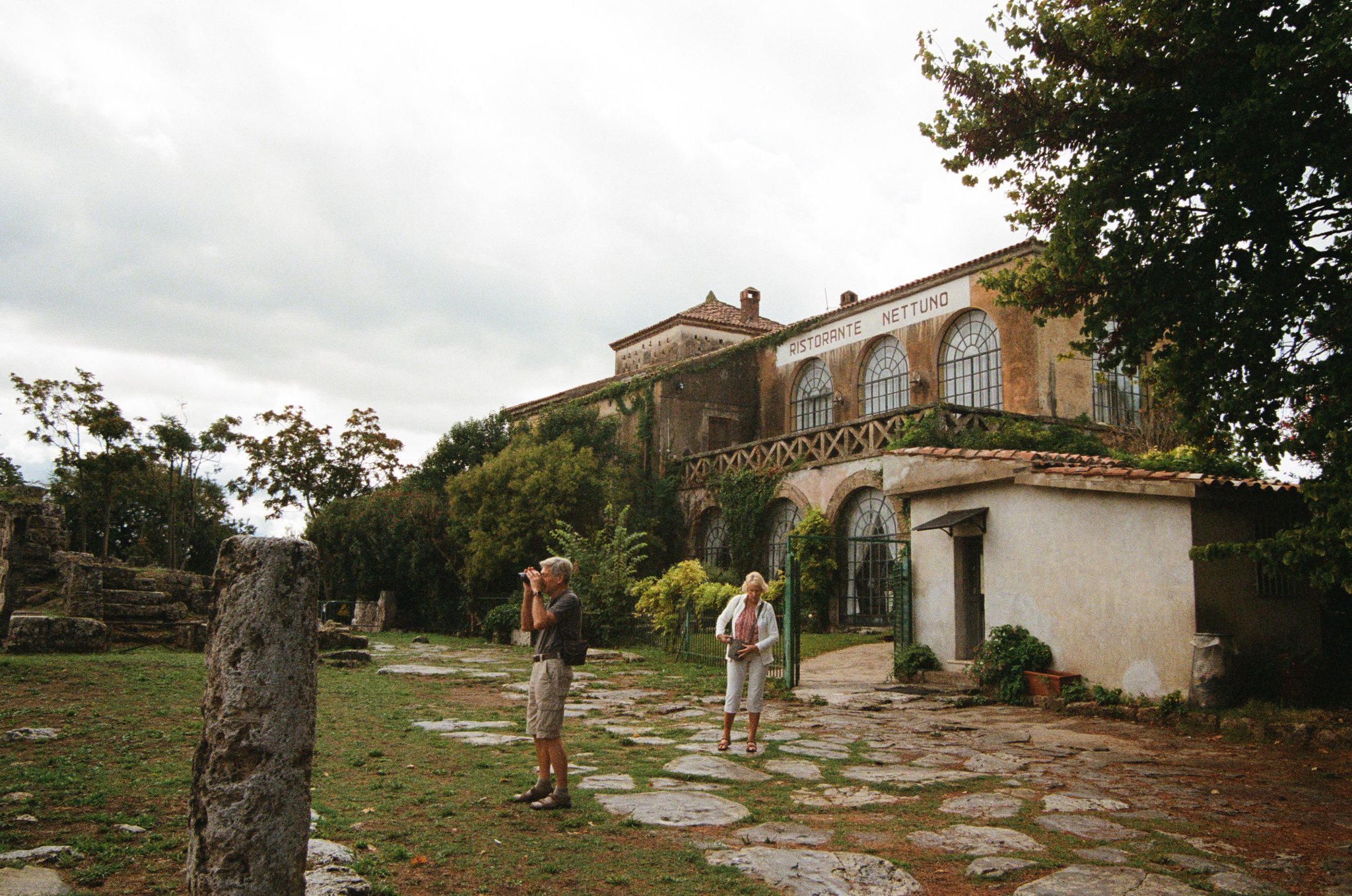
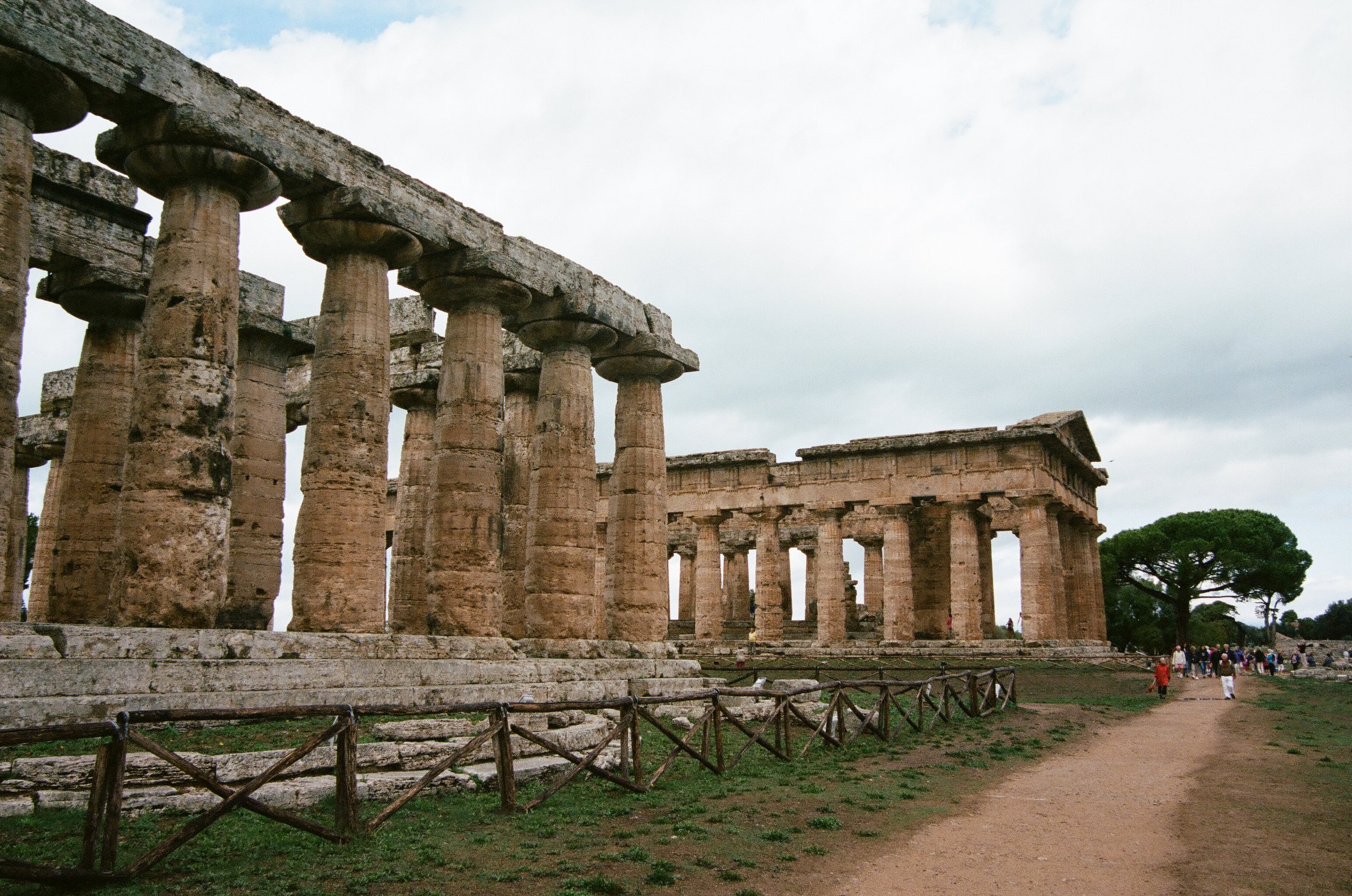
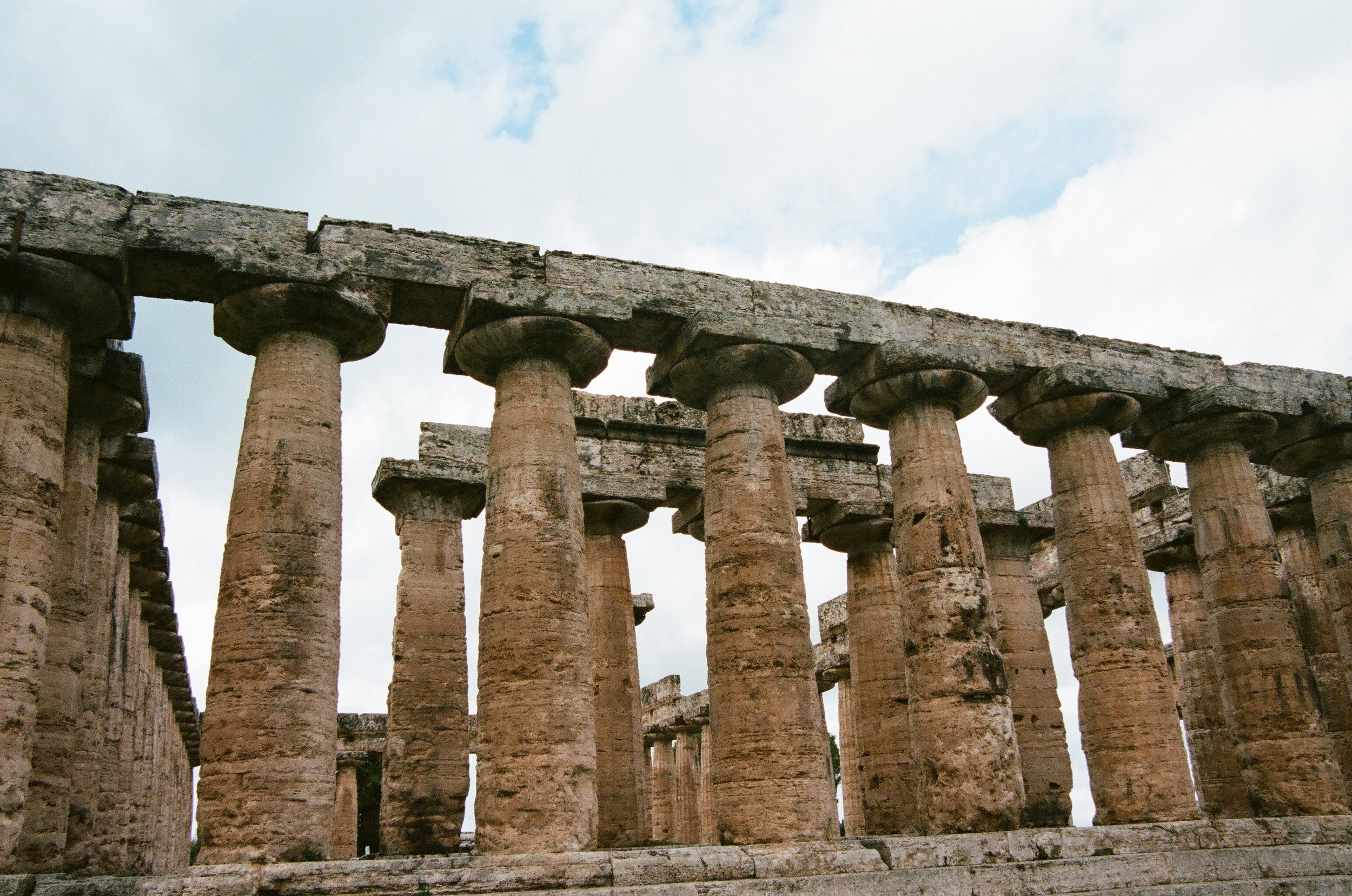
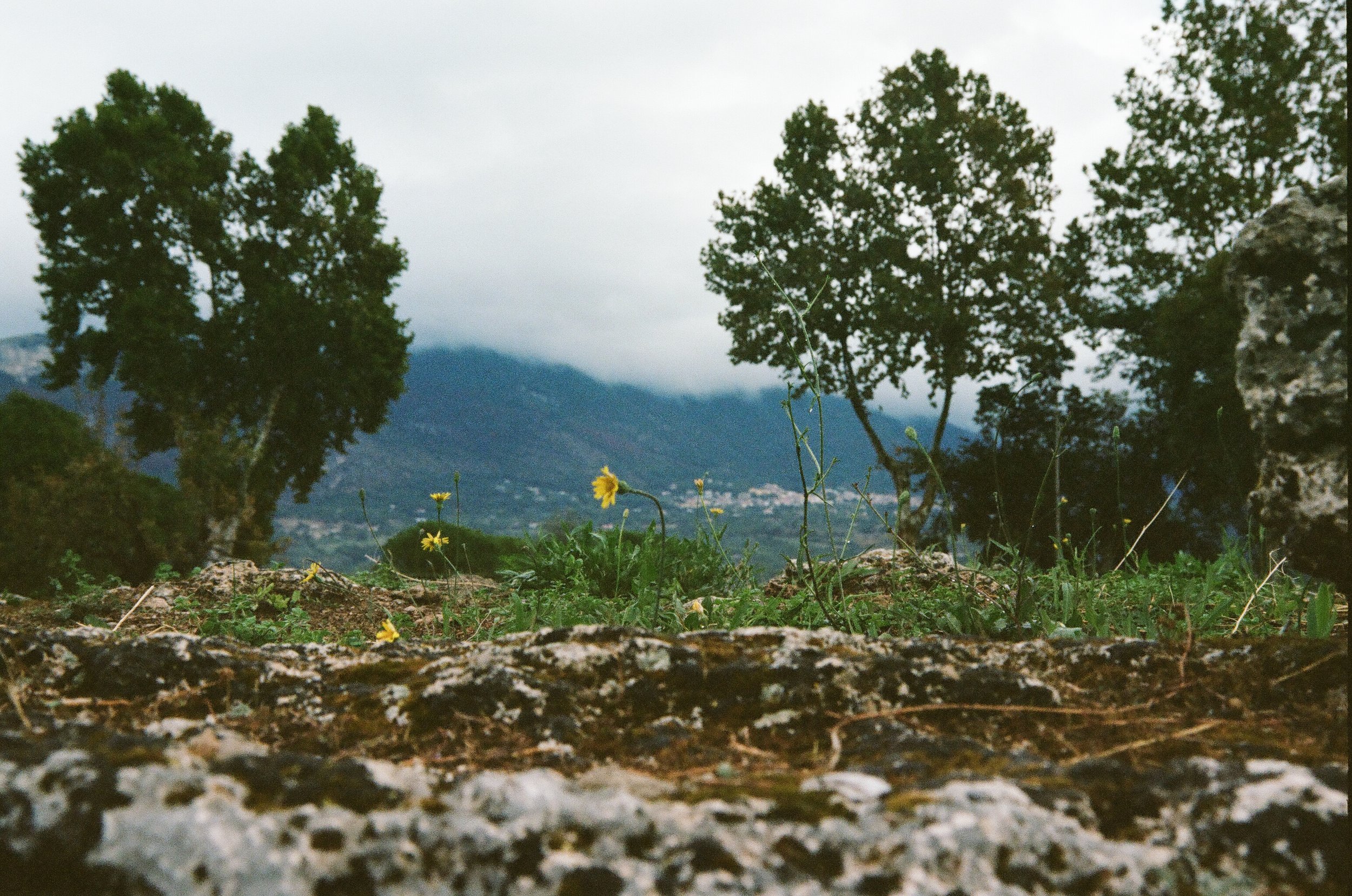
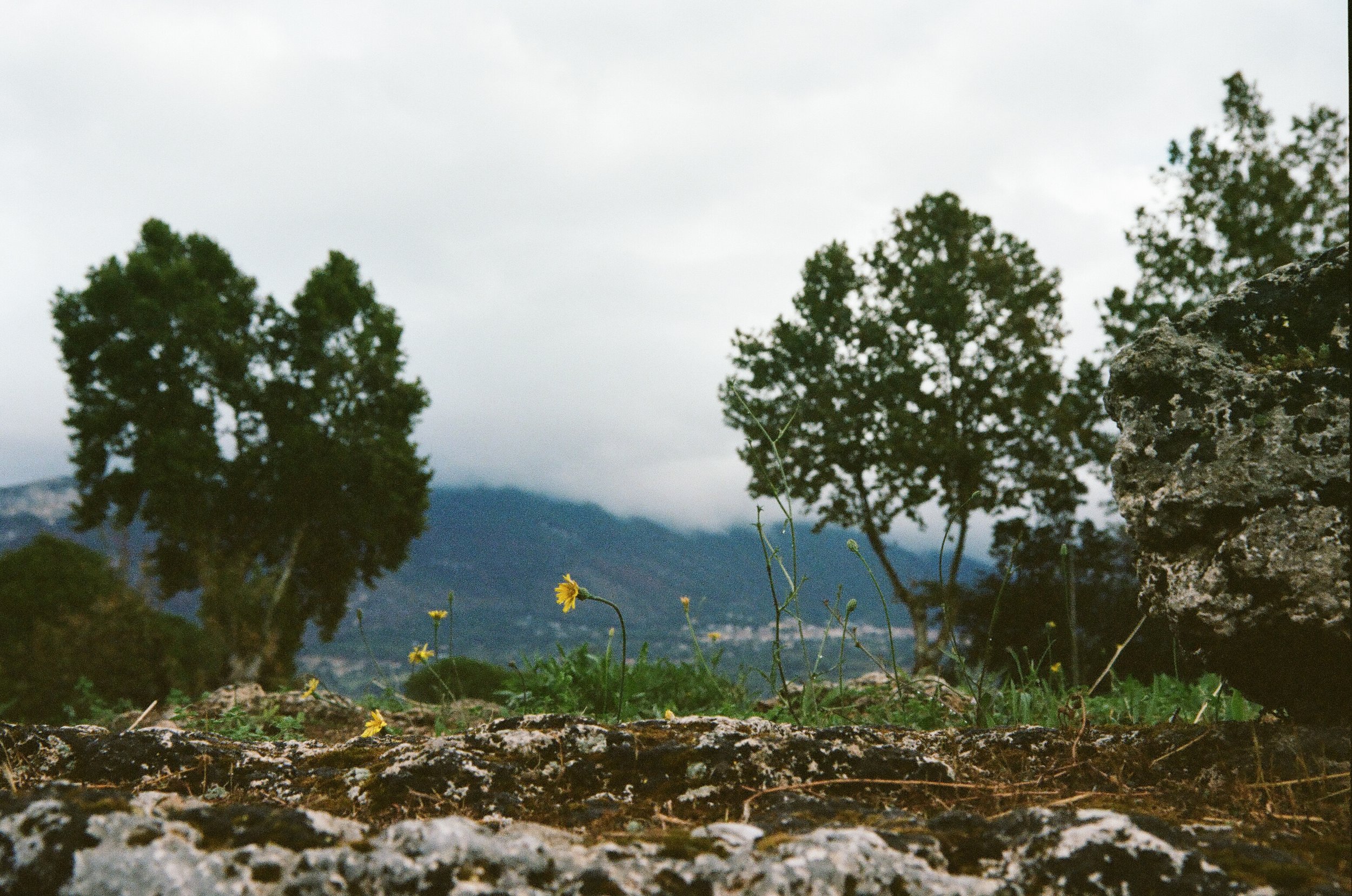
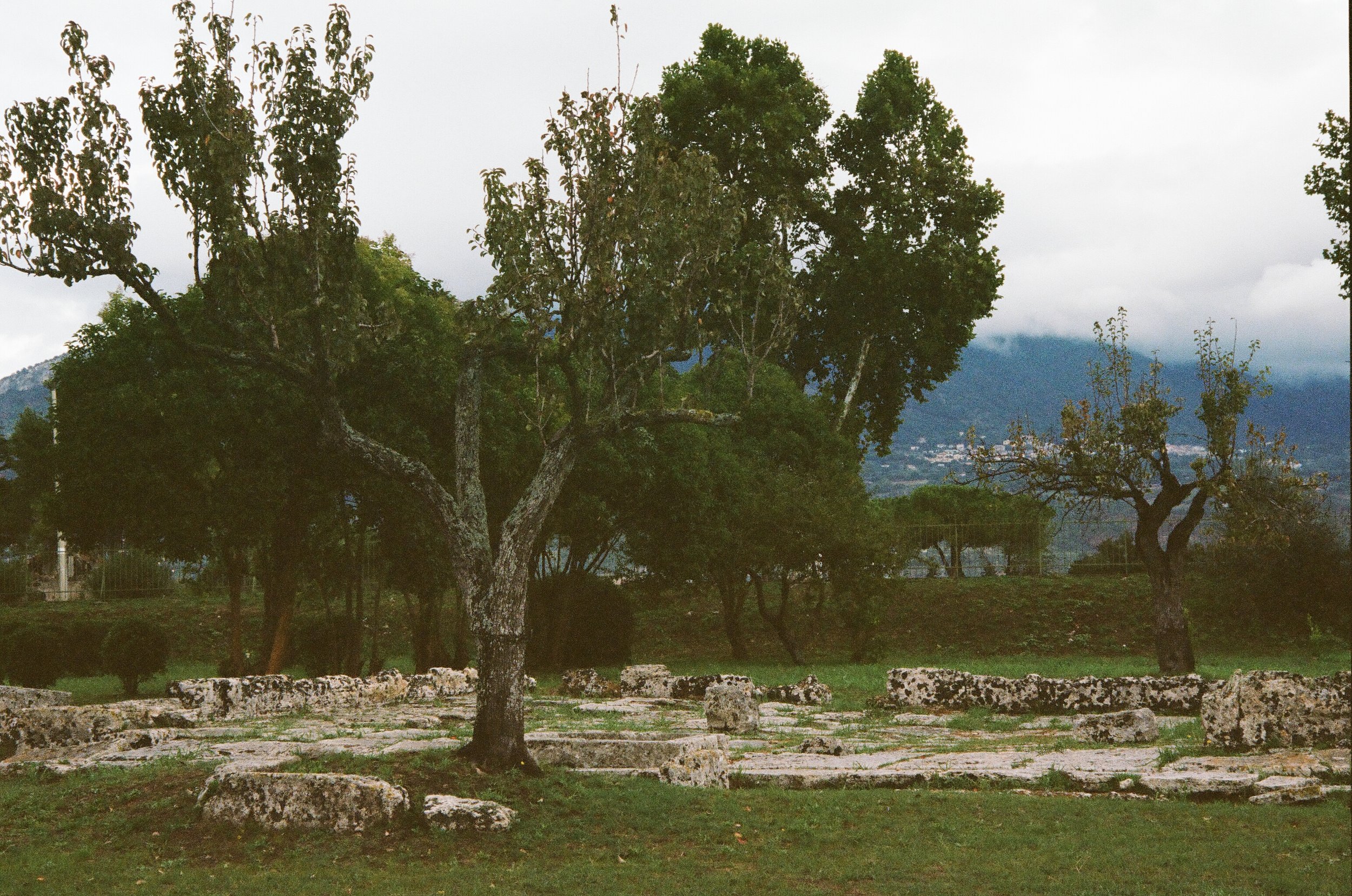
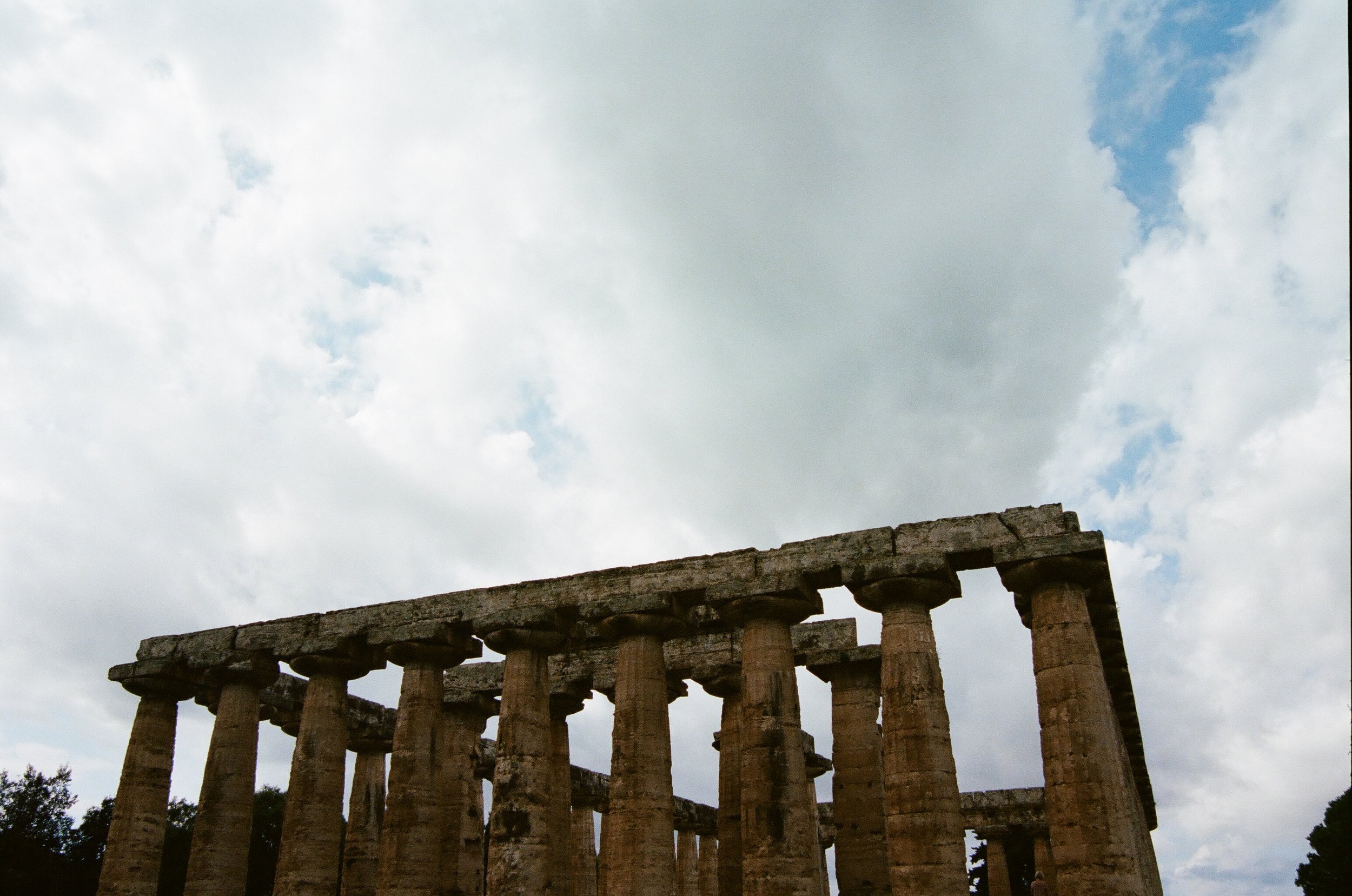
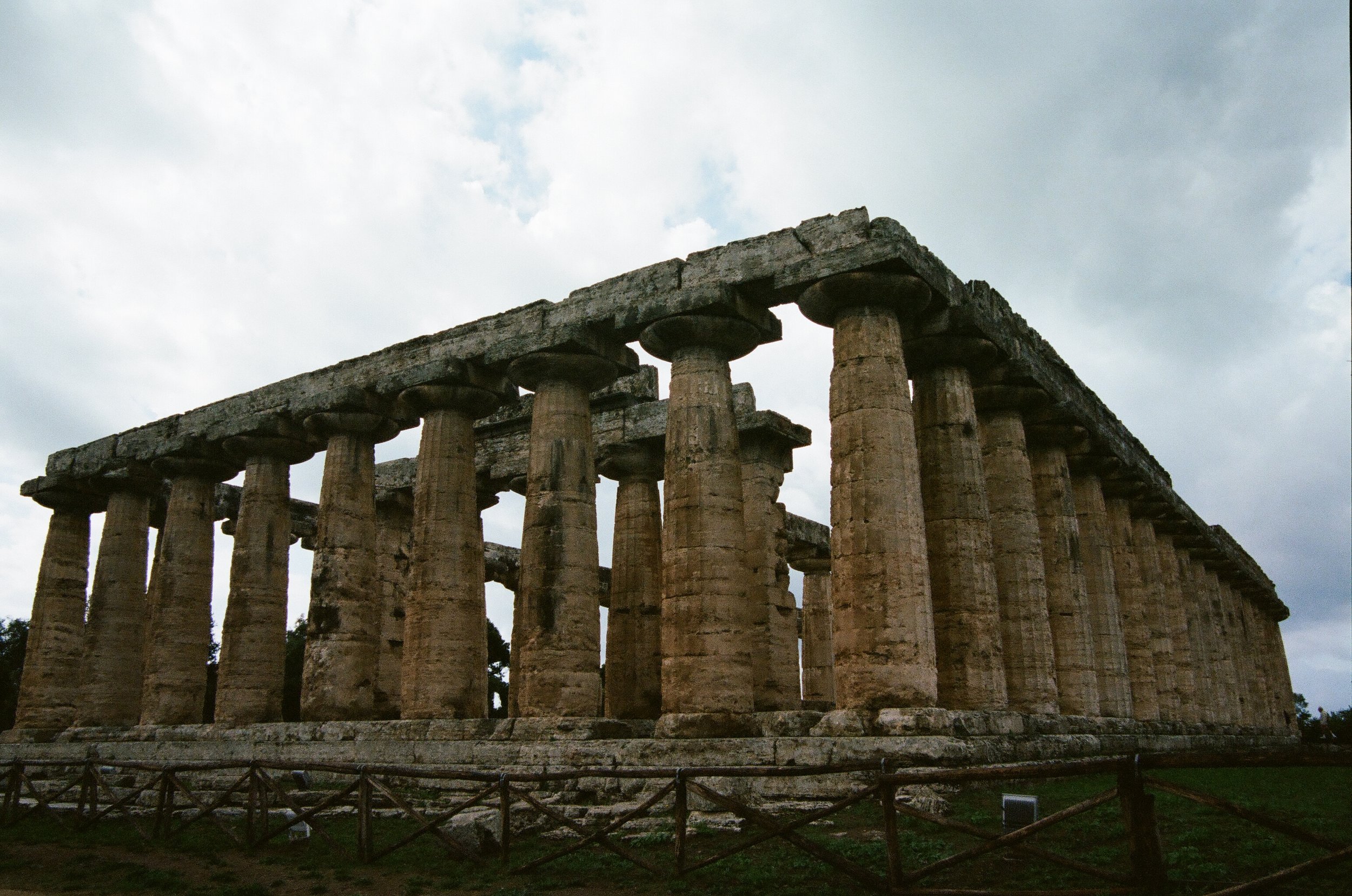
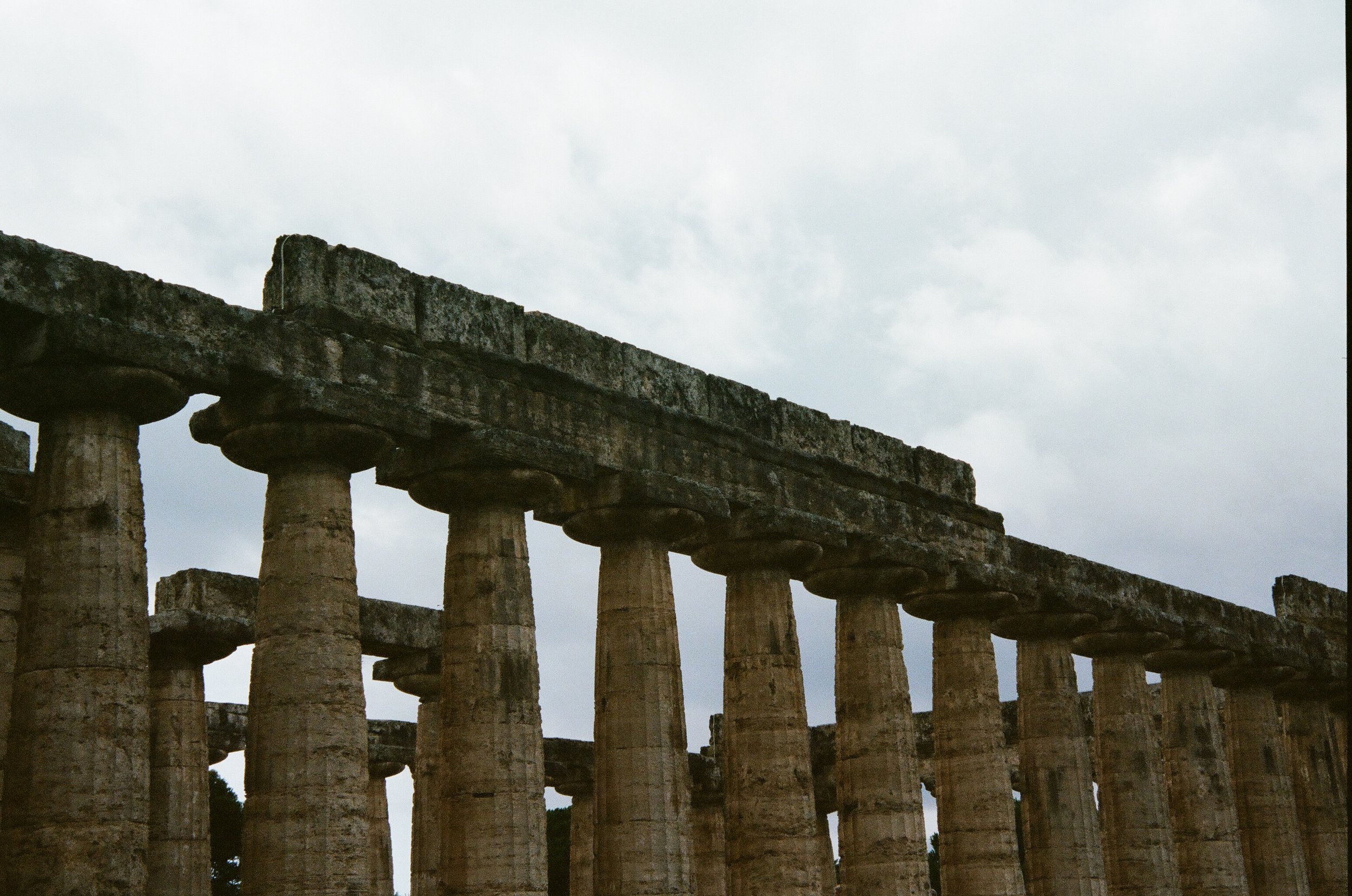
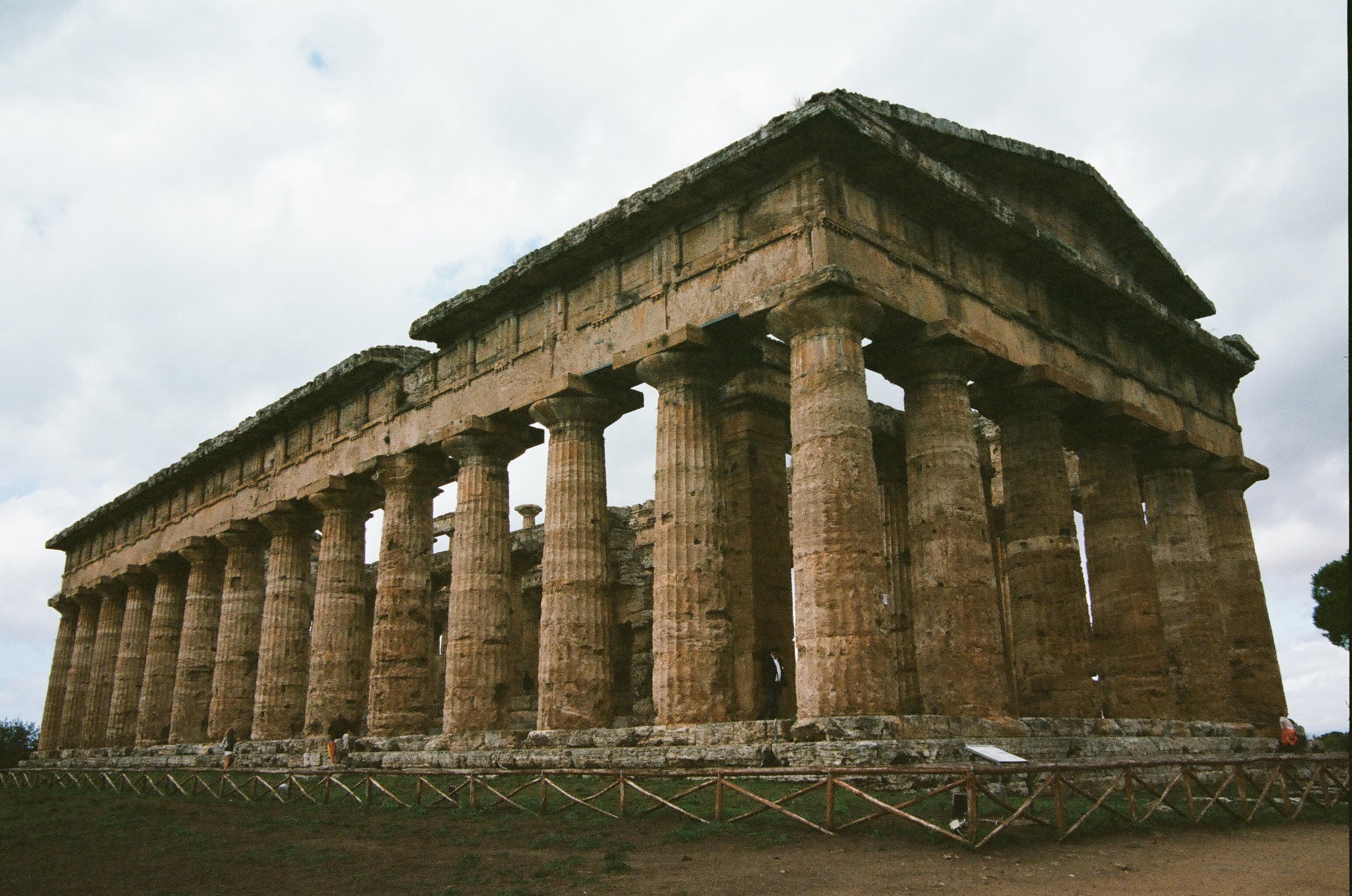
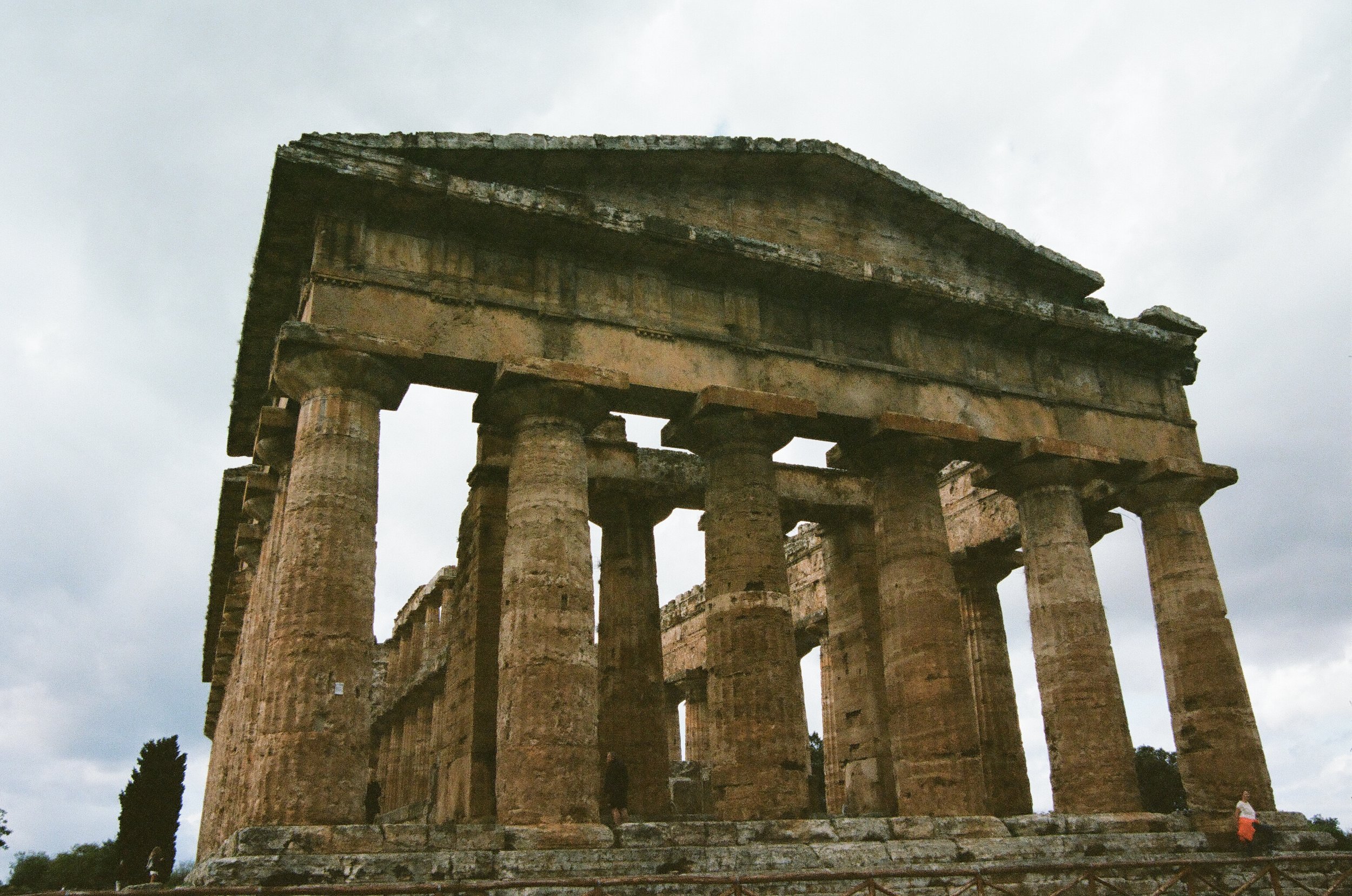
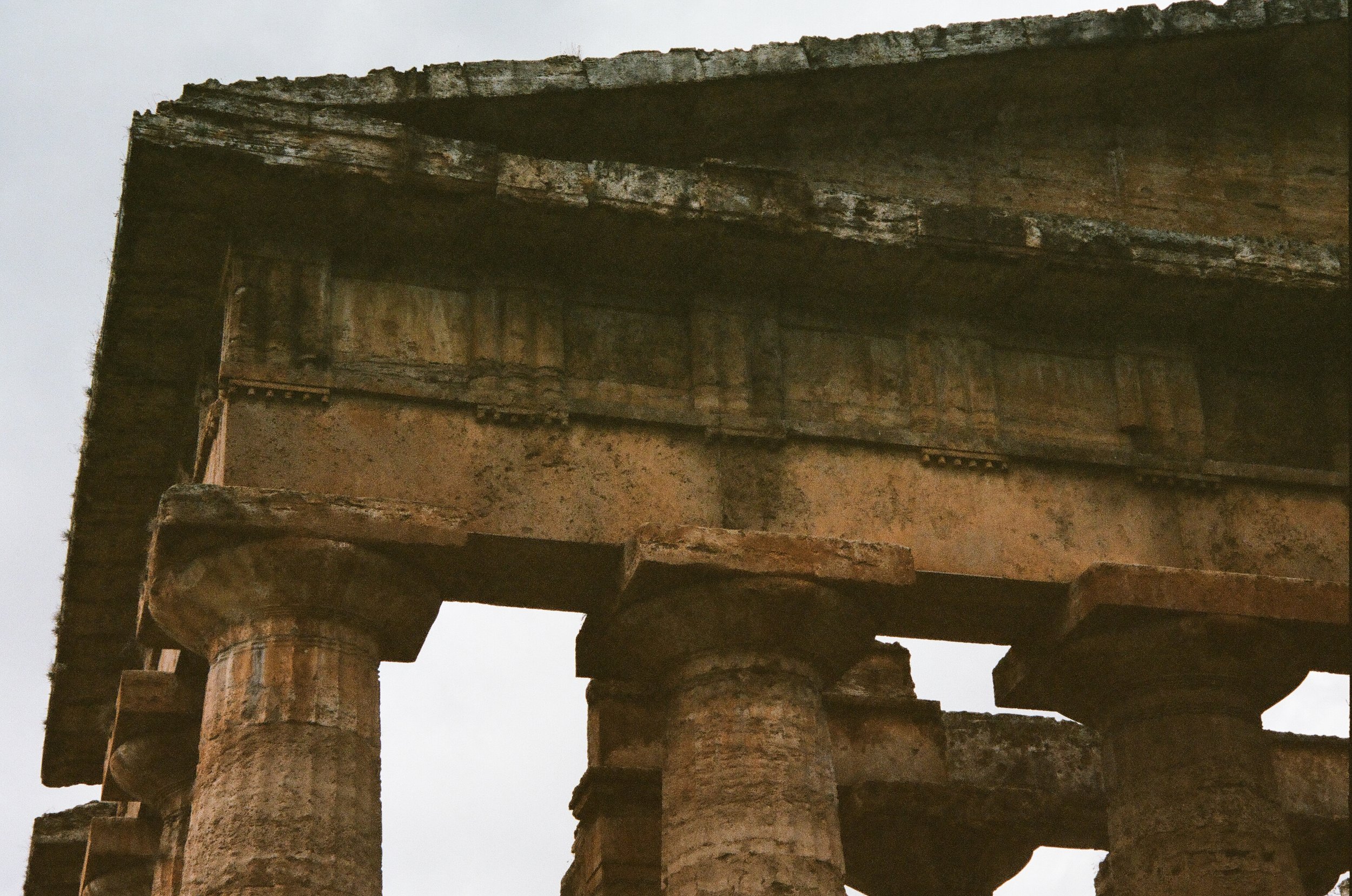
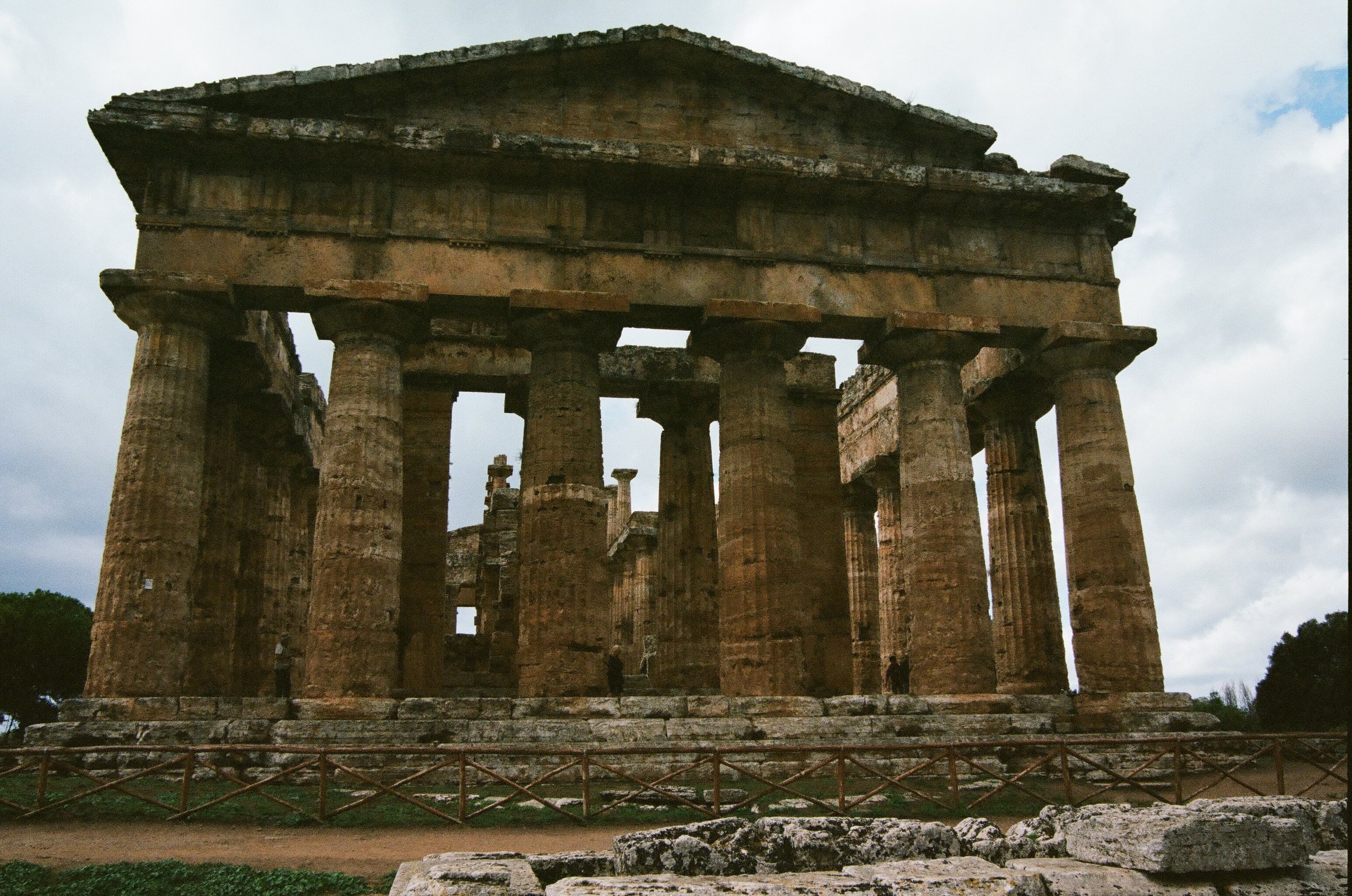
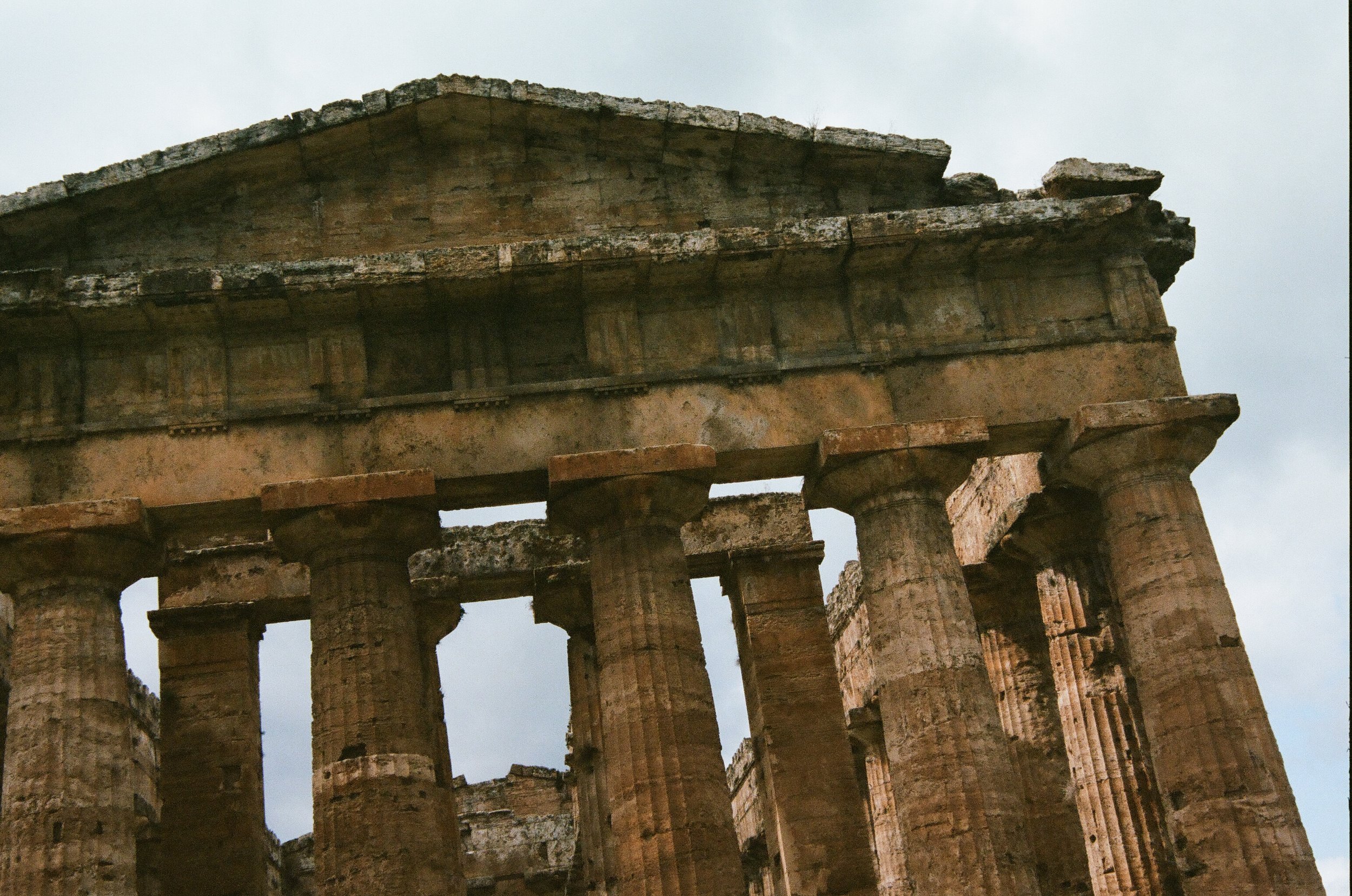
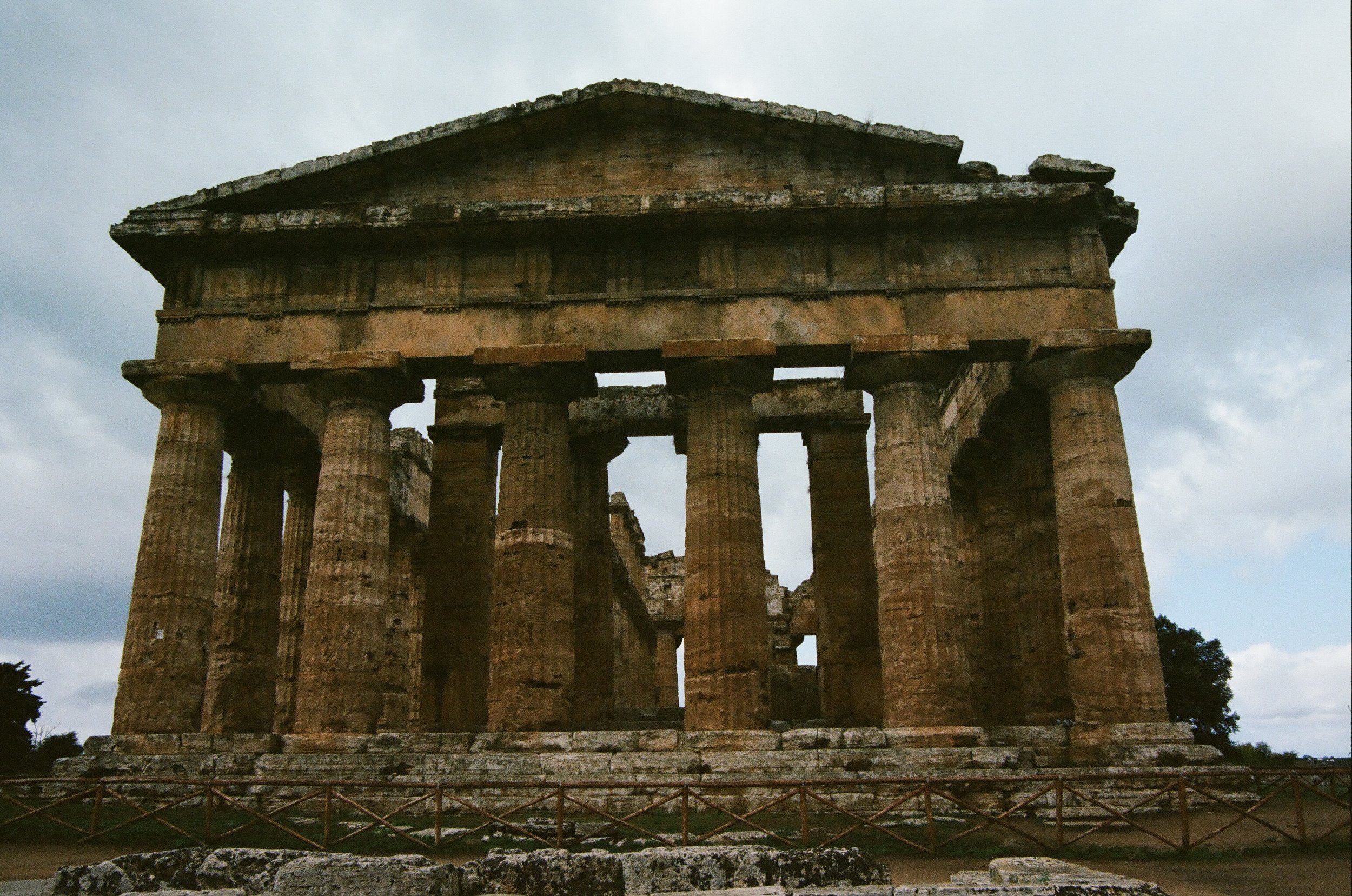
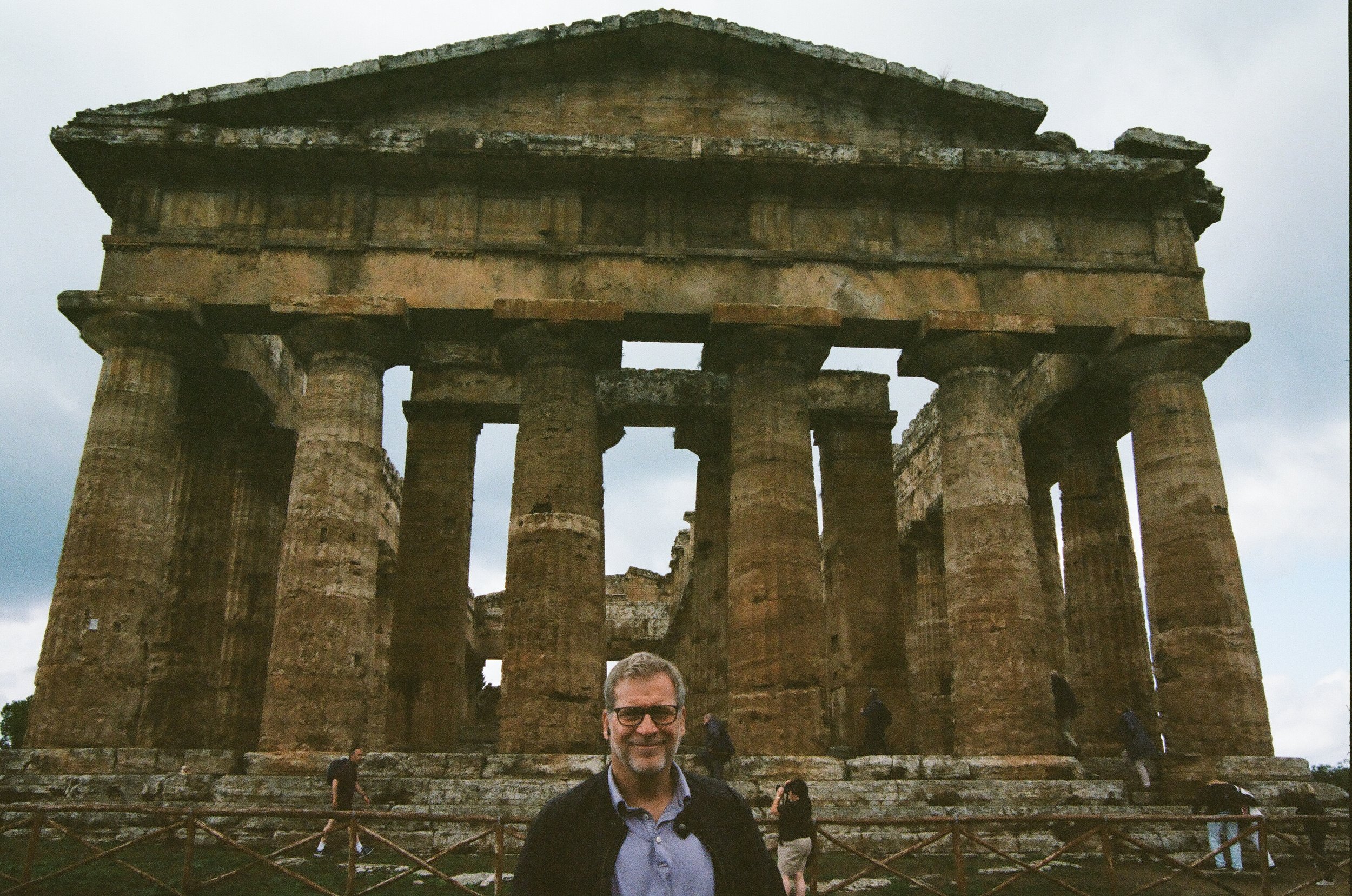
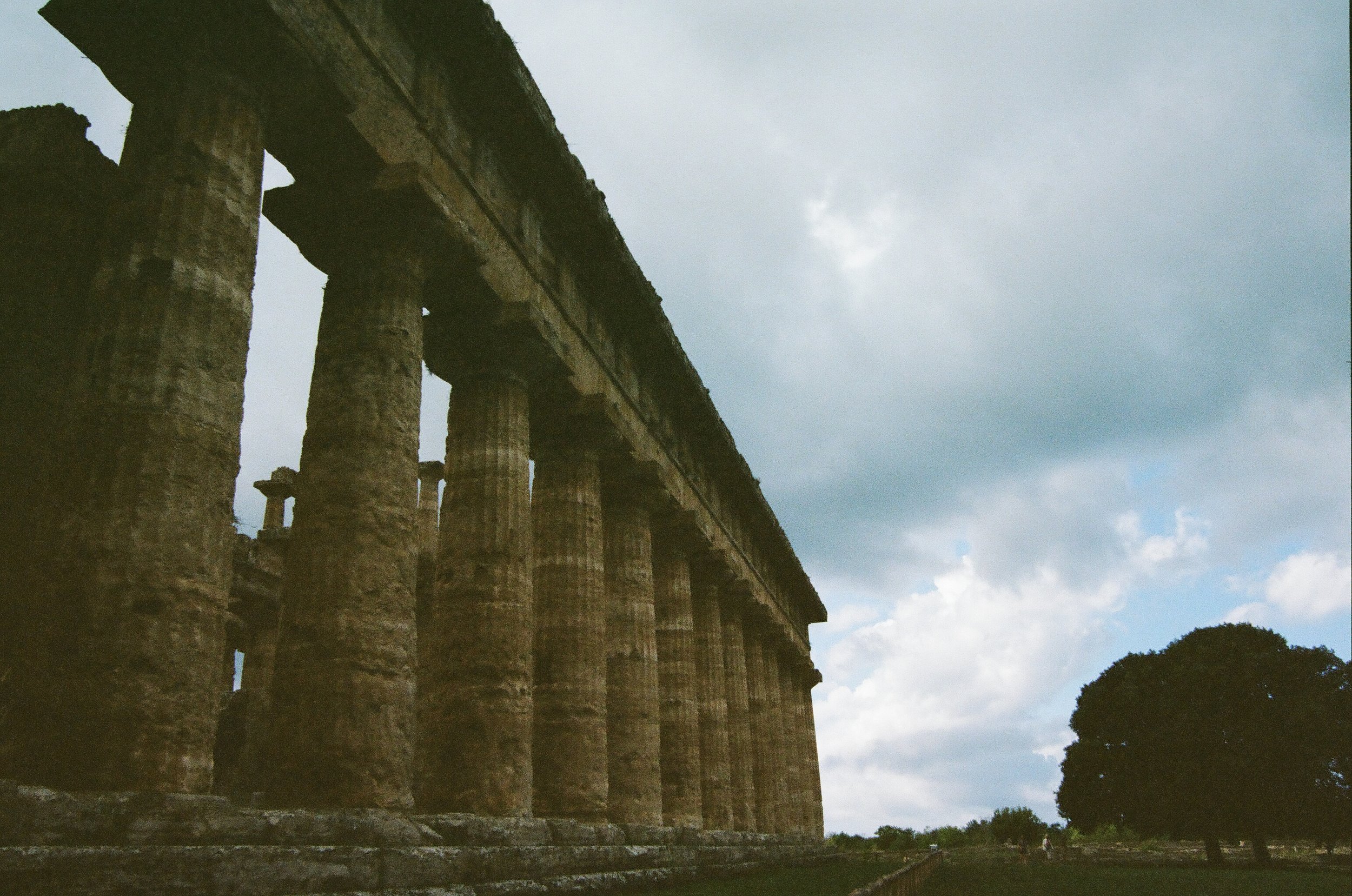
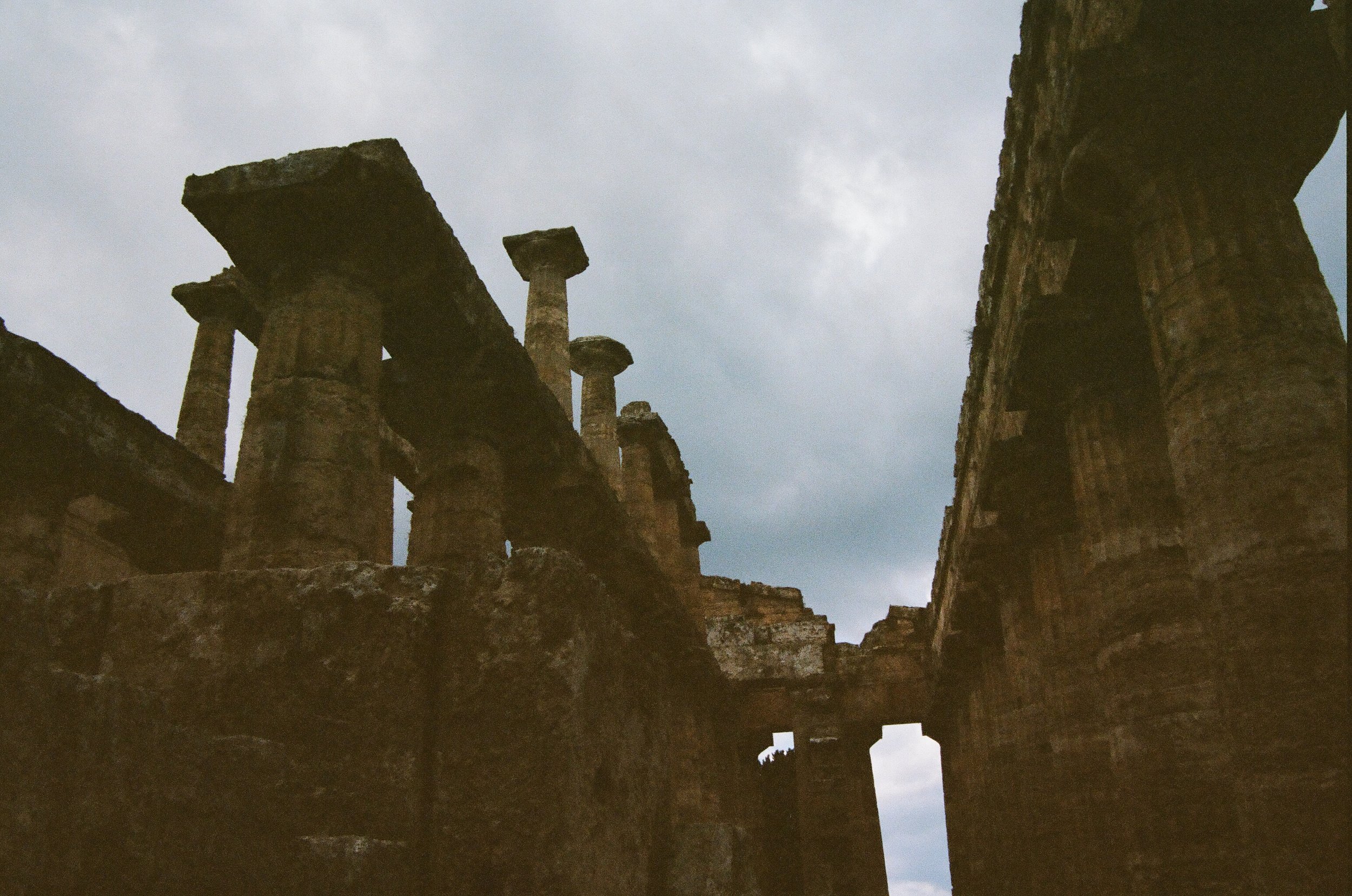
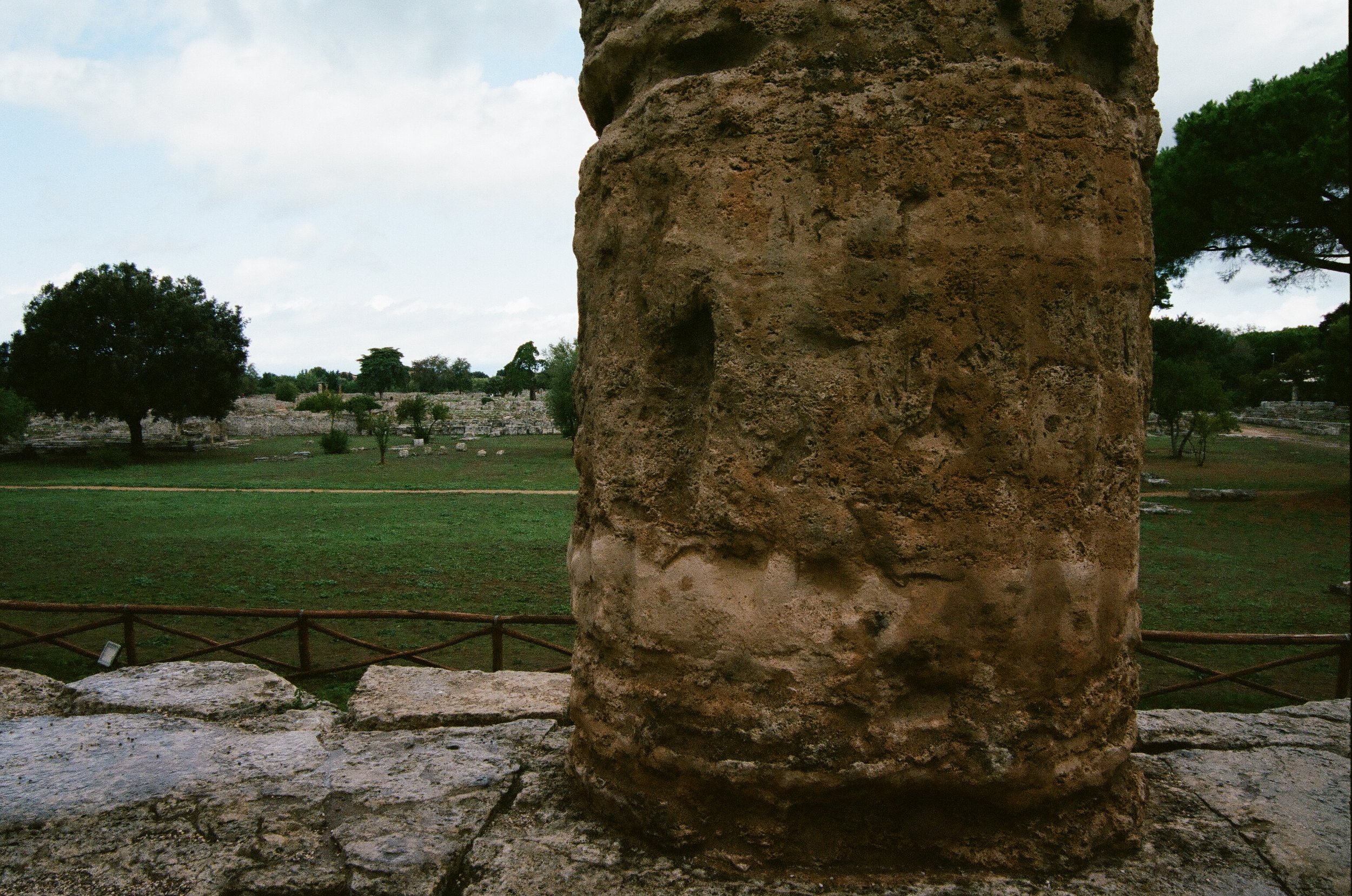
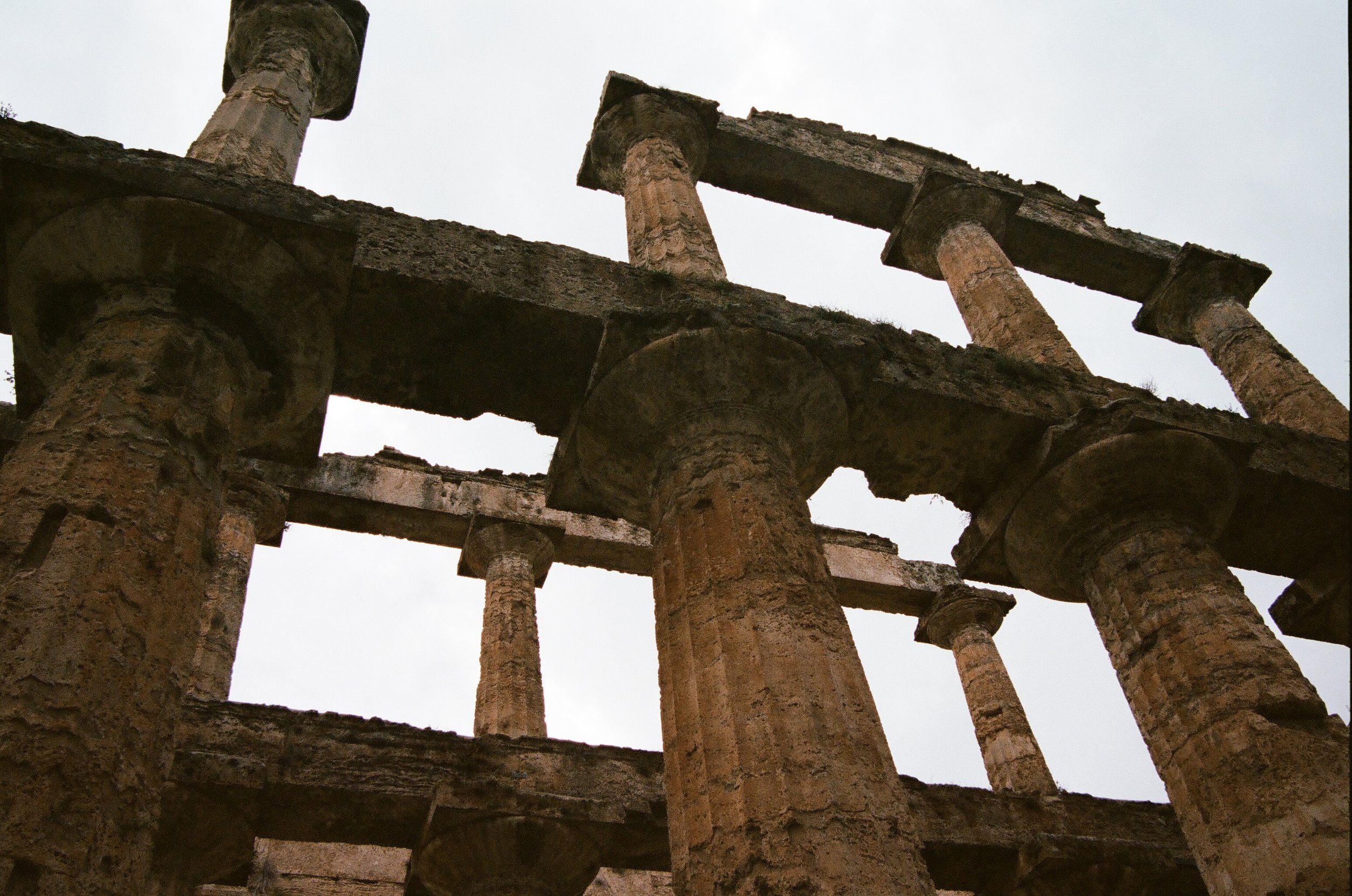
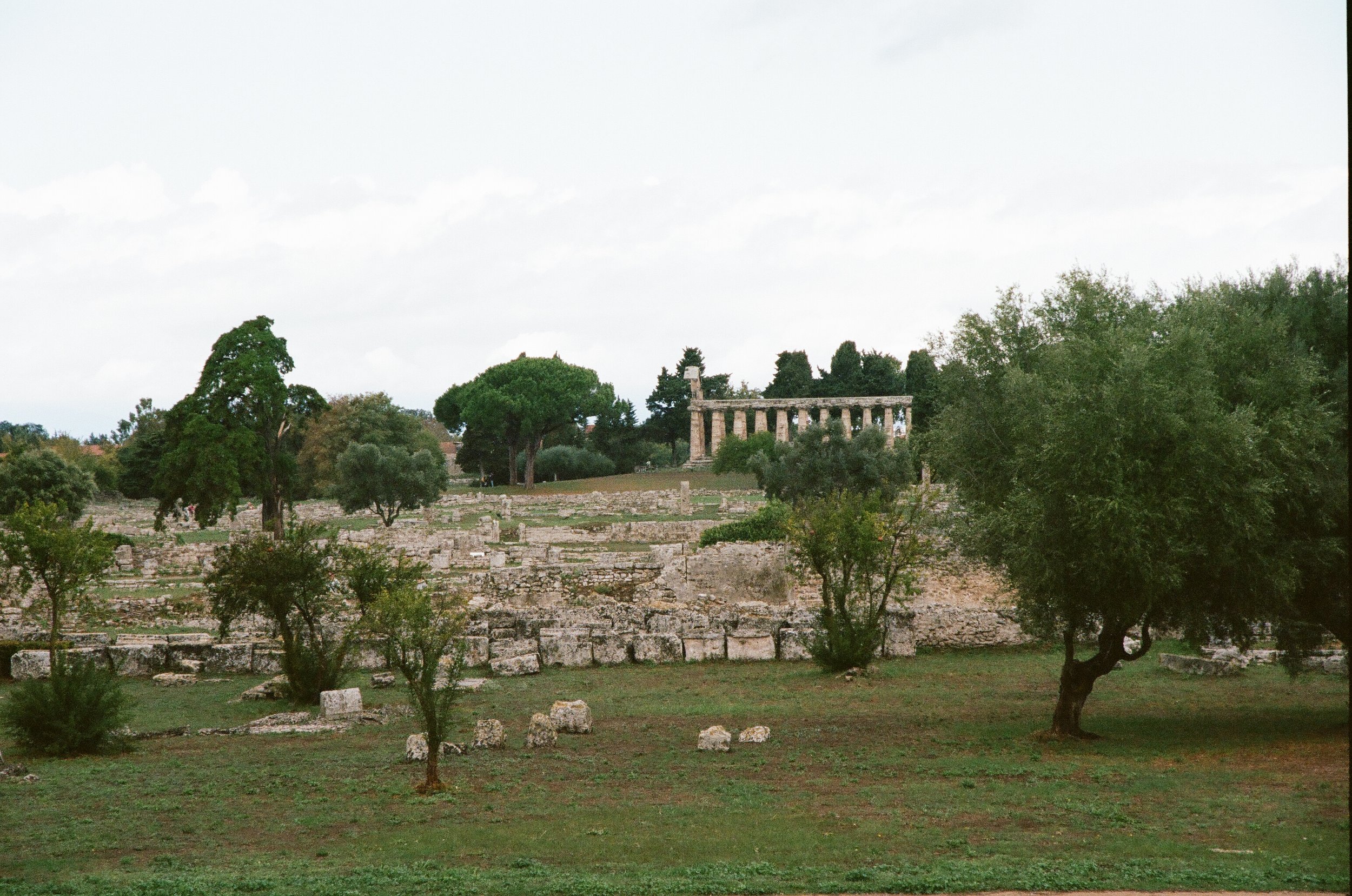
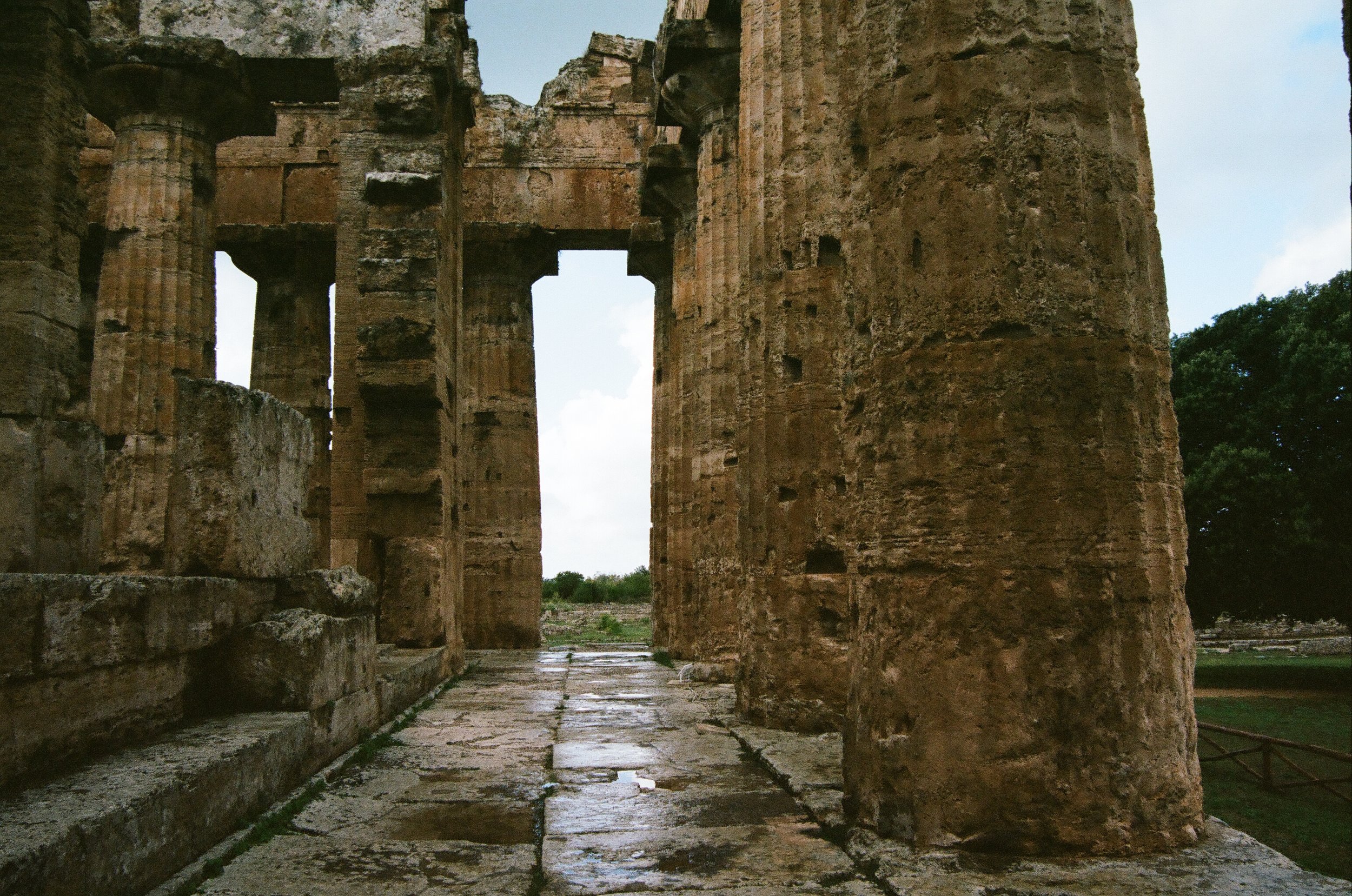
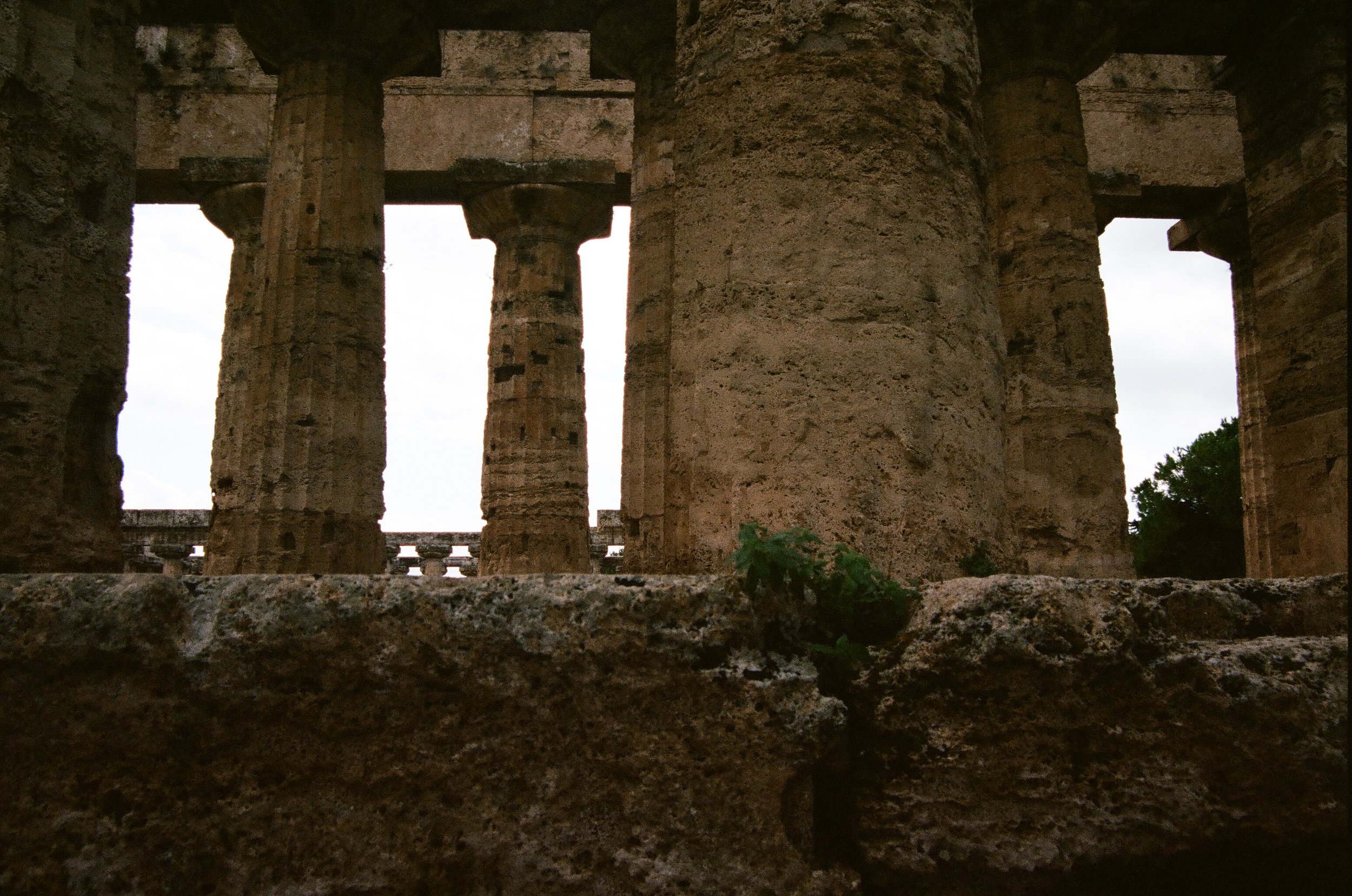
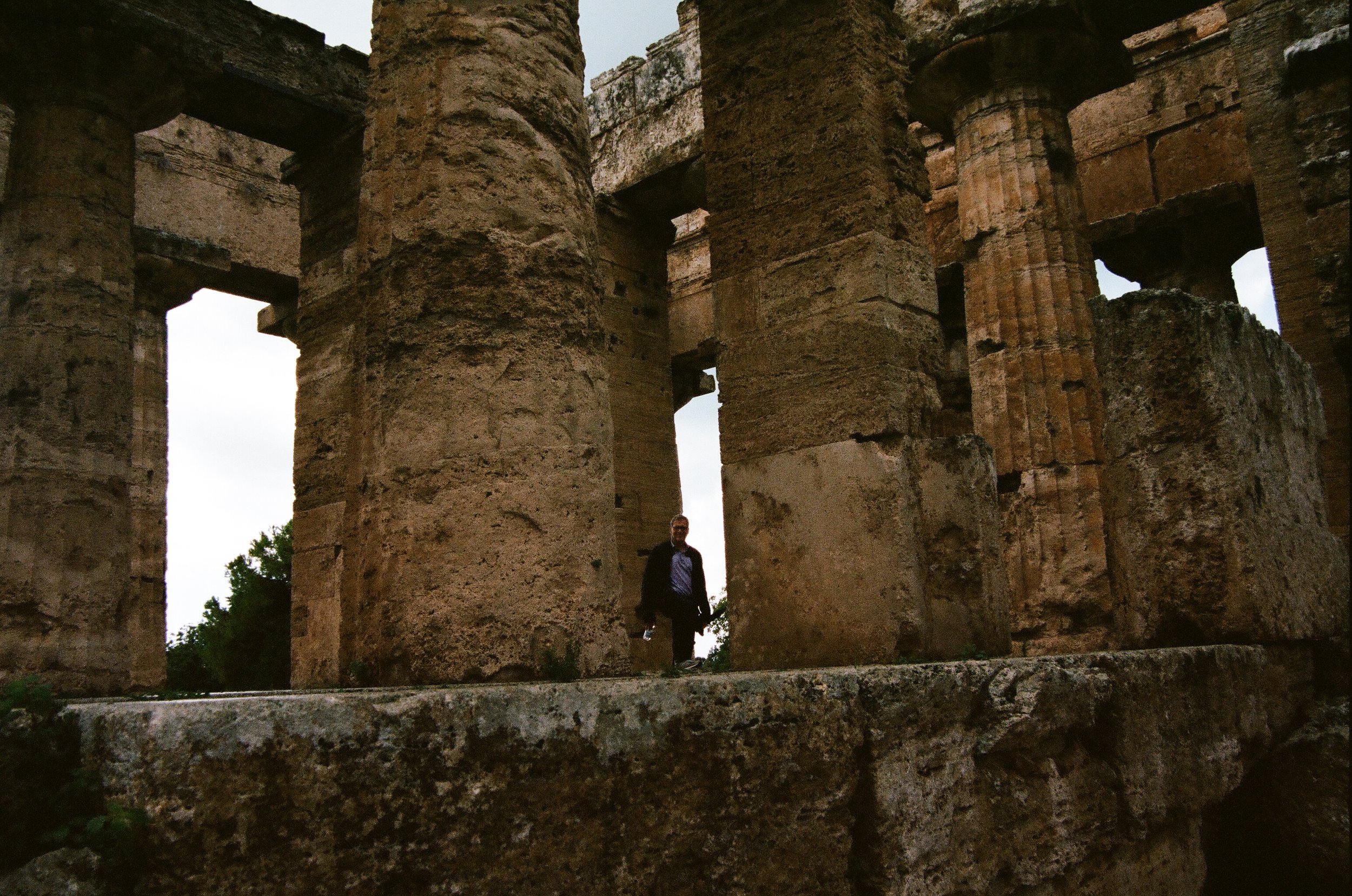
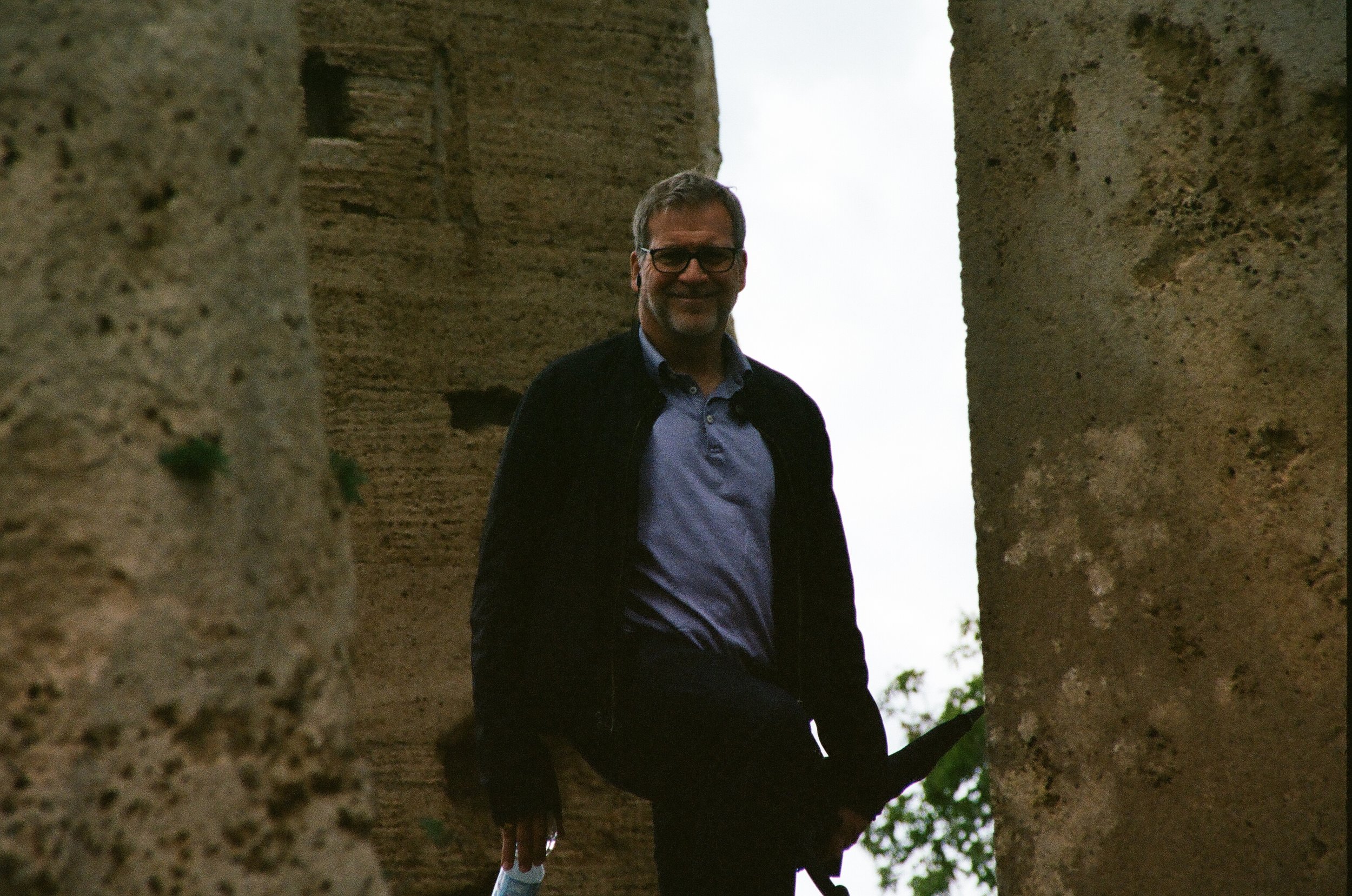
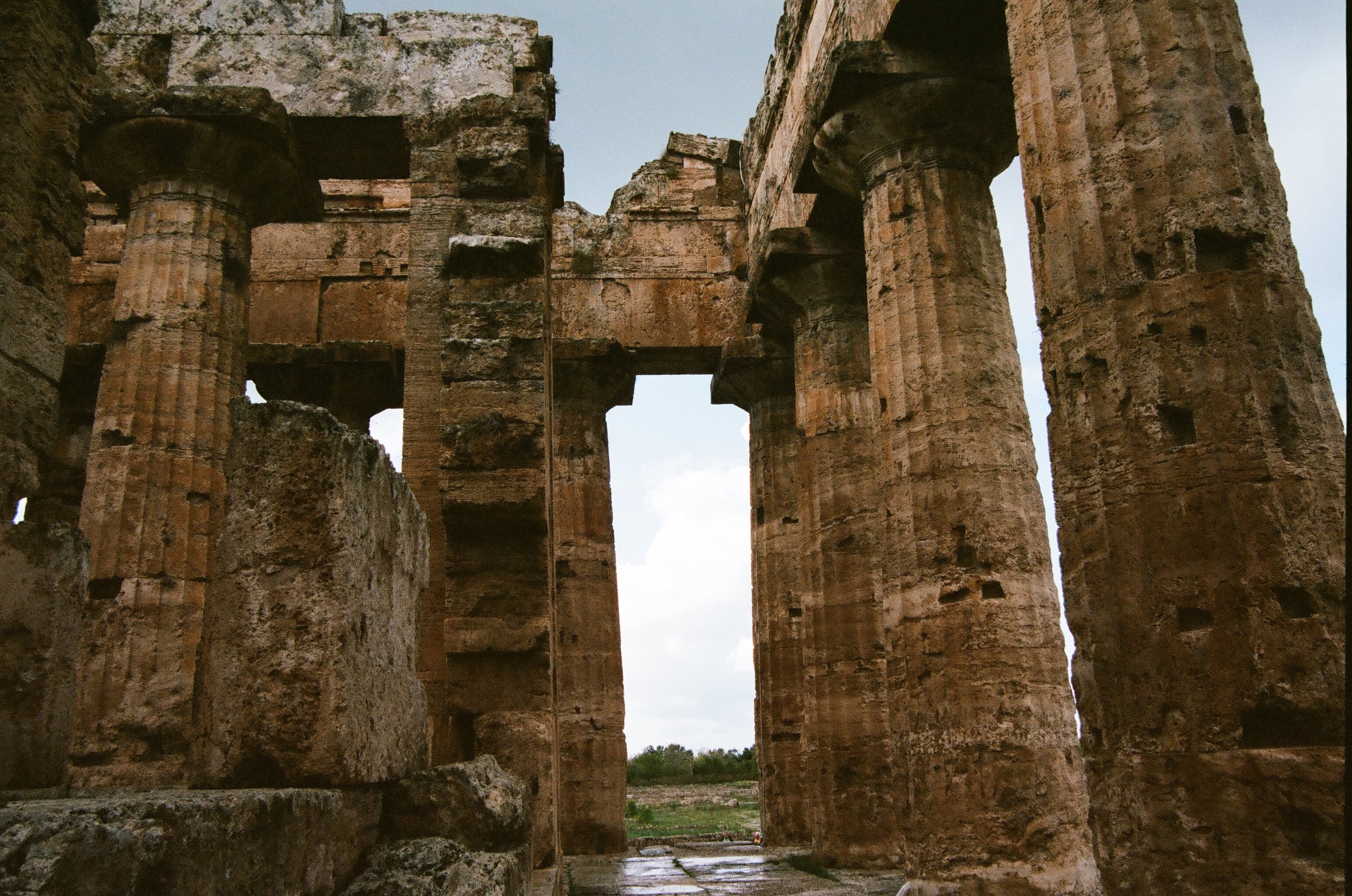
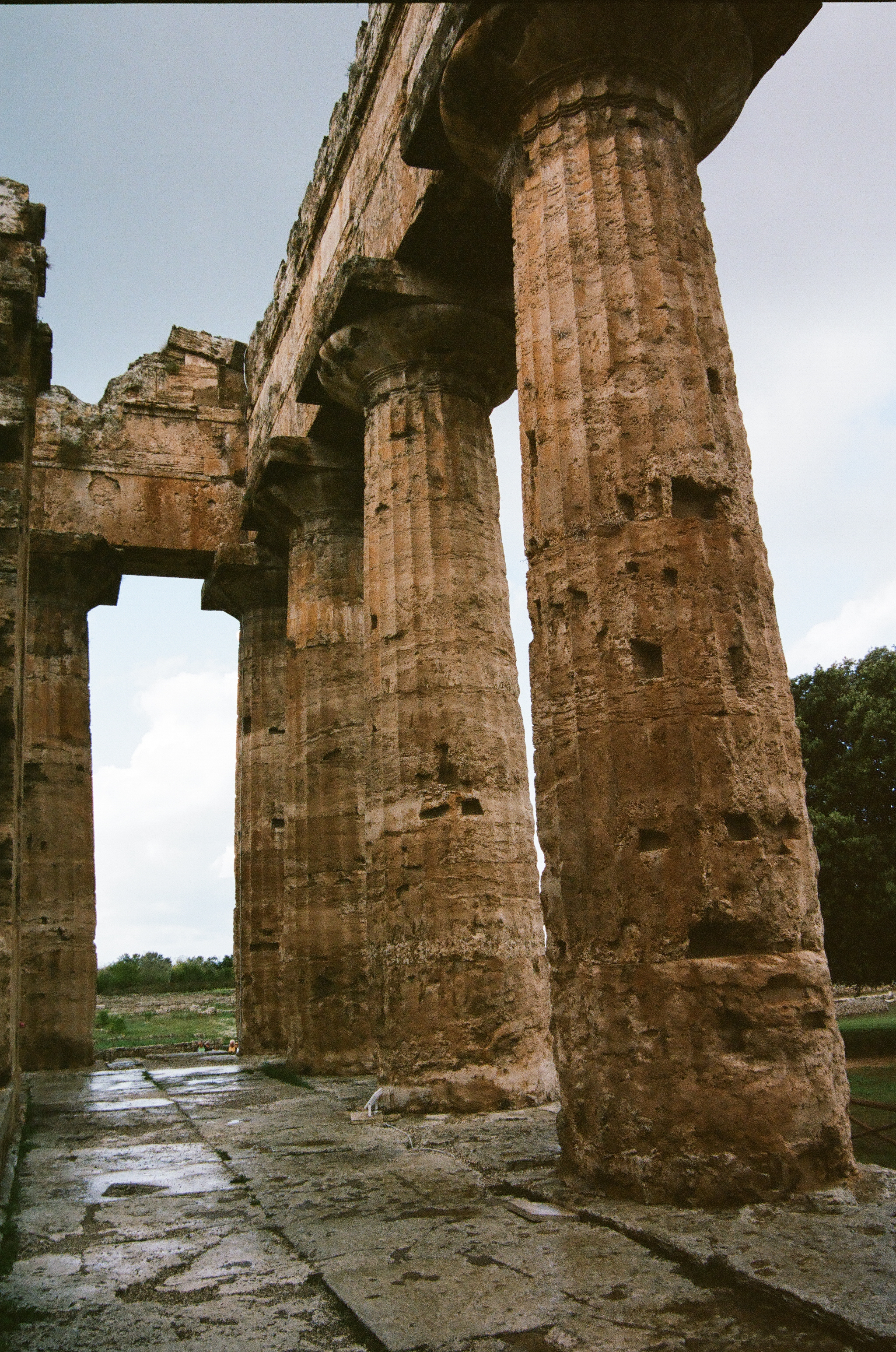
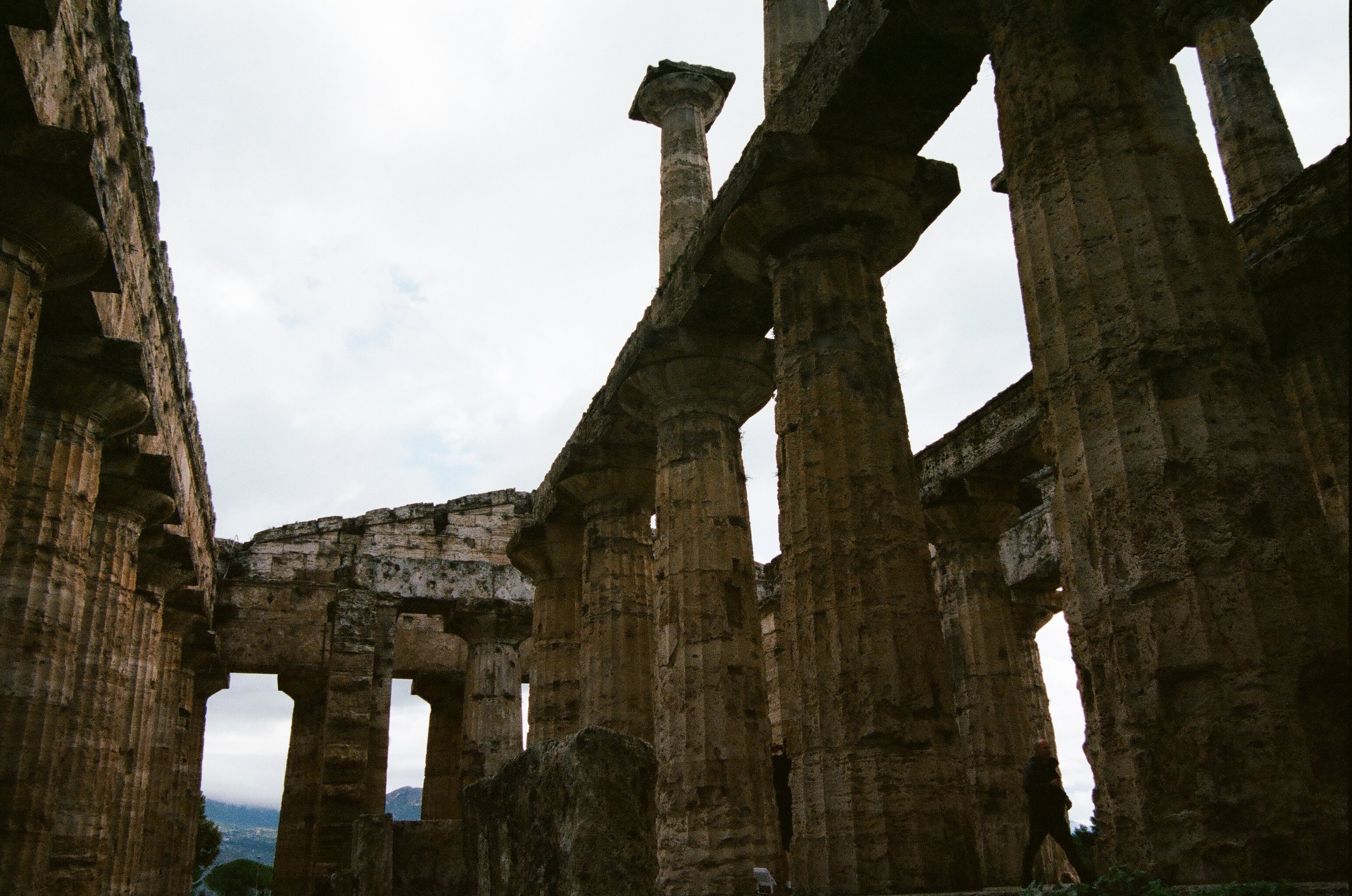
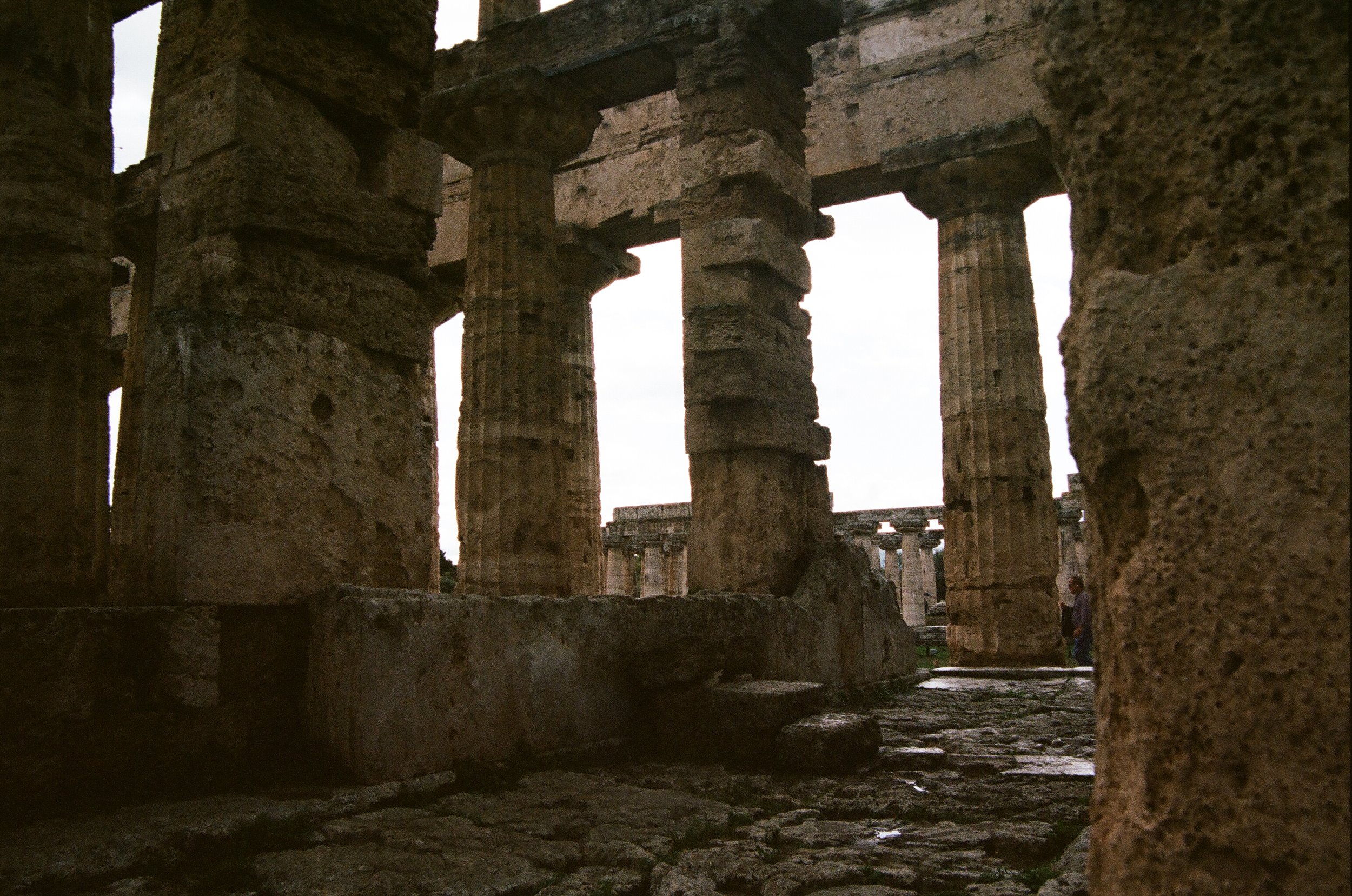
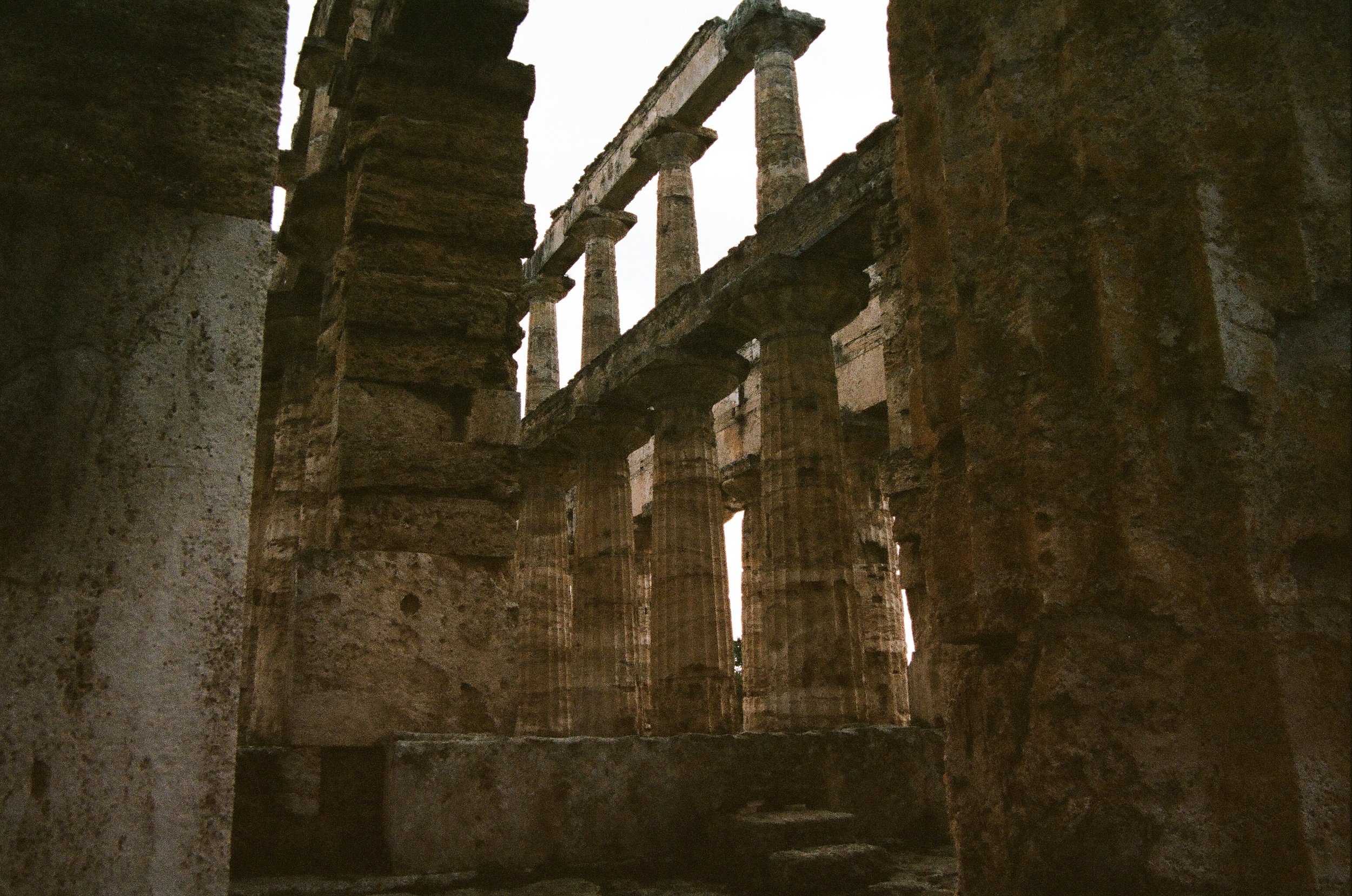
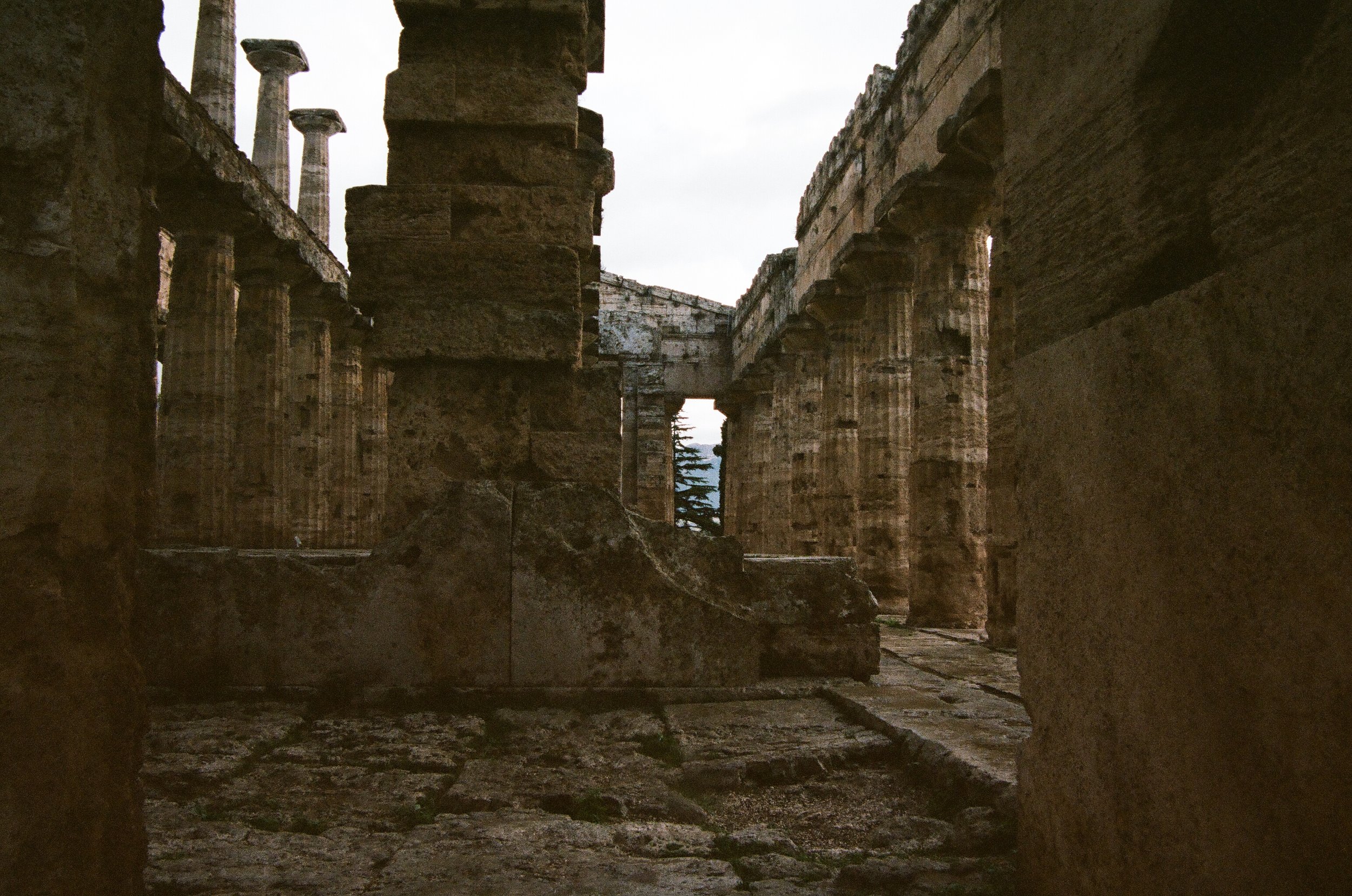
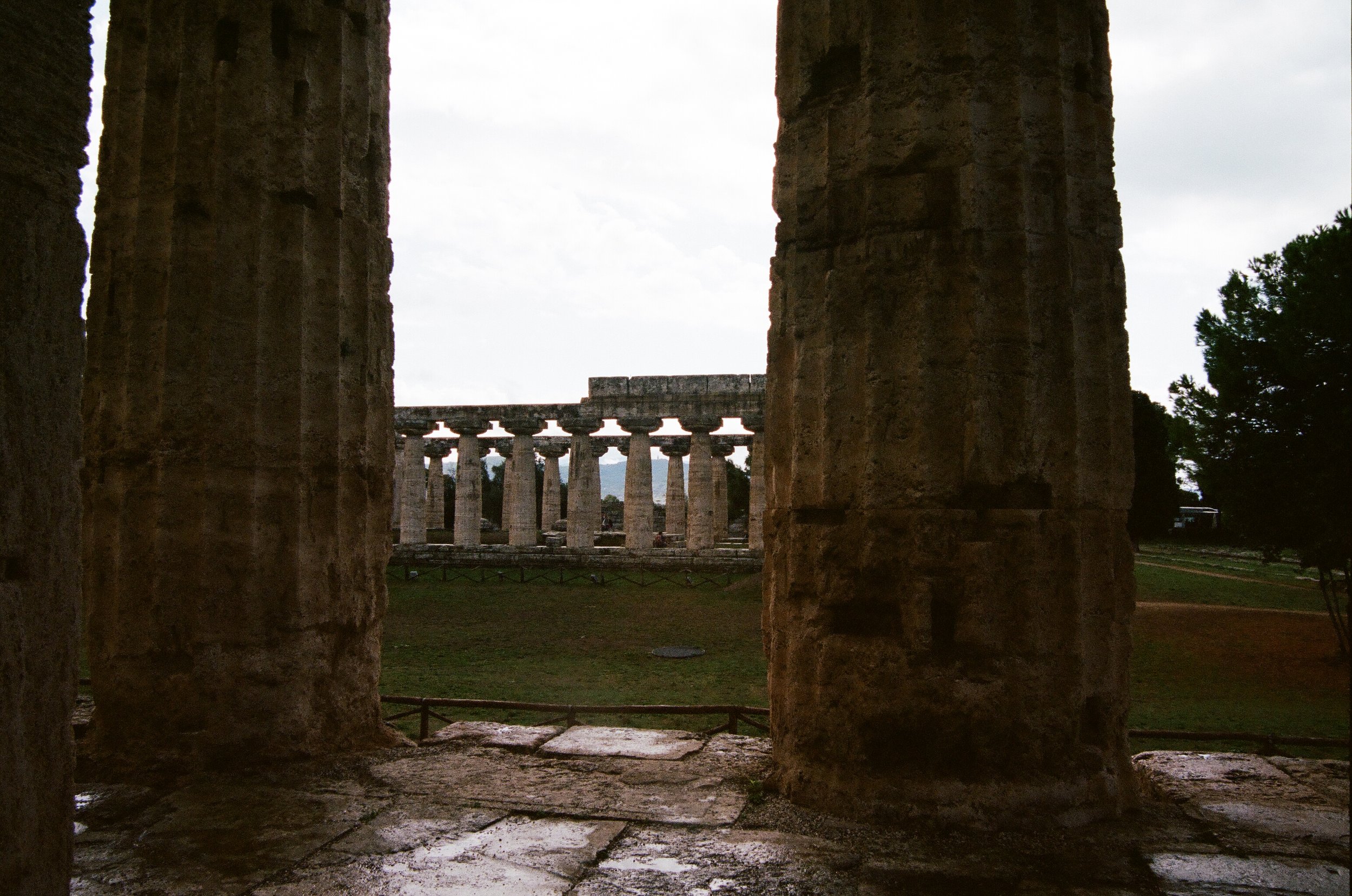
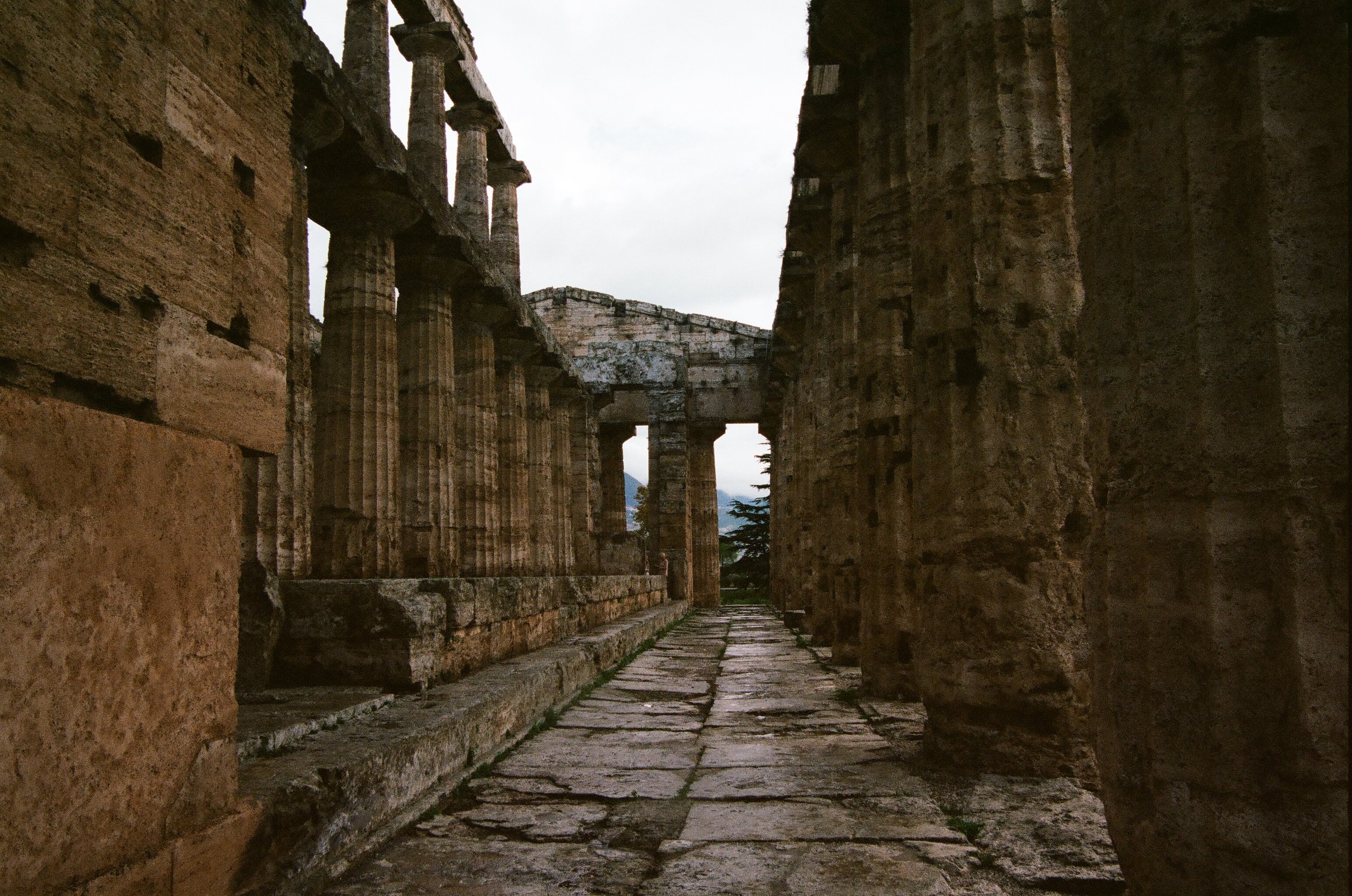
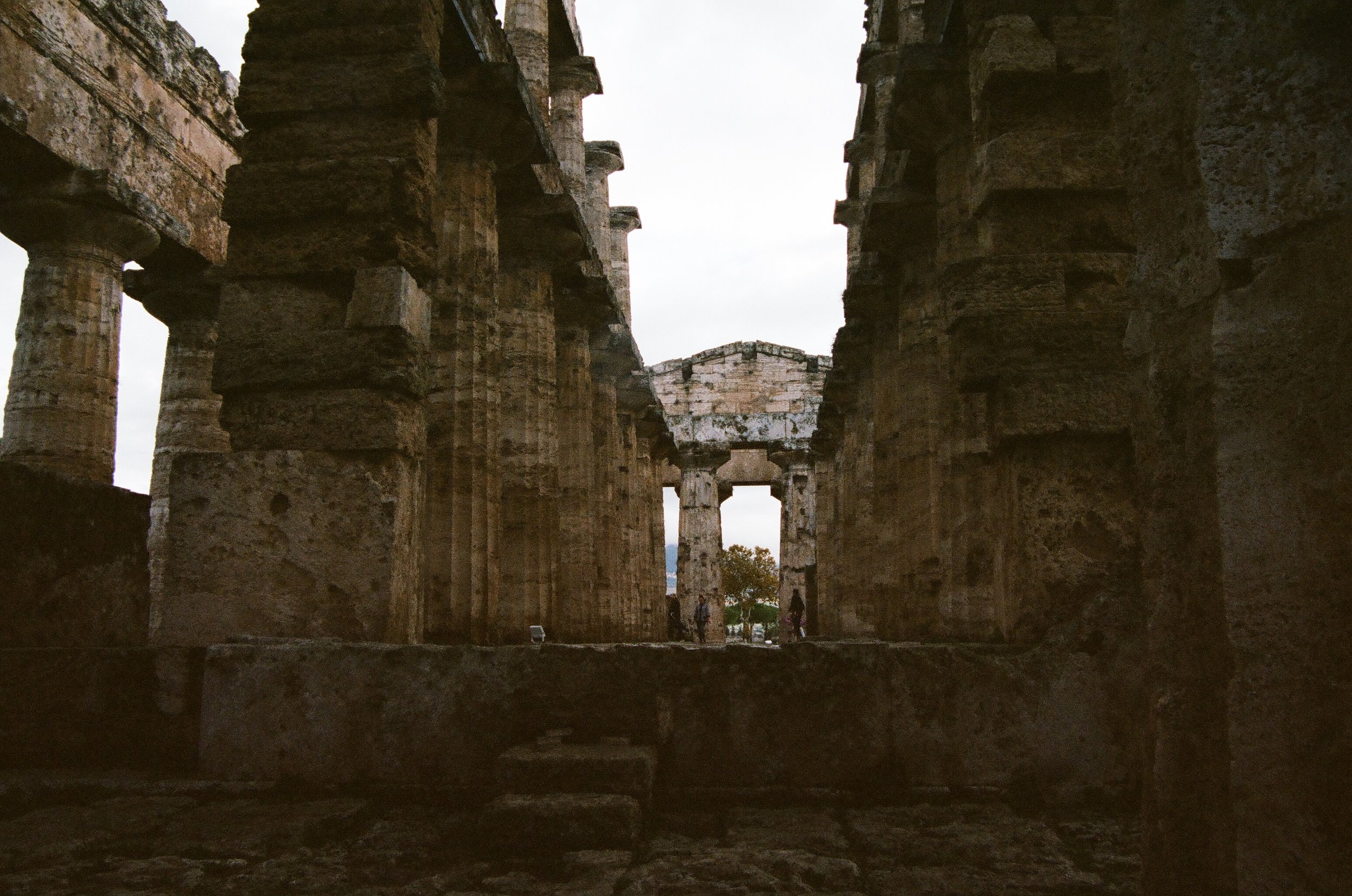
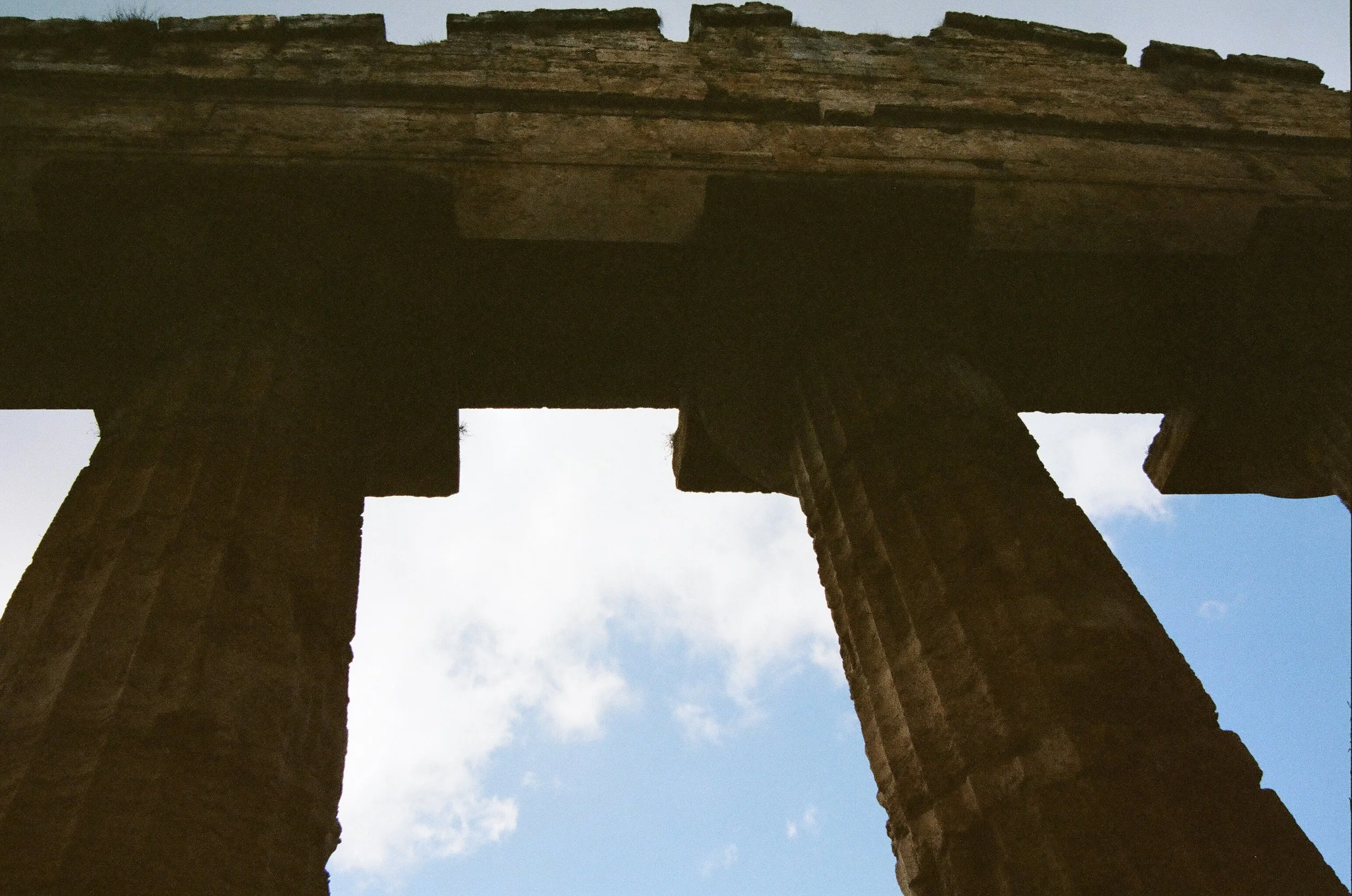
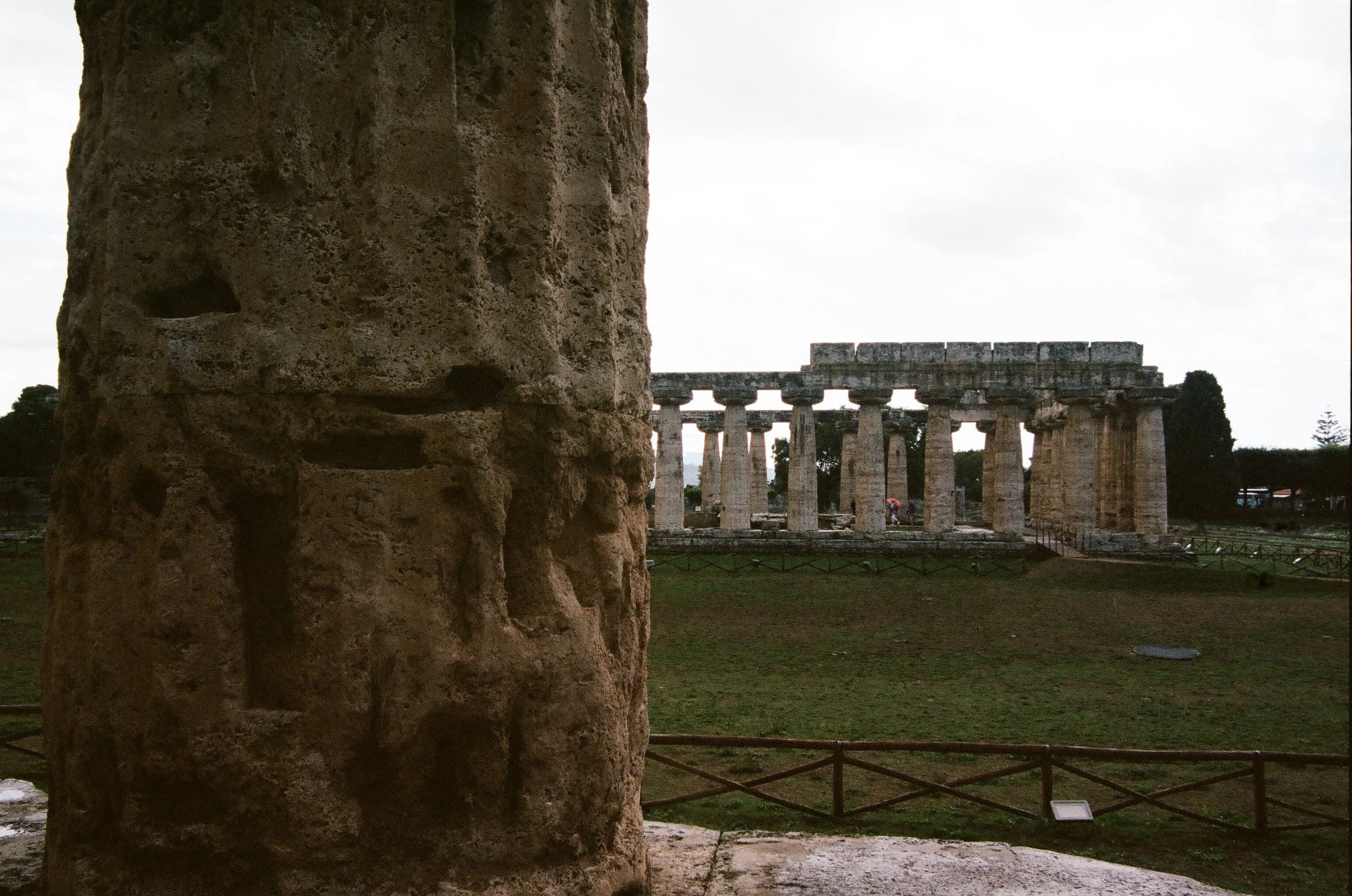
Below is the Aerial view of Paestum, looking northwest; two Hera Temples in foreground, Athena Temple in background, and a Classical Antiquity museum on right. The first Temple of Hera, built around 550 BC by the Greek colonists, is the oldest surviving temple in Paestum. The second Temple of Hera was built around 460–450 BC, is found just north of the first Hera Temple. At a short distance and height from the the Hera Temples, and north of the center, is the Temple of Athena, built around 500 BC. In the center of the complex is a Roman Forum, perhaps built on the site of a preceding Greek agora. North of the forum is a small Roman temple, dated to 200 BC, and dedicated to the Capitoline Triad, Juno, Jupiter, and Minerva.
To the far north-east of the forum one sees an amphitheater, recently many parts of Paestum have been reopened so vistors can wander through these structures and lands, even walking withing the open aired temples. It’s a wonderful experience. Source: Wikipedia & me.
VISIT THE PAESTUM MUSEUM SITE FOR ALL THE ARCHEOLOGICAL INFORMATION AND IMAGES. http://www.paestum.org.uk/museum/
Additional Cultural and Architectural and Art History and Archeological sources:

CLICK HERE: https://www.romeartlover.it/Paestum5.html
(The Museum of Paestum with images of the artifacts and art.)
CLICK HERE: https://www.romeartlover.it/Paestum.html
(Paestum - The Temples)
CLICK HERE: https://www.romeartlover.it/Paestum2.html
(The Walls of Paestum)

The Splendor of Napoli and the Isles of the Emperors
the splendor of napoli and the isles of the emperors
The bright and brash colors of the Spacconapoli neighborhood in Napoli, Italia (Naples, Italy) captured on velvia film slides, shot on one of my canon analog cameras.
The sharp contrast of the elegance of Bourbon architecture and Neapolitan artistry against the slow modern decay of the last 80 years in grafitti and weathered edges of life highlights a city steeped in dichotomies.
The Neapolitan soul remains seemingly intact however, divided between the threads of passionate art, beauty, the wild nature of the sea and Baroque gardens, and the soaring rocks and islands so utterly exquisite they are paradisos on earth… and in the looming apartments and close quarters of alleys making the piazzas the true heart of the local’s living room.
Travel on sea and breathe deeply in the clean bracing air as you wander miles of meadows and picaresque villages along the hiking trails of the Amalfi Coast, and the bejeweled isles of Capri, Ischia, and Procida. They are nature and ruin found in perfect harmony, timeless slices of heaven to be experienced best when in love with life.
And back in Naples, even among the crush of pollution and population, with the stain of the Camorra, even in the heart of this ancient superstitious city with countless rulers over countless centuries one simply cannot ignore the fascinating elements of history and beauty bound eternally in the treasures of Roman Naples, of Pompeii and Herculaneum, of the ancient Emperor isles, of the Renaissance and Baroque art everywhere, still lingering, surviving, — conserved in the museums and palazzos of the Campania that will forever be worth exploring and studying.
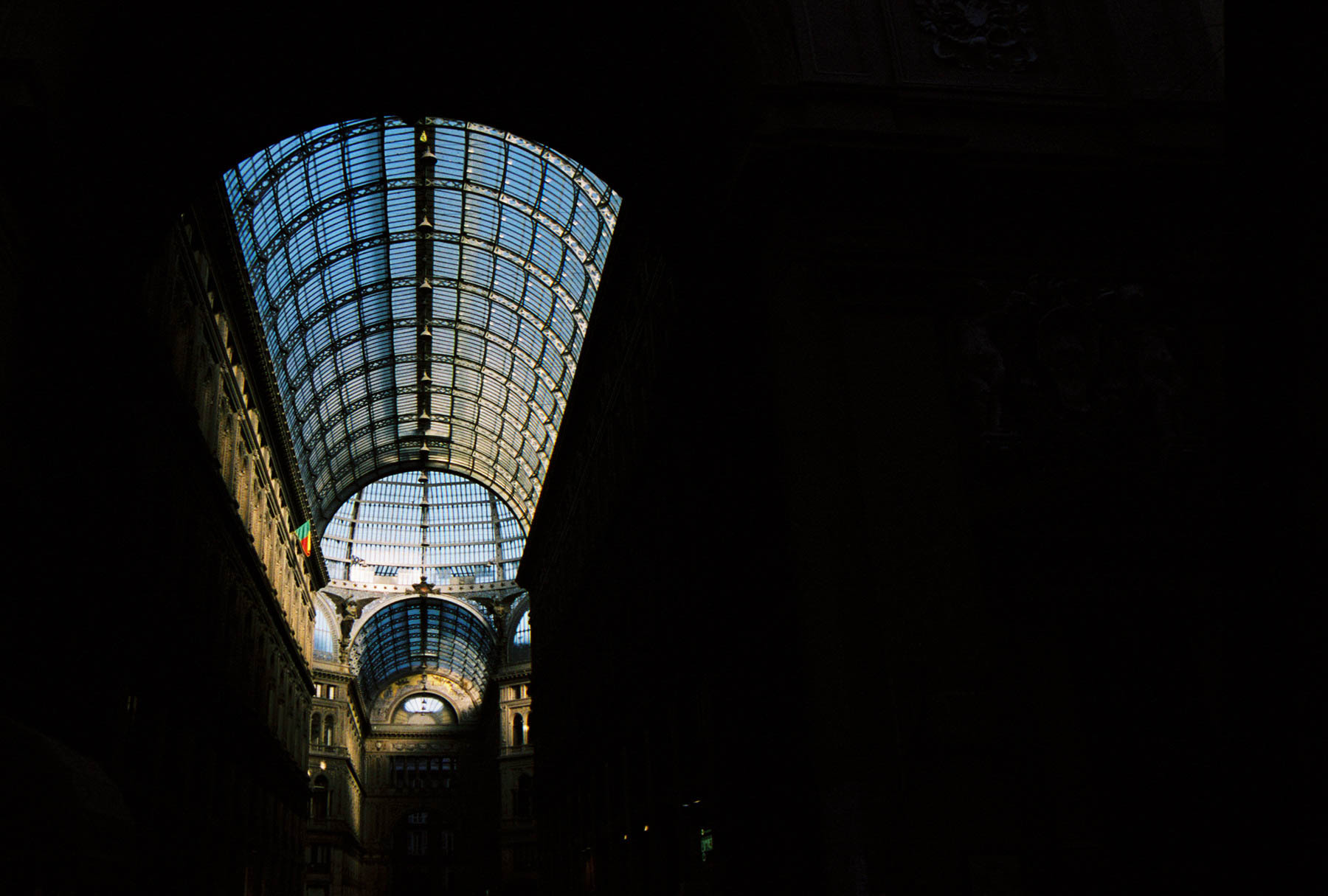
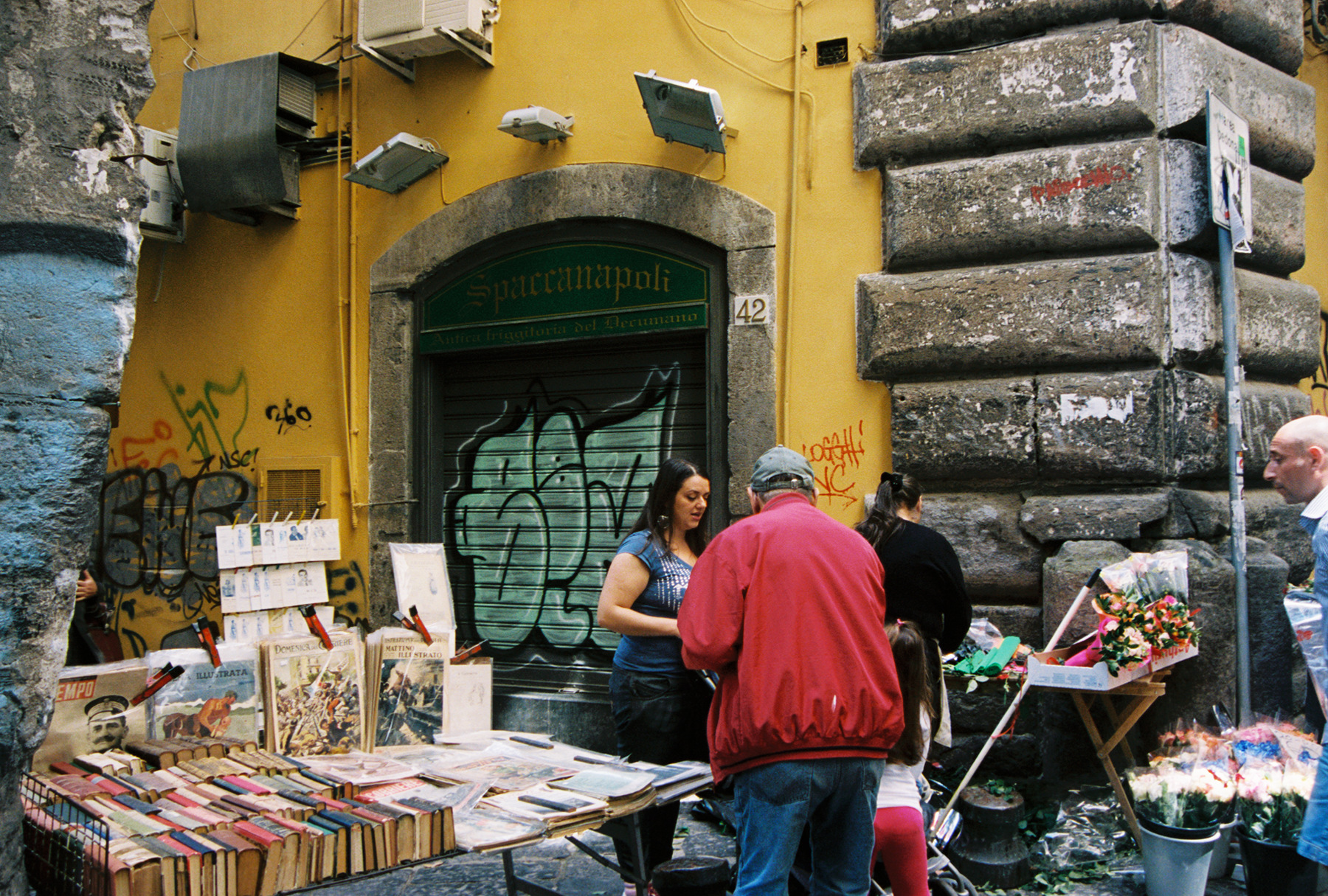
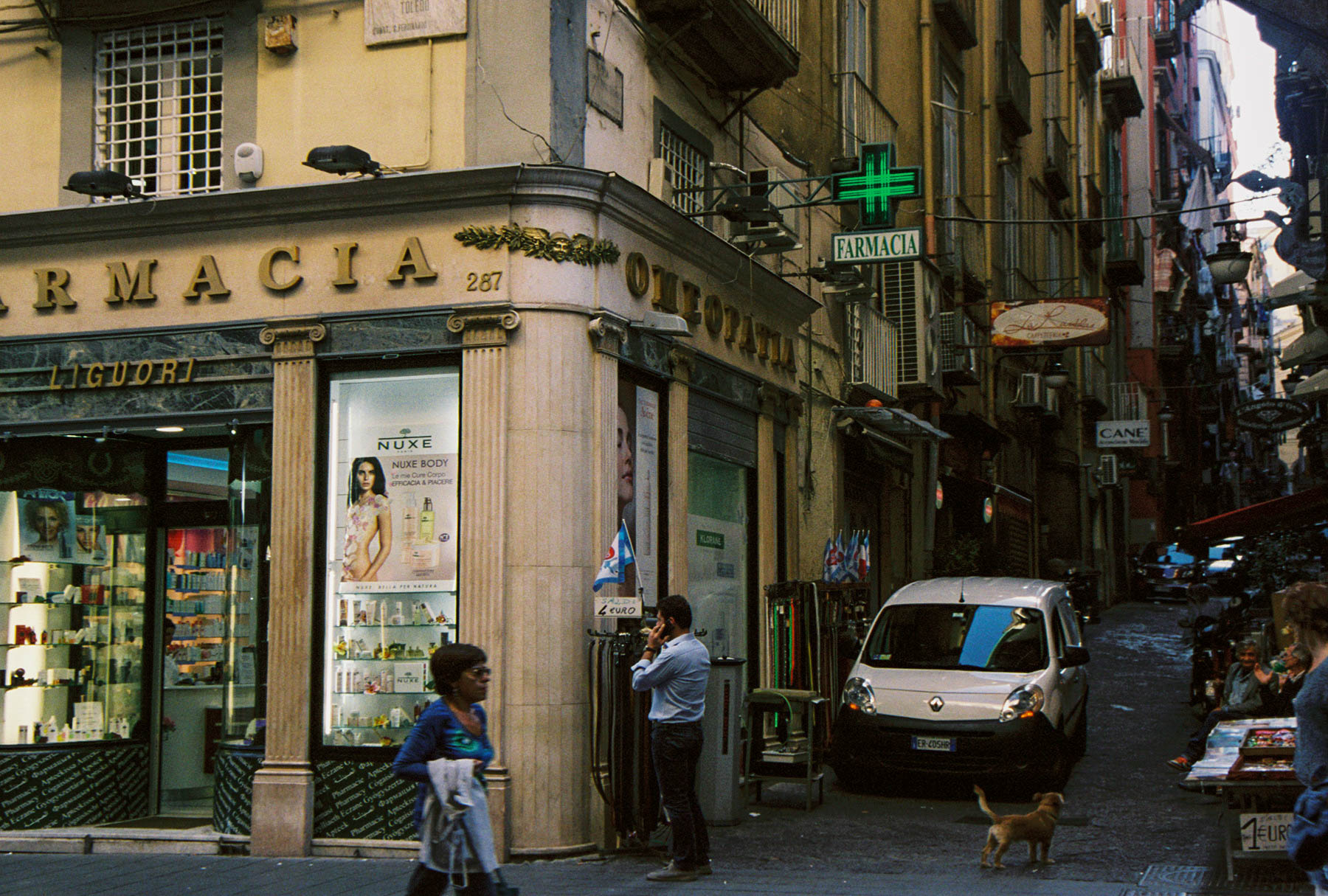
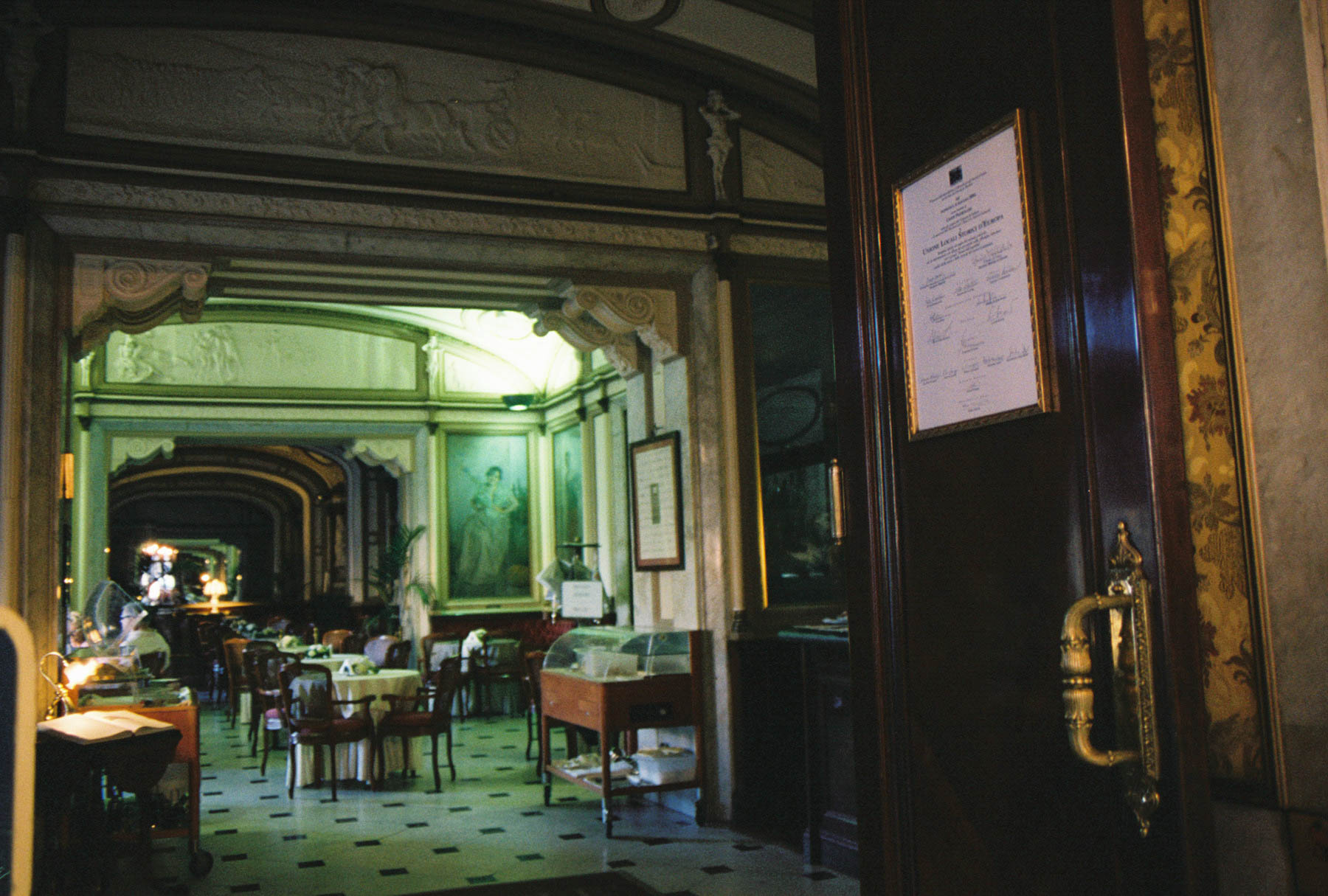
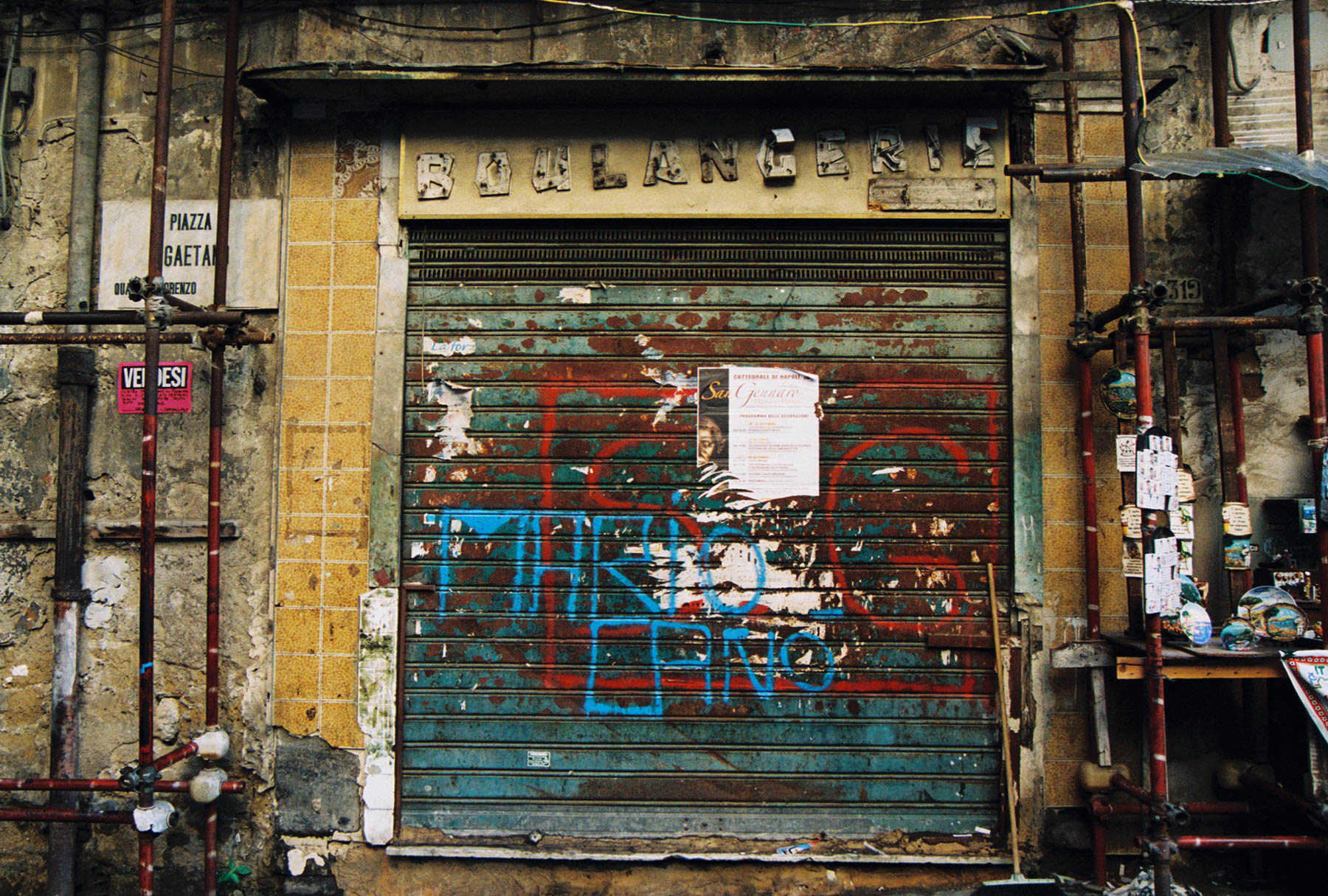
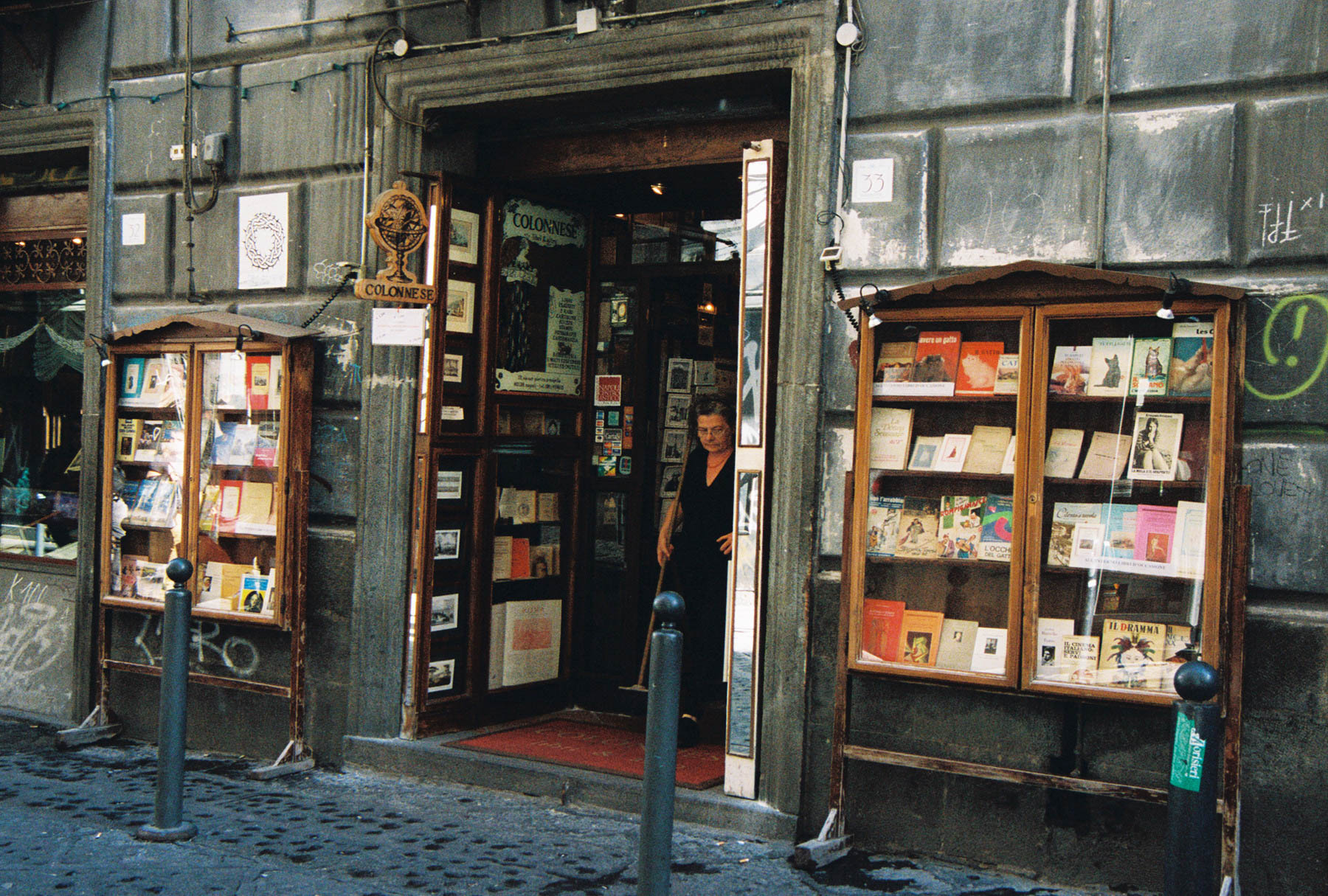
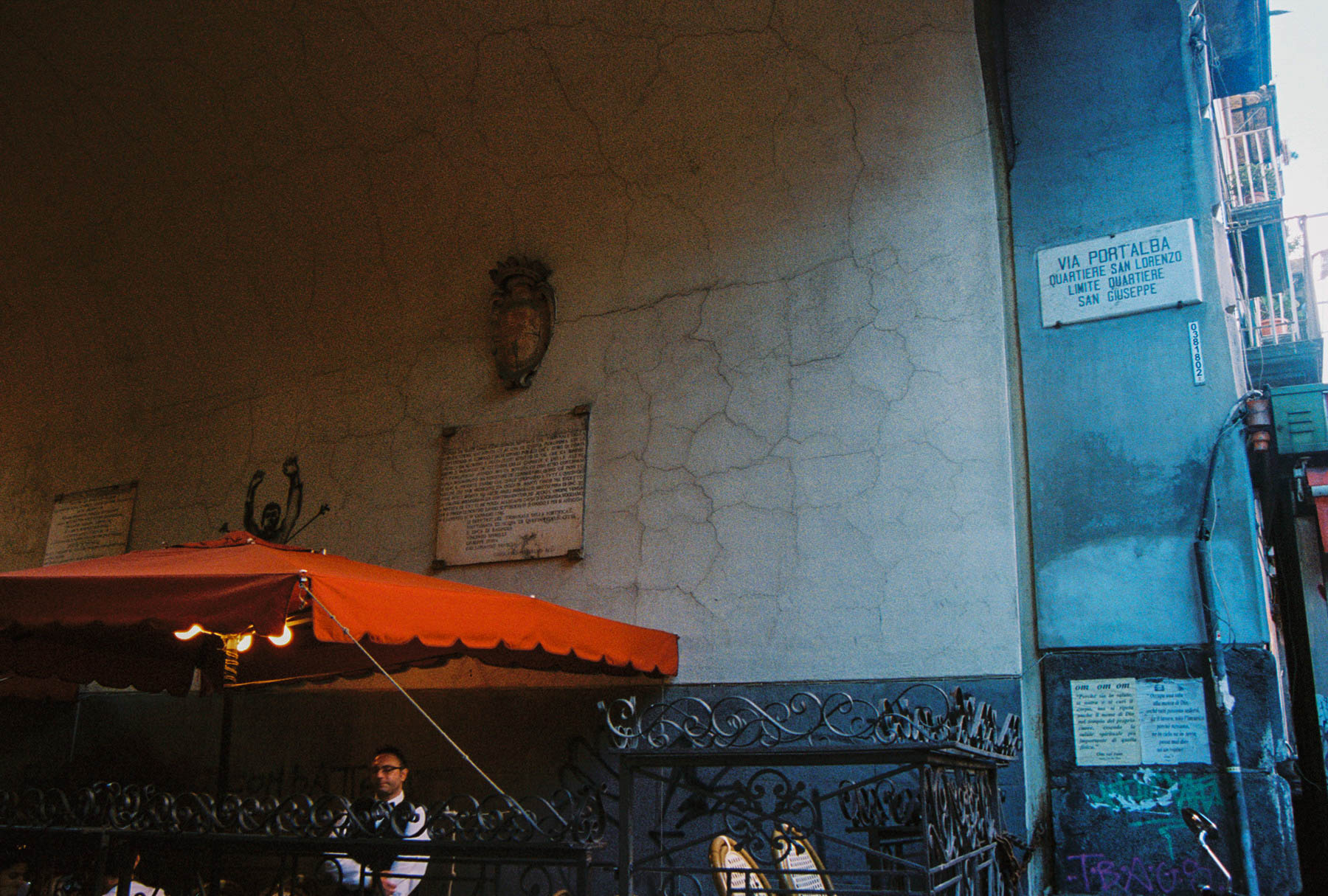
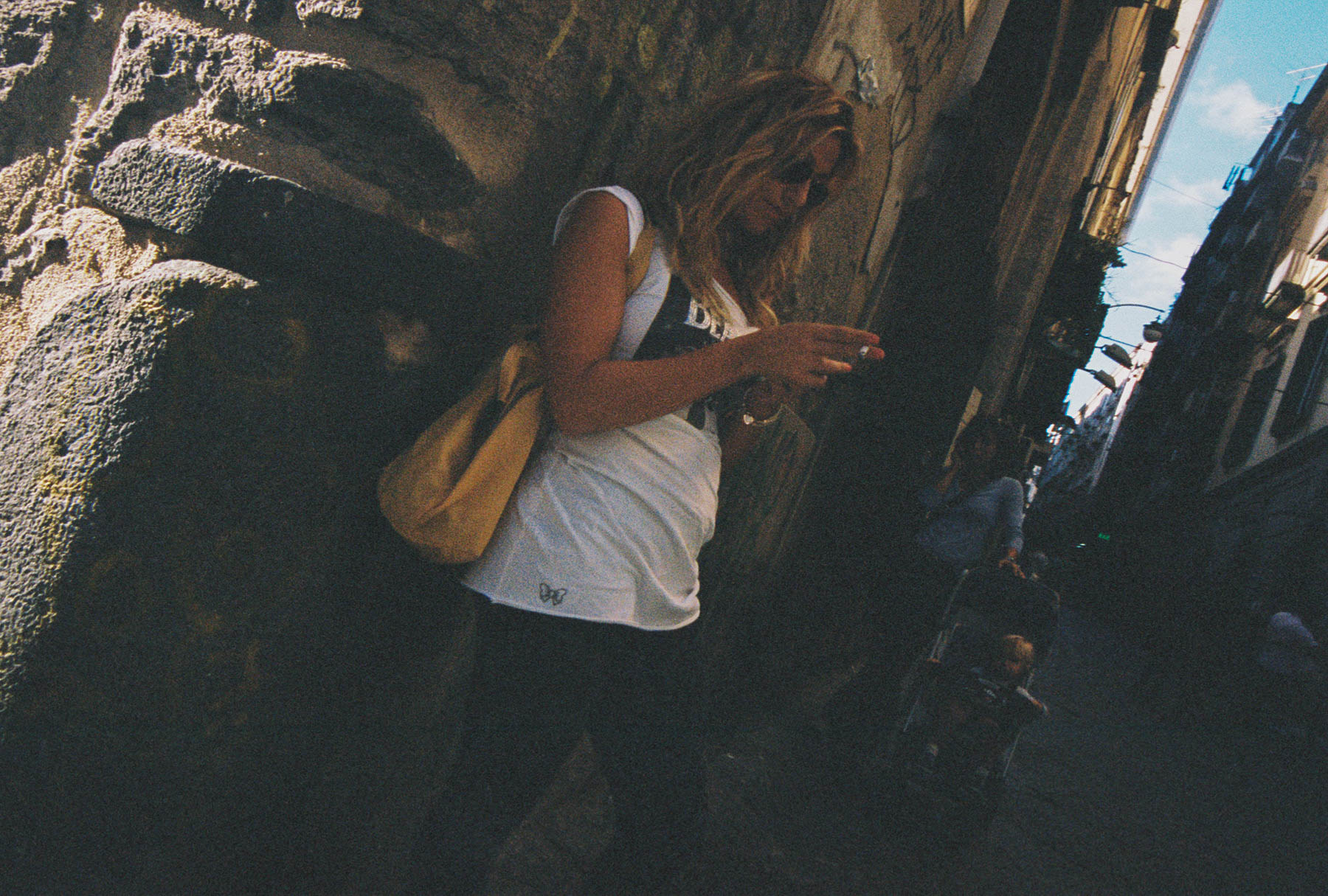
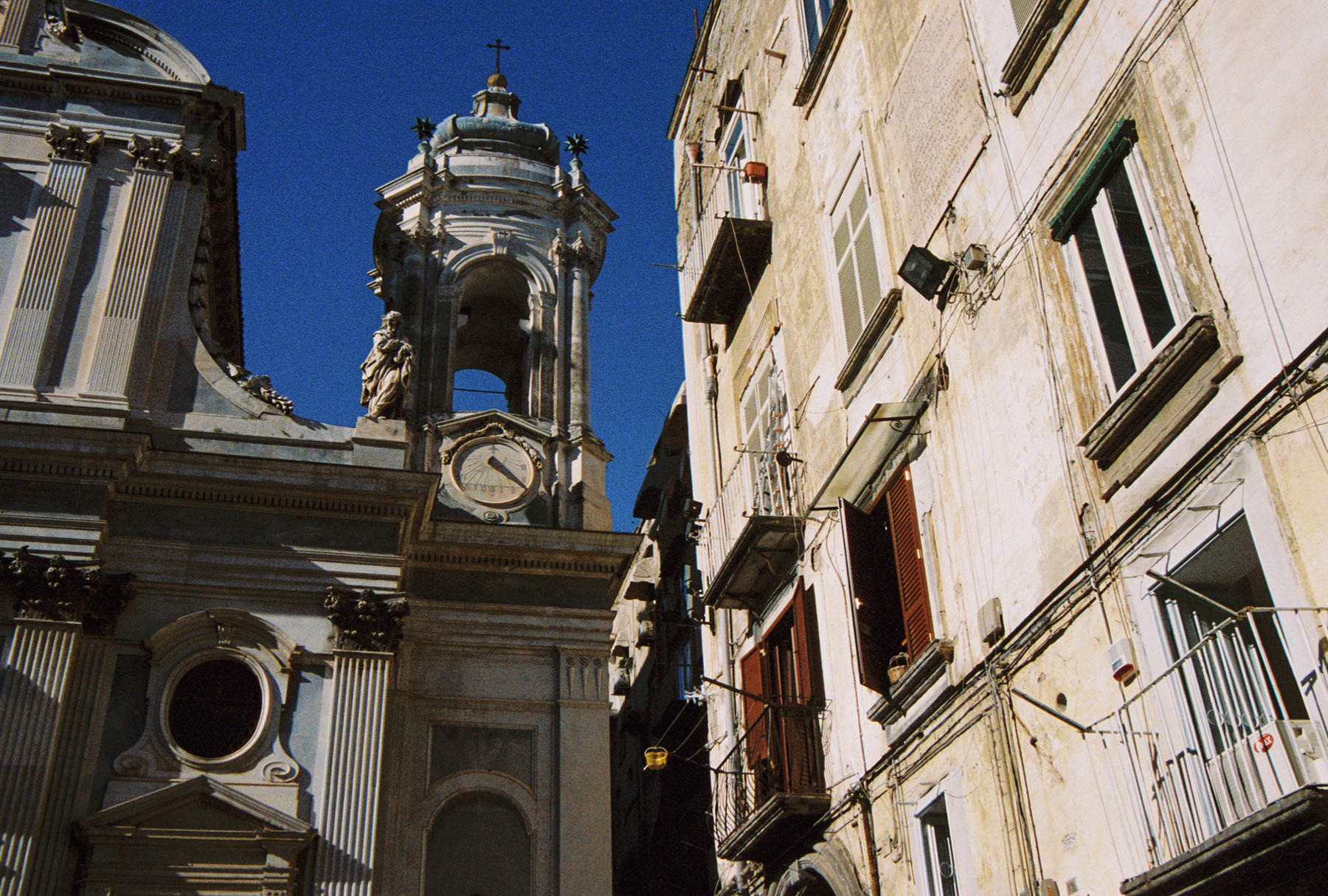
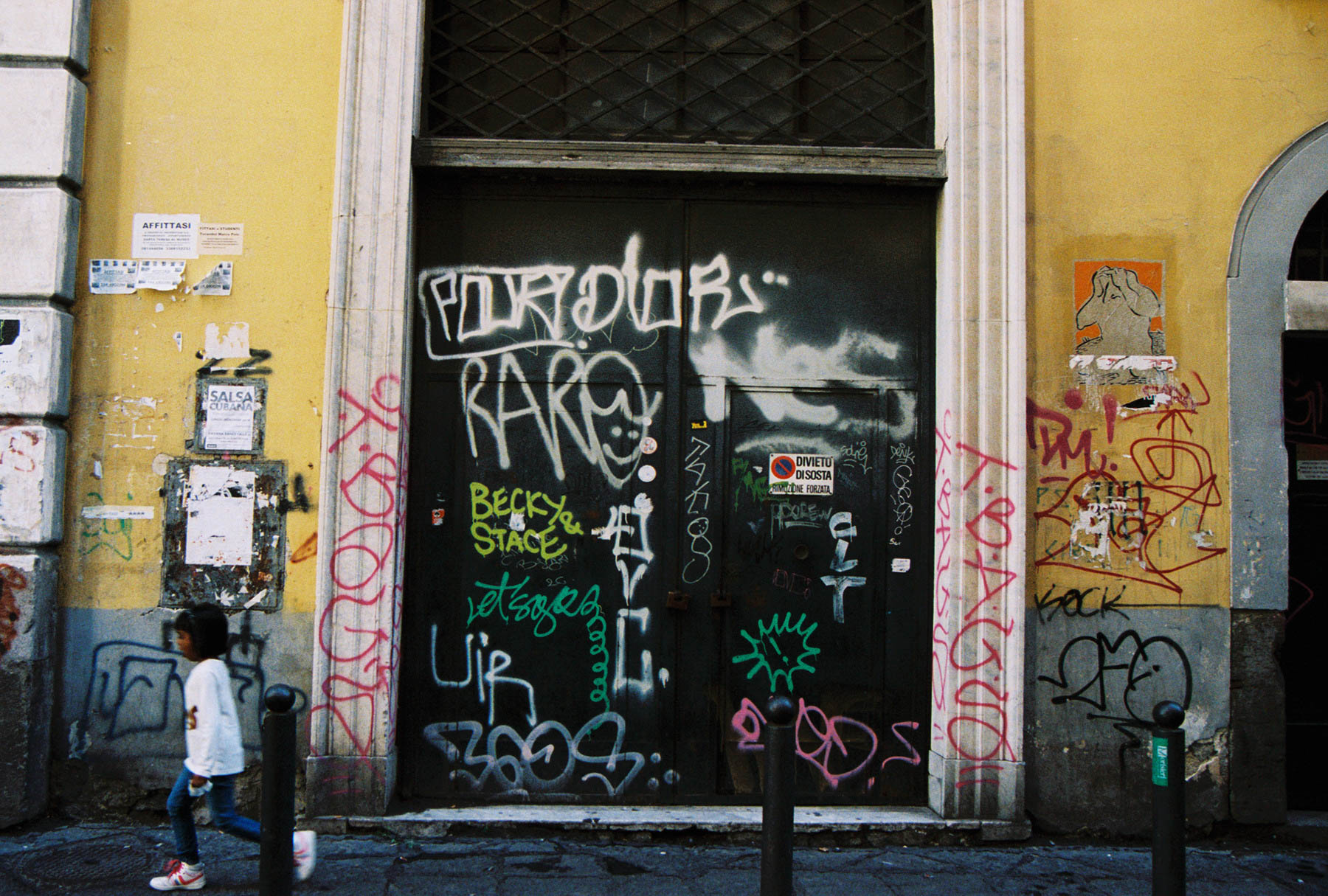
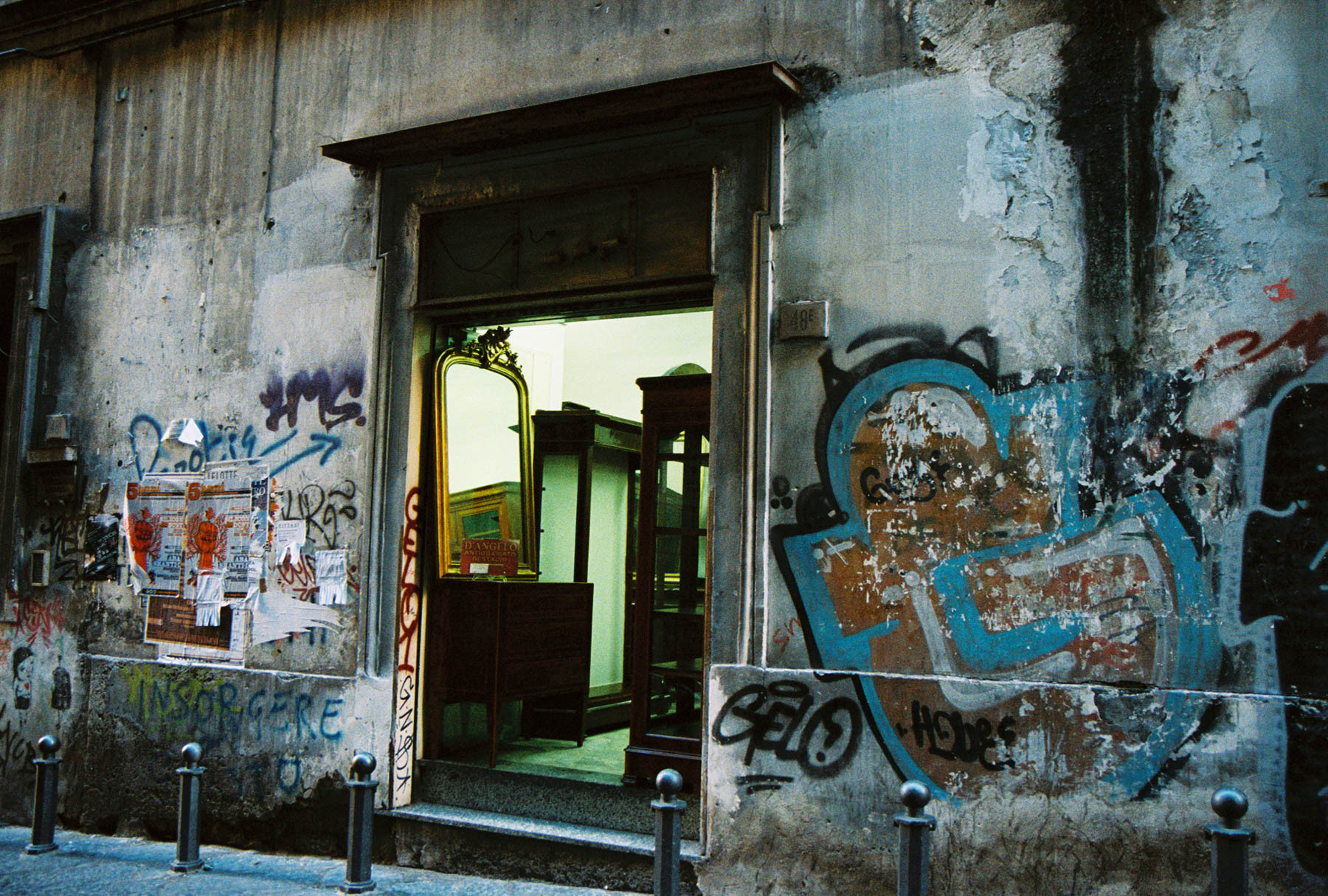
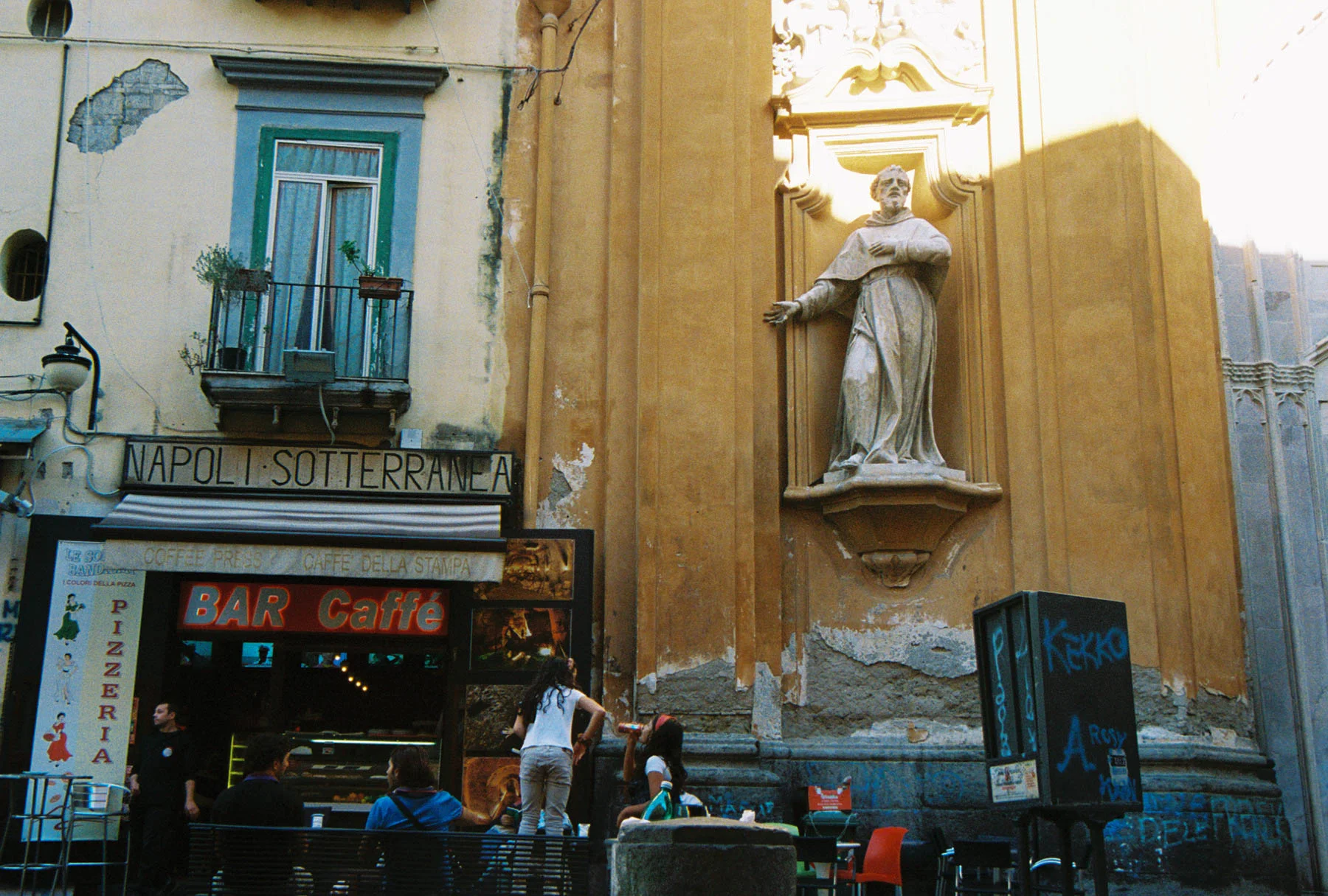
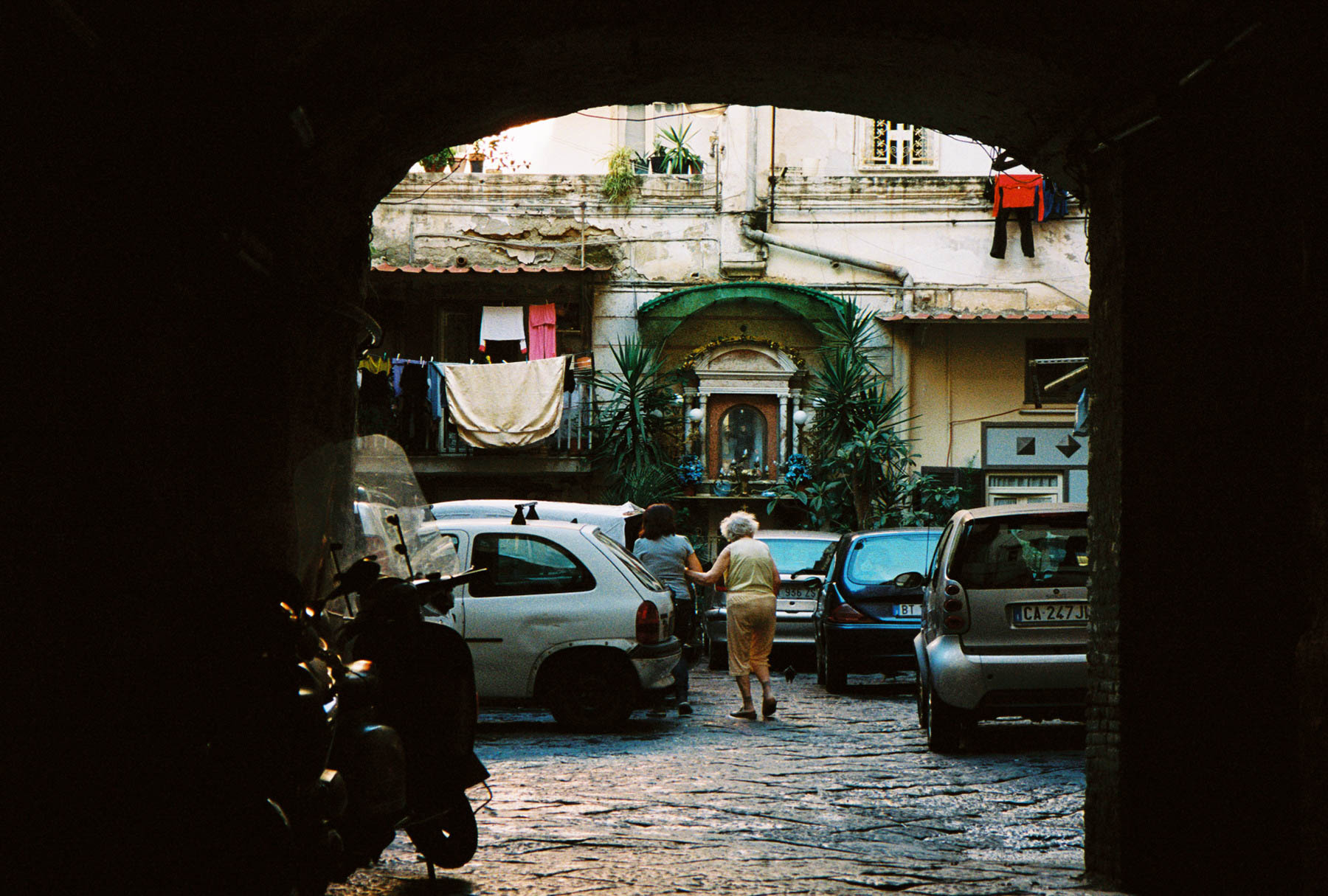
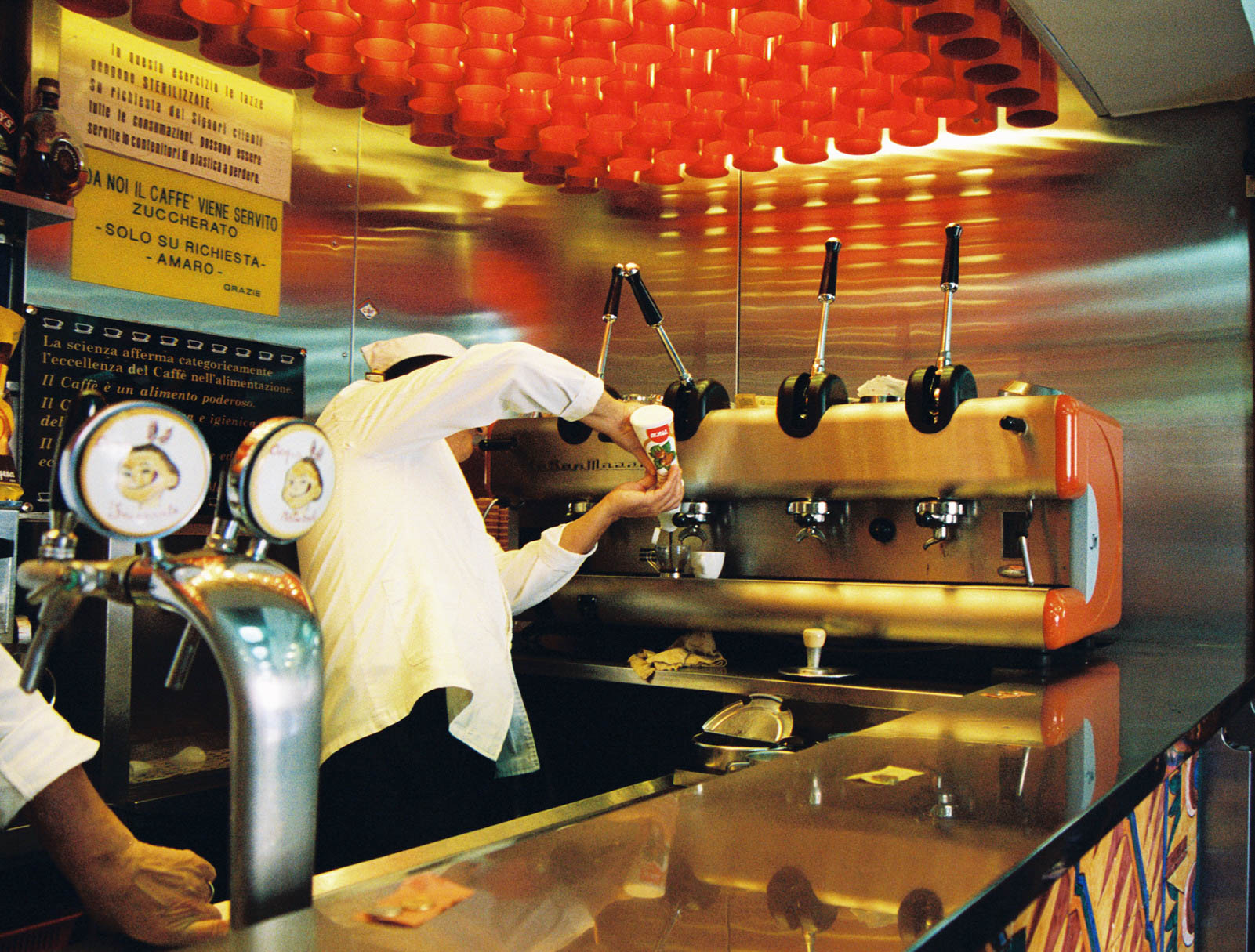
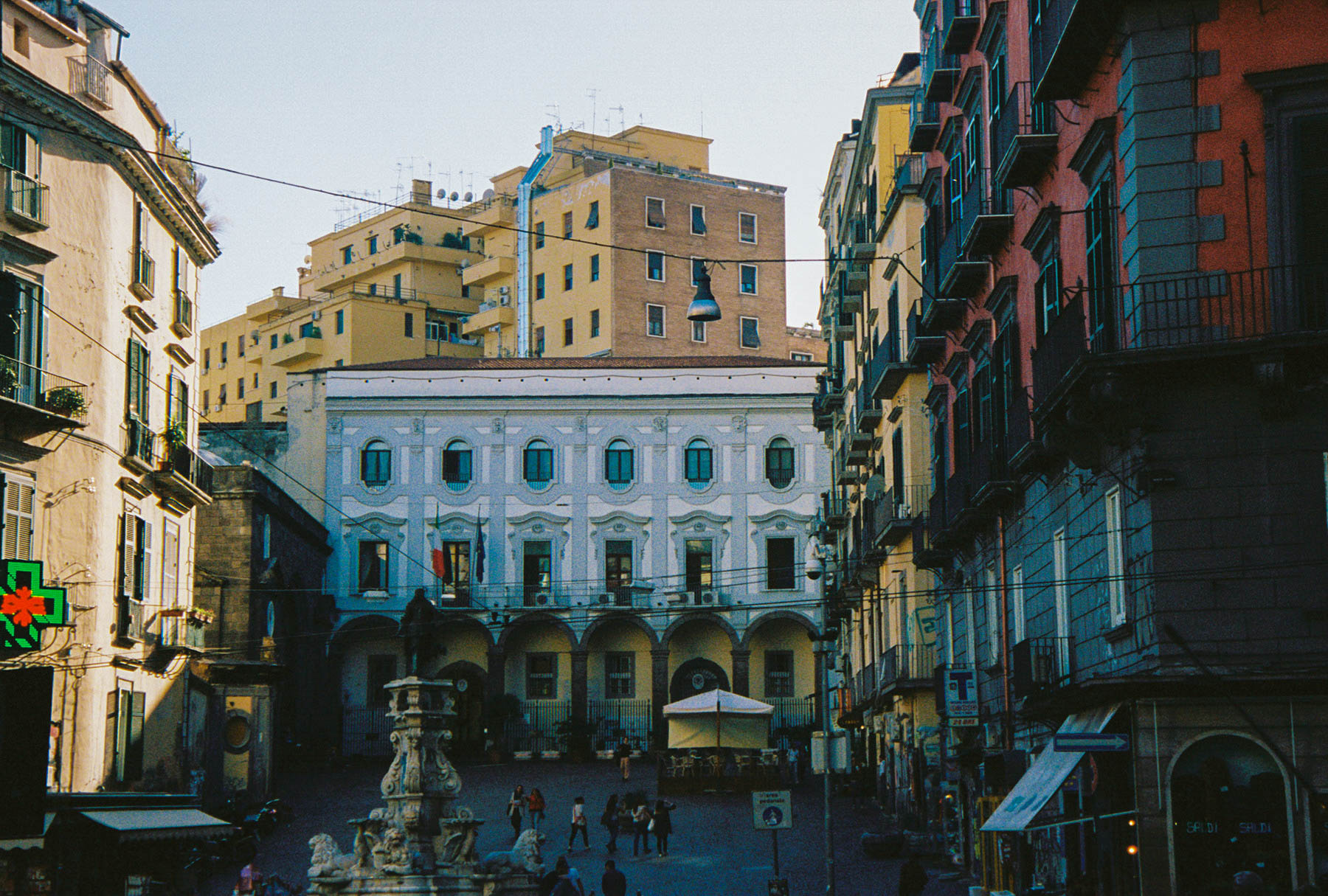
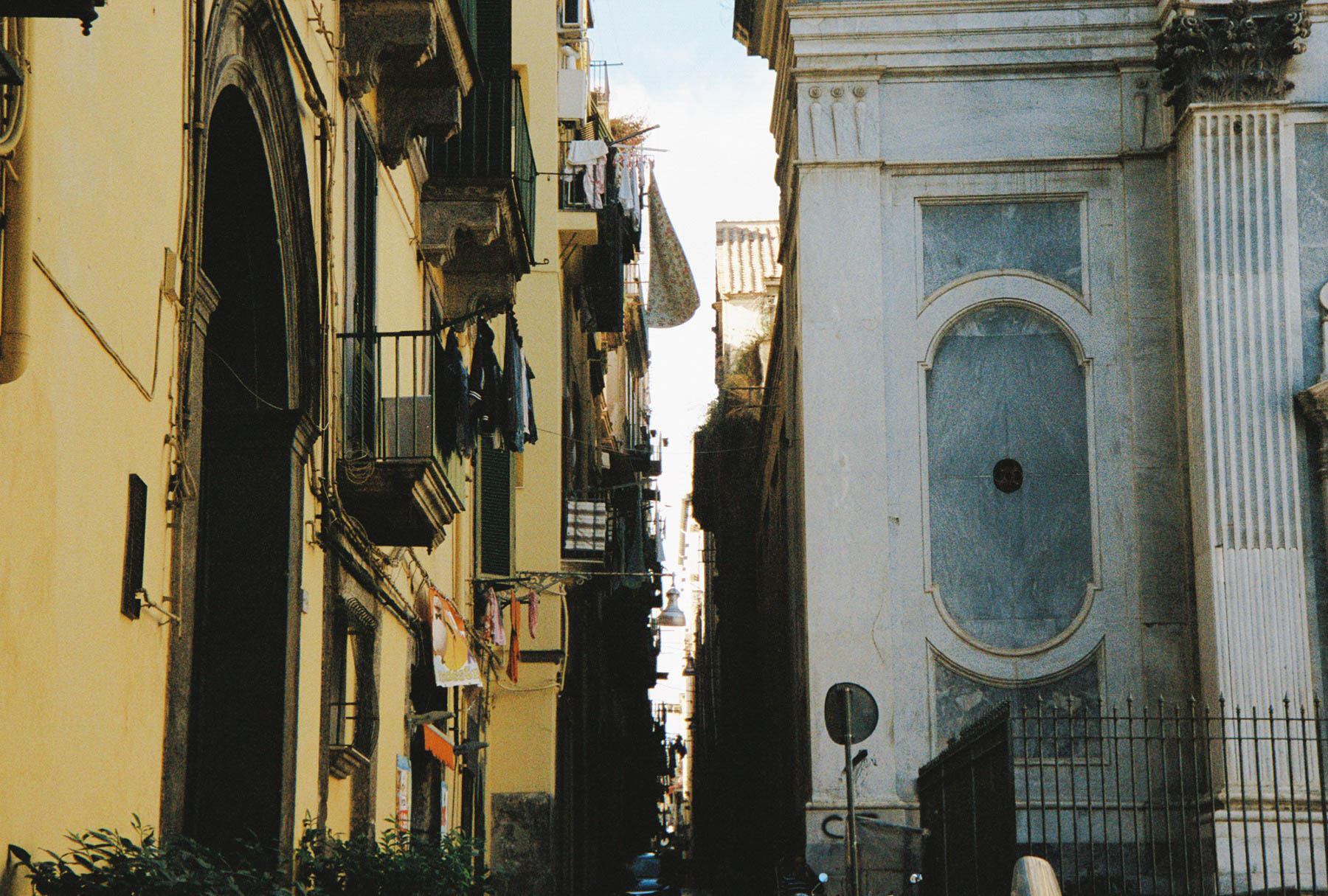
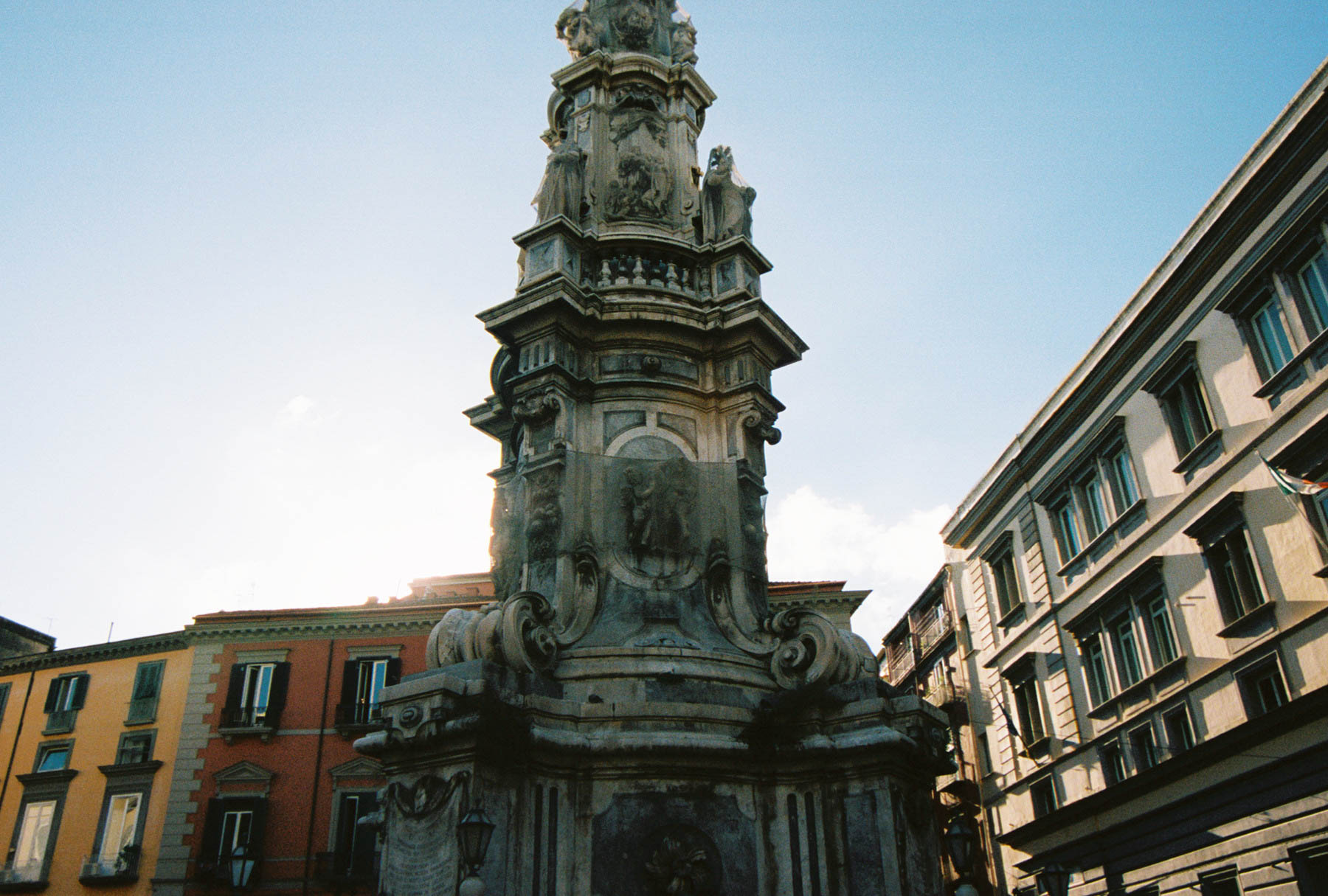
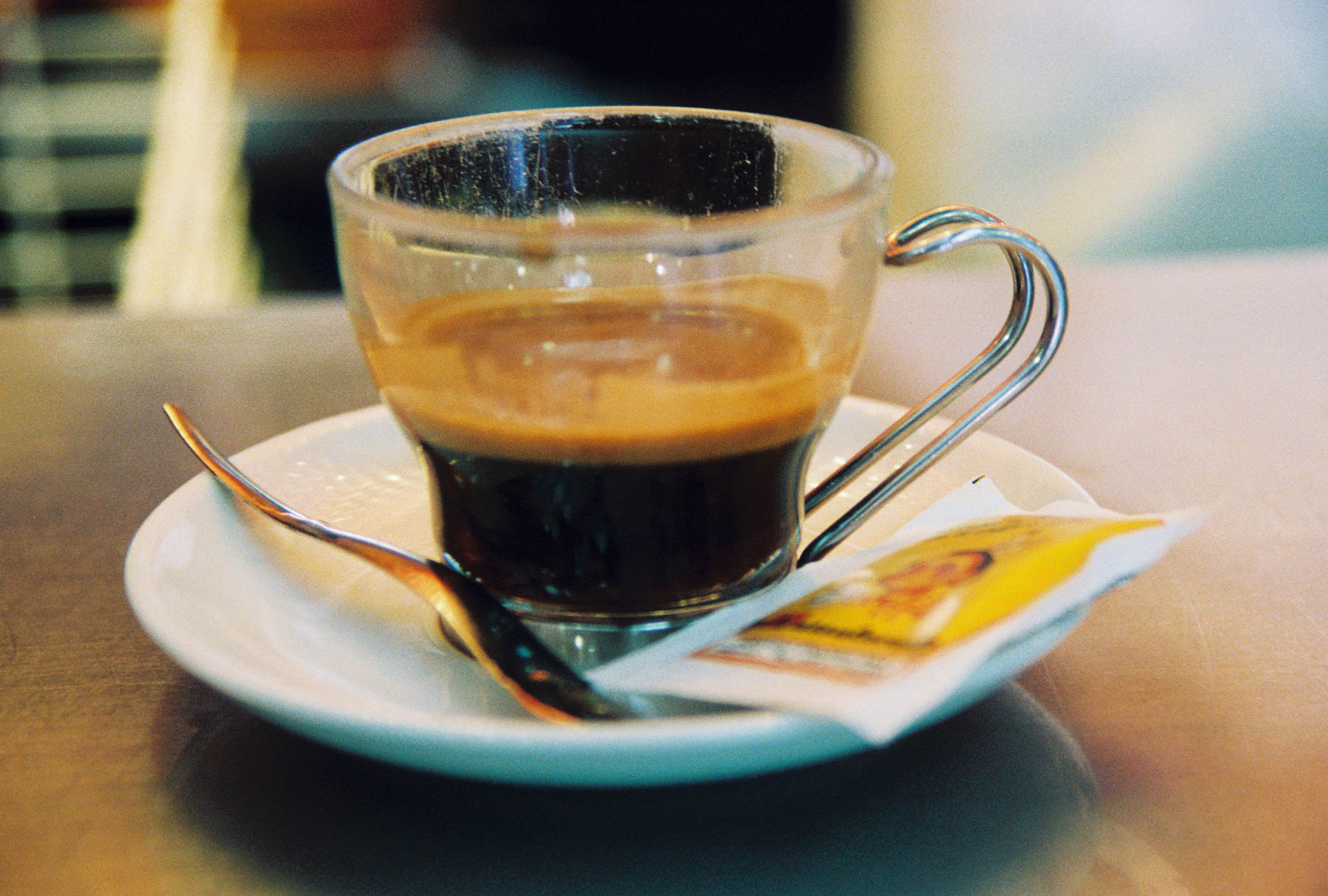
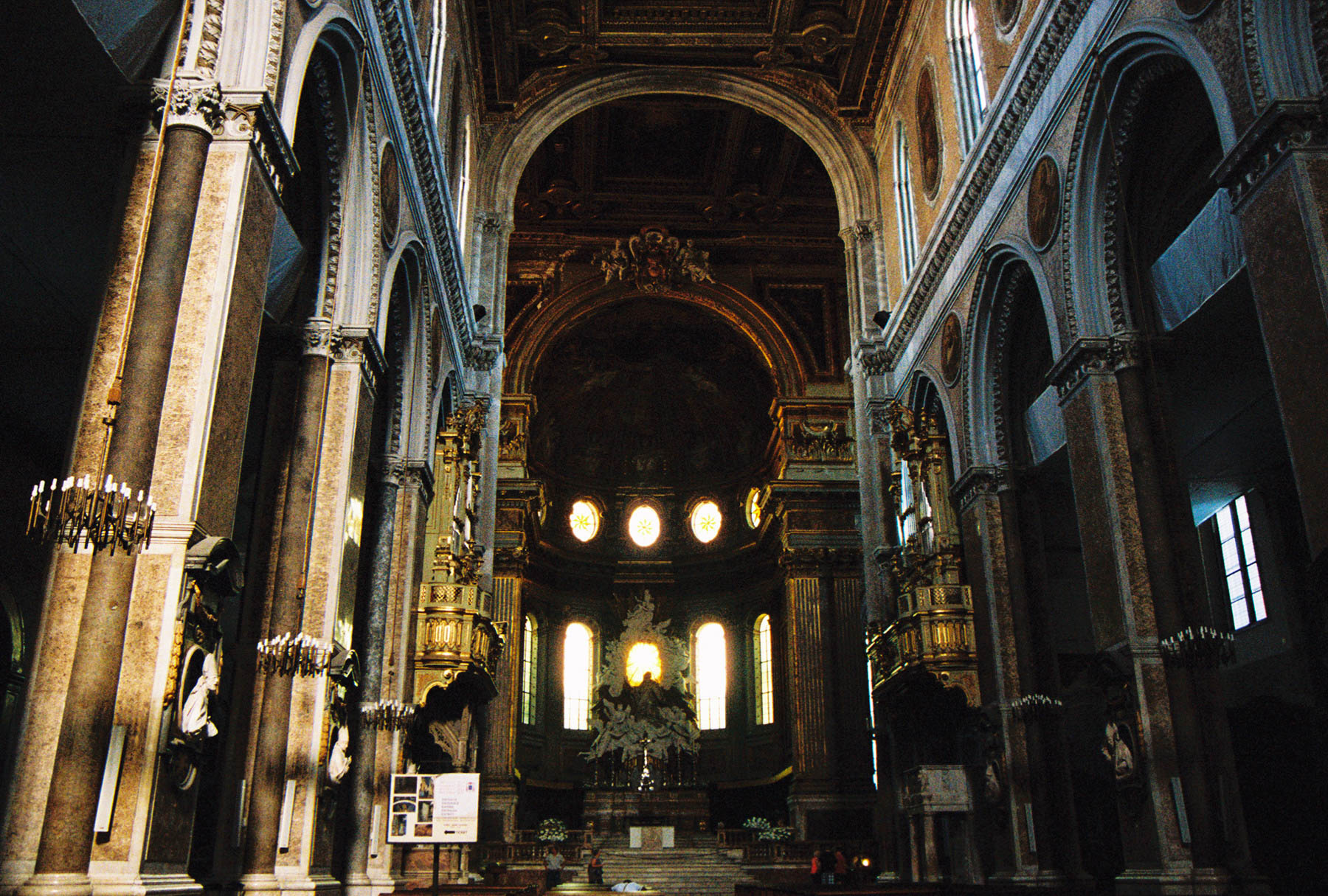
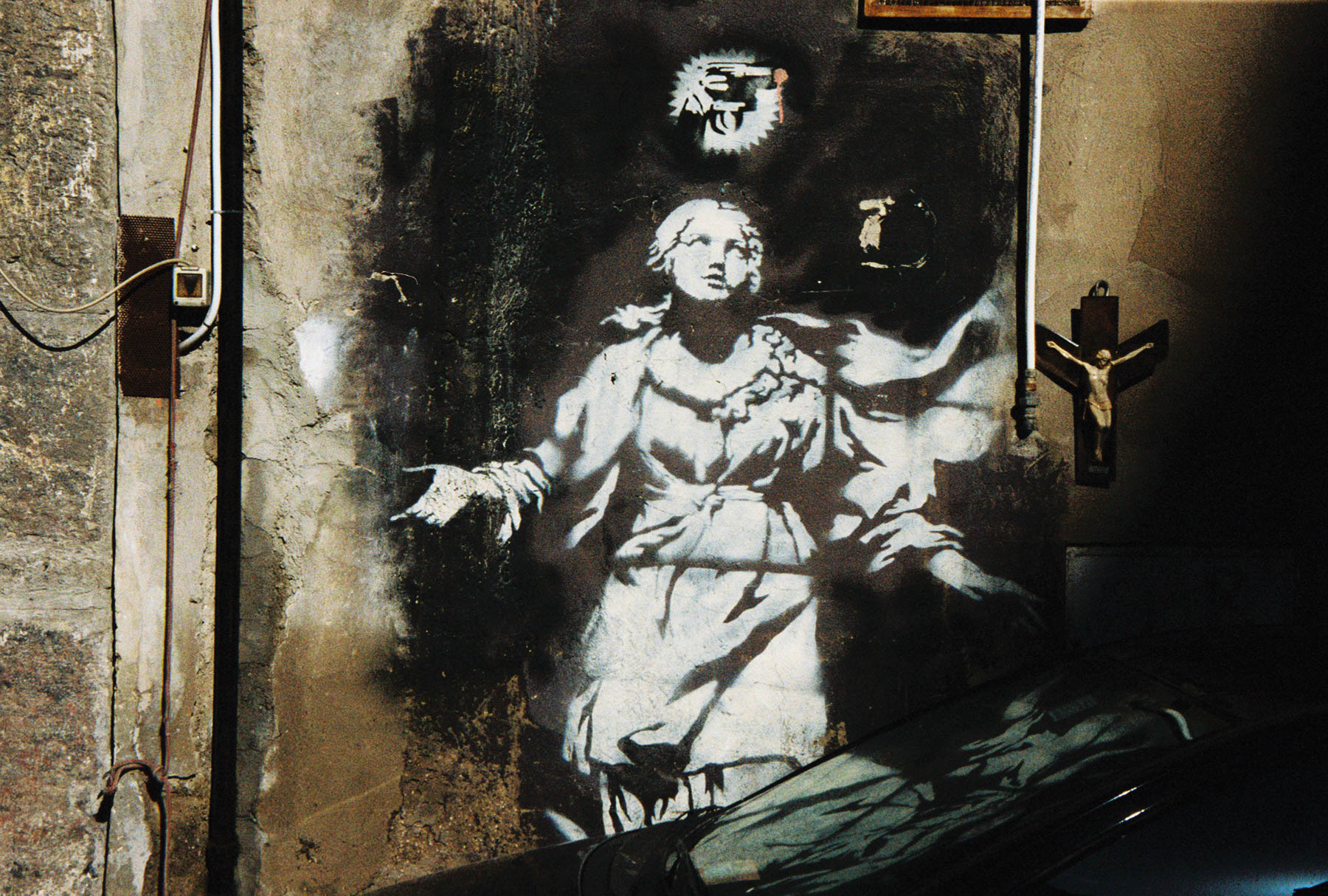
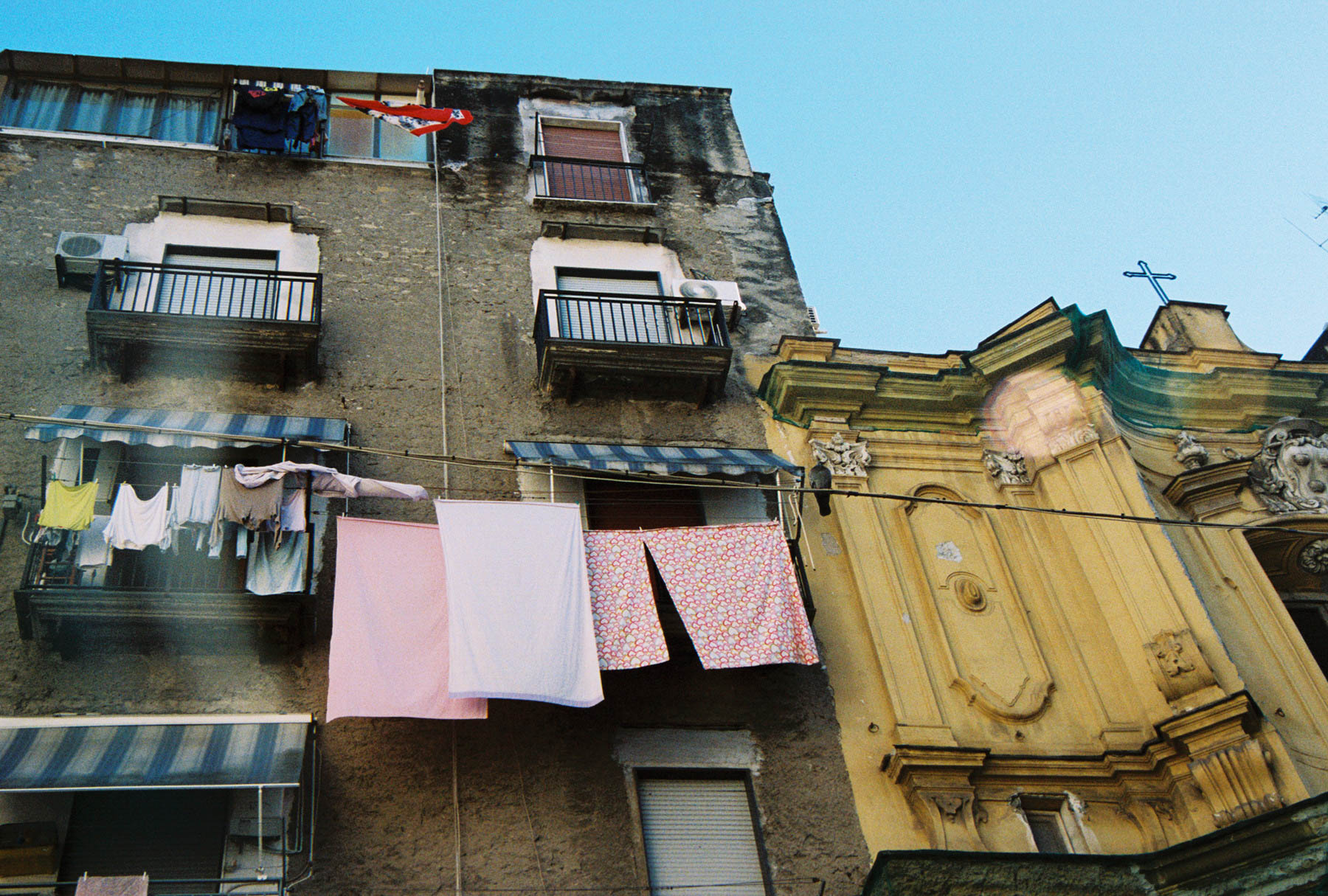
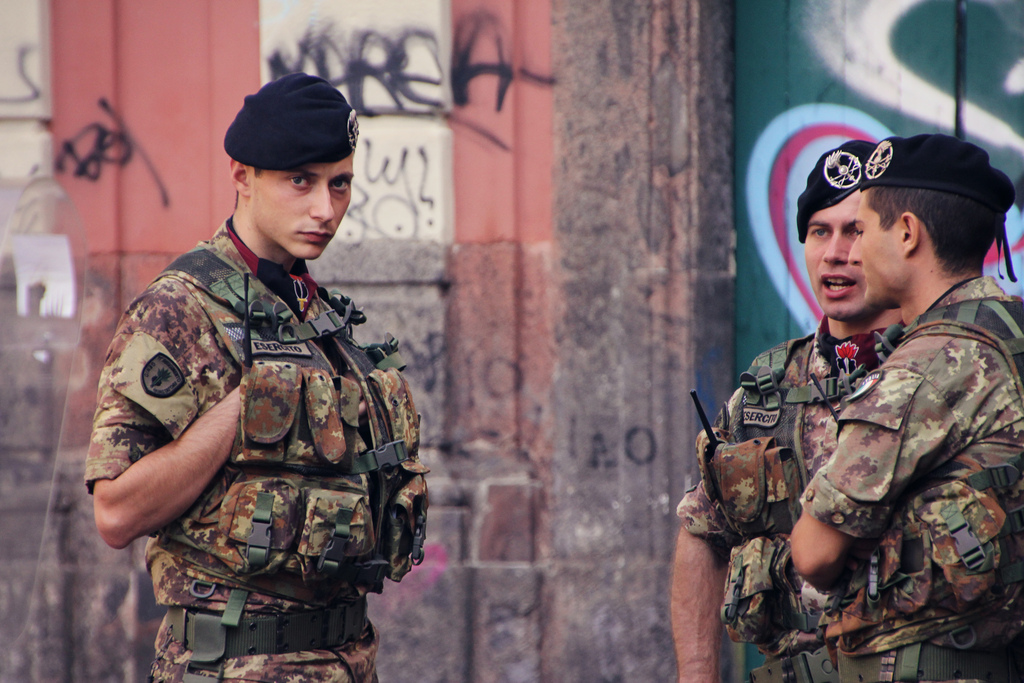
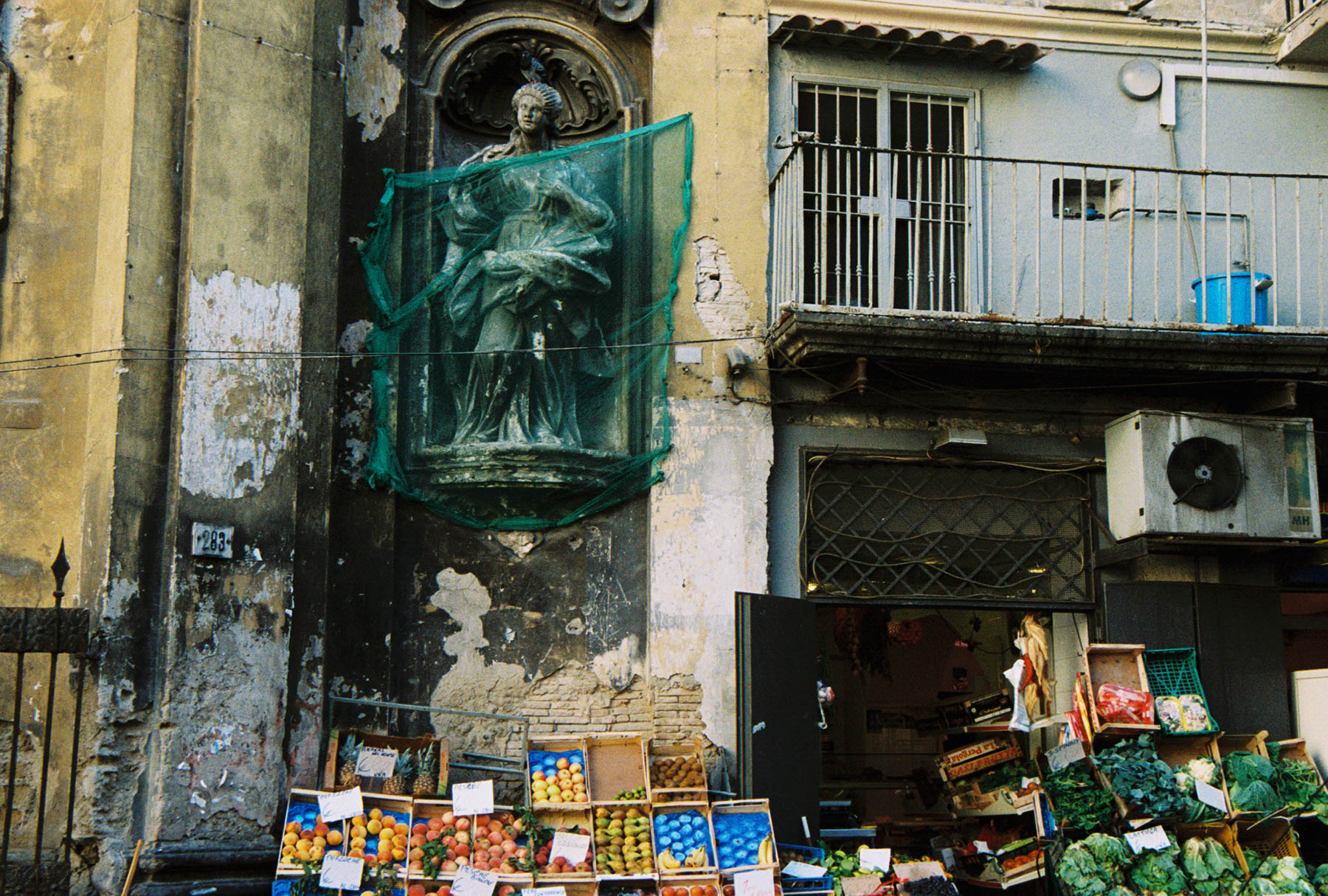
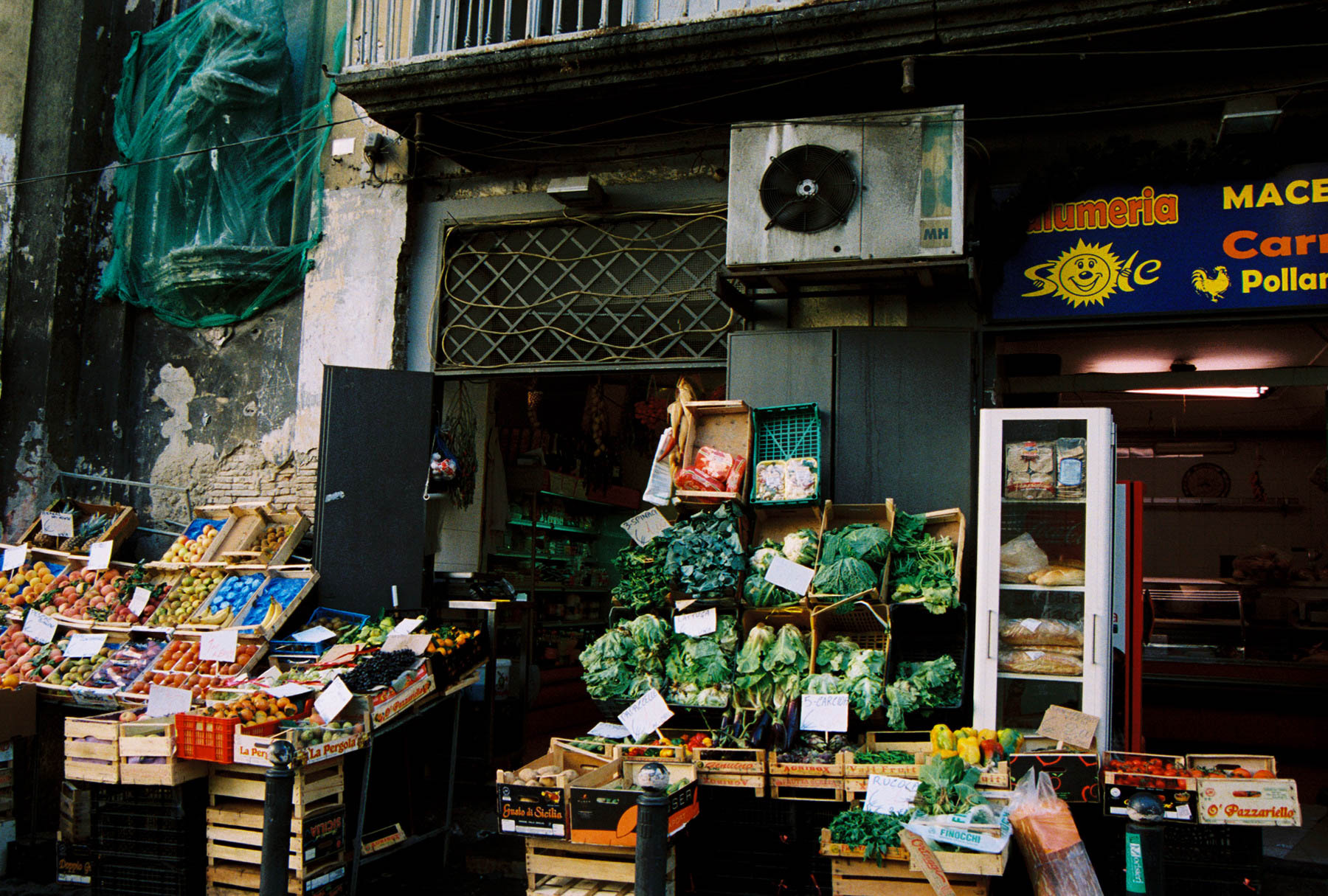
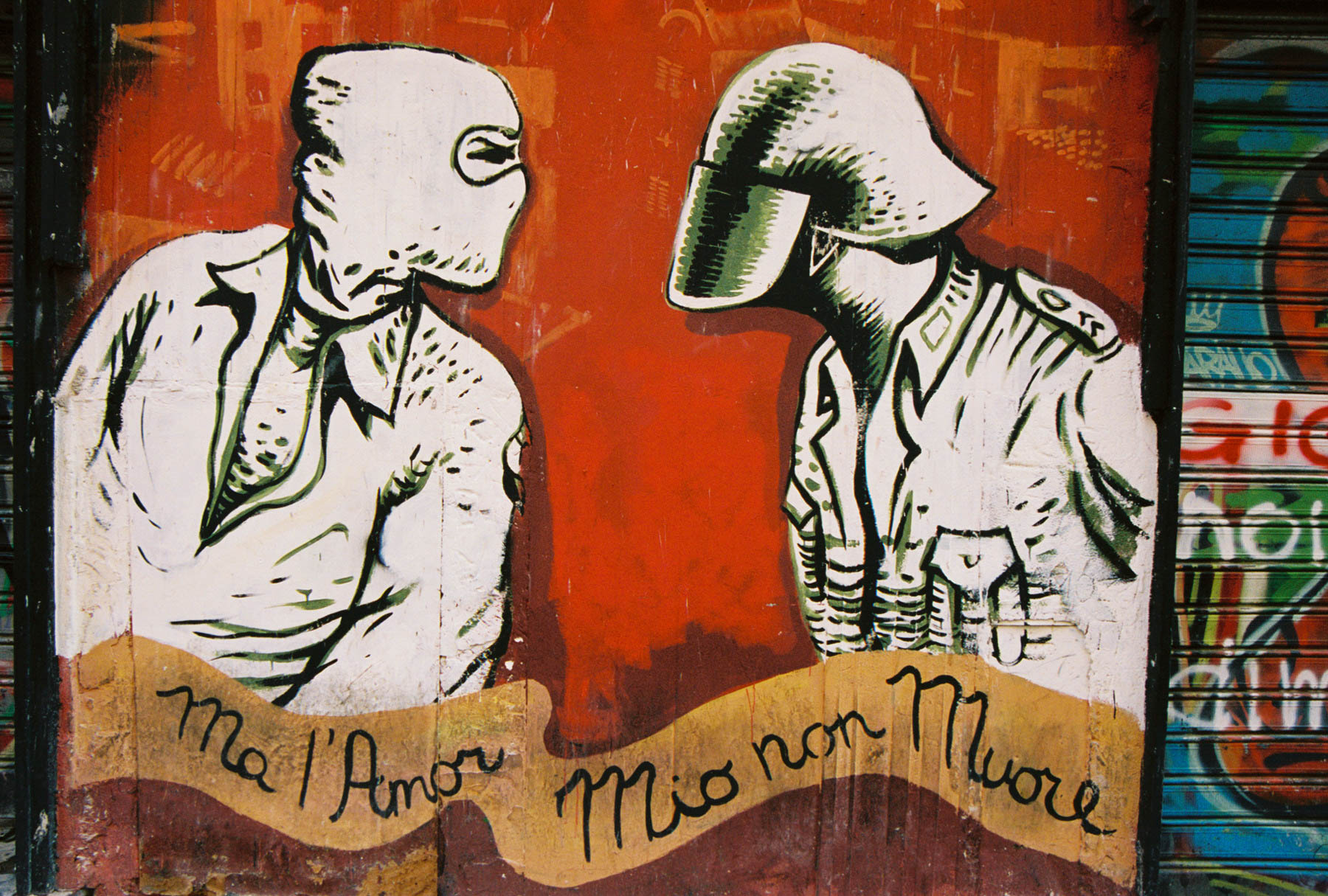
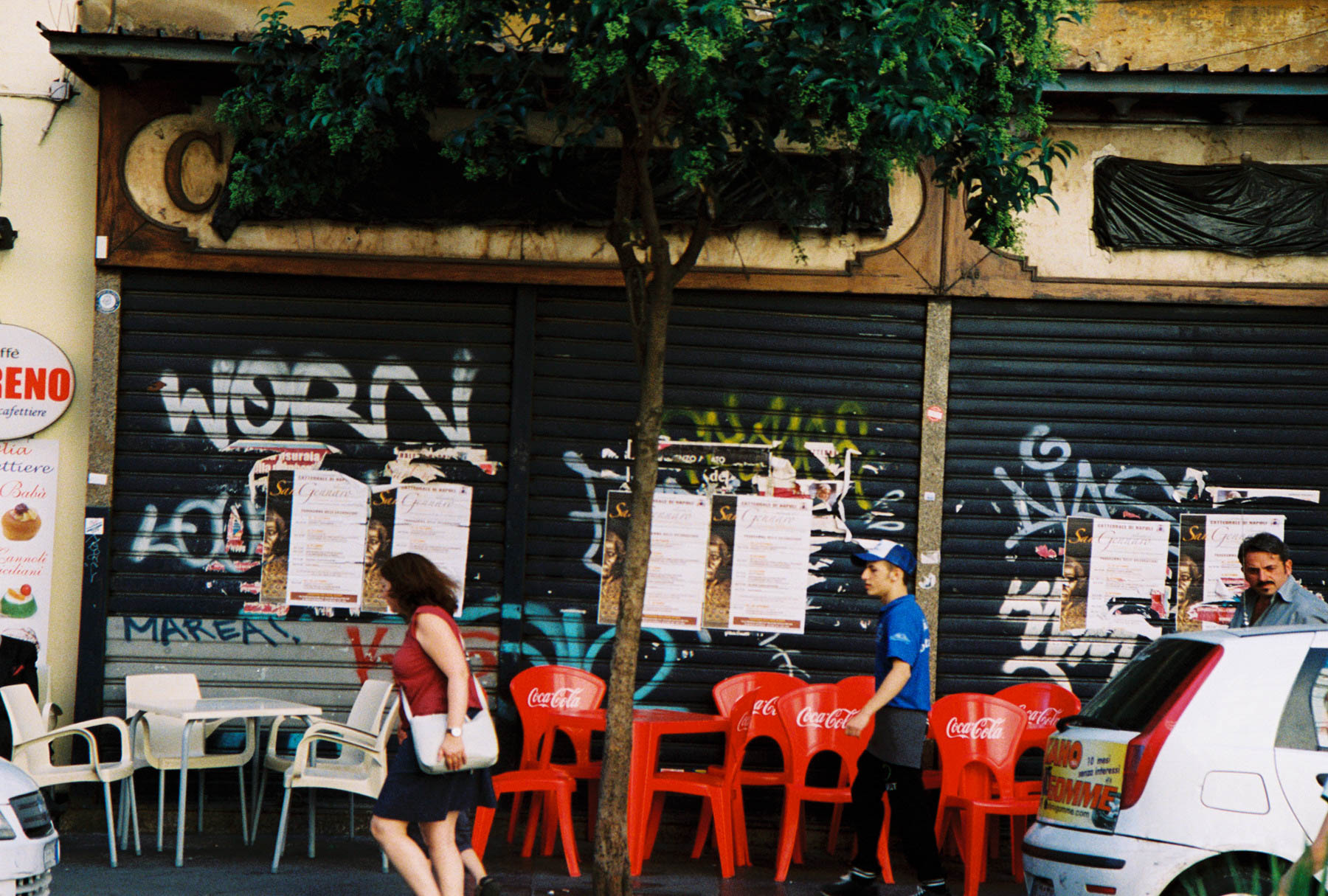
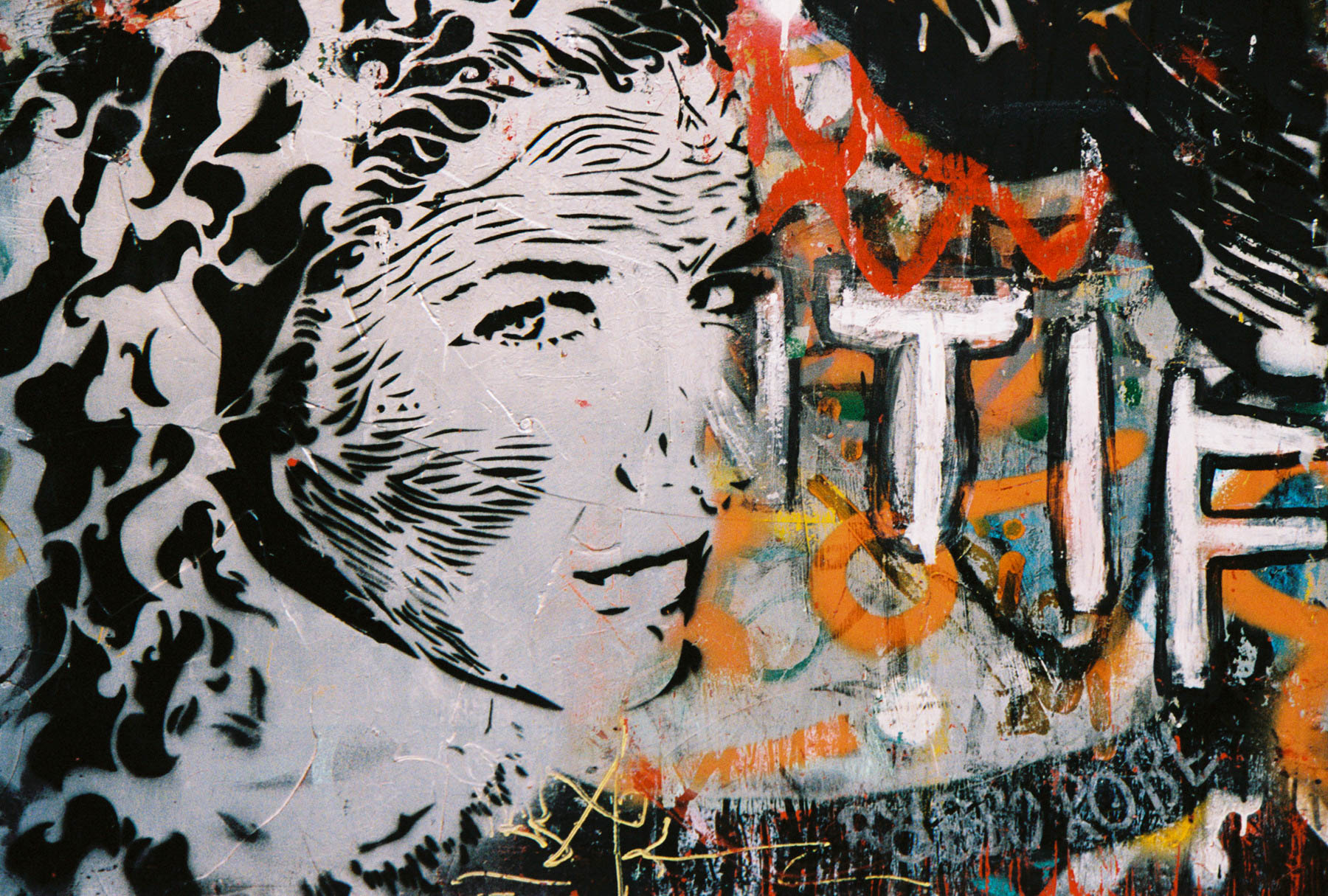
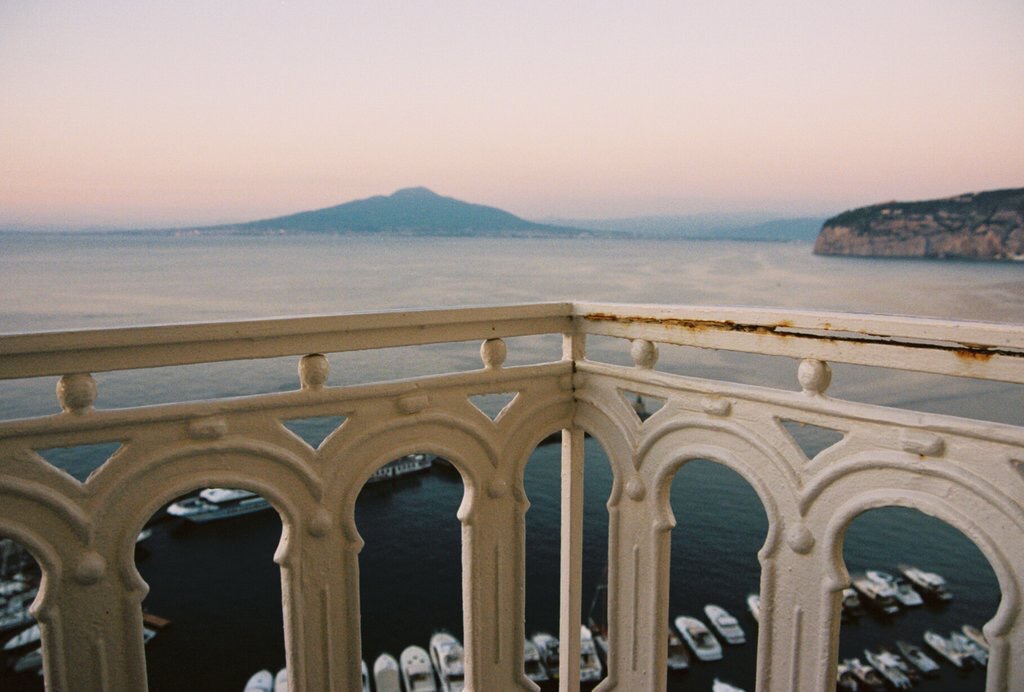
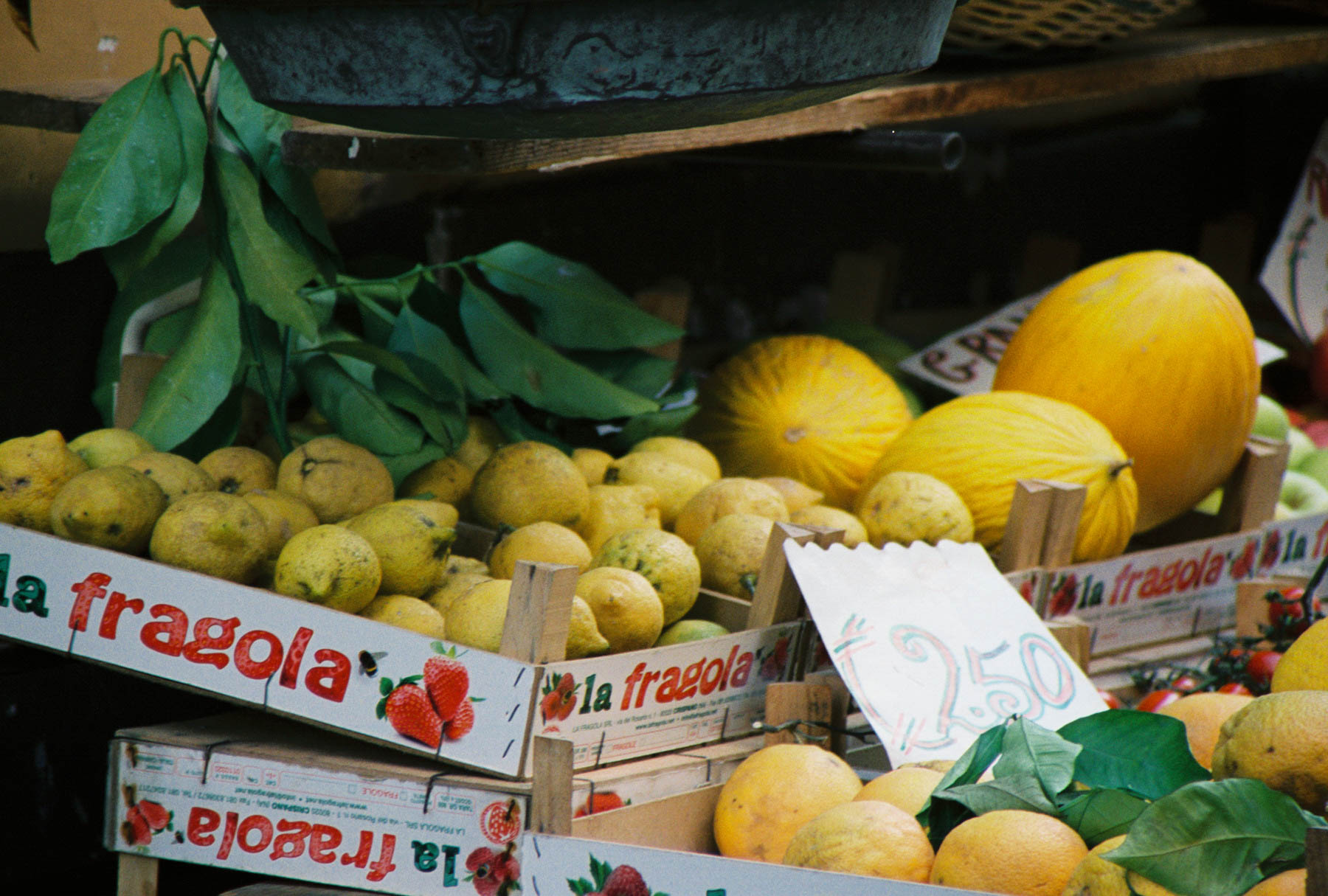
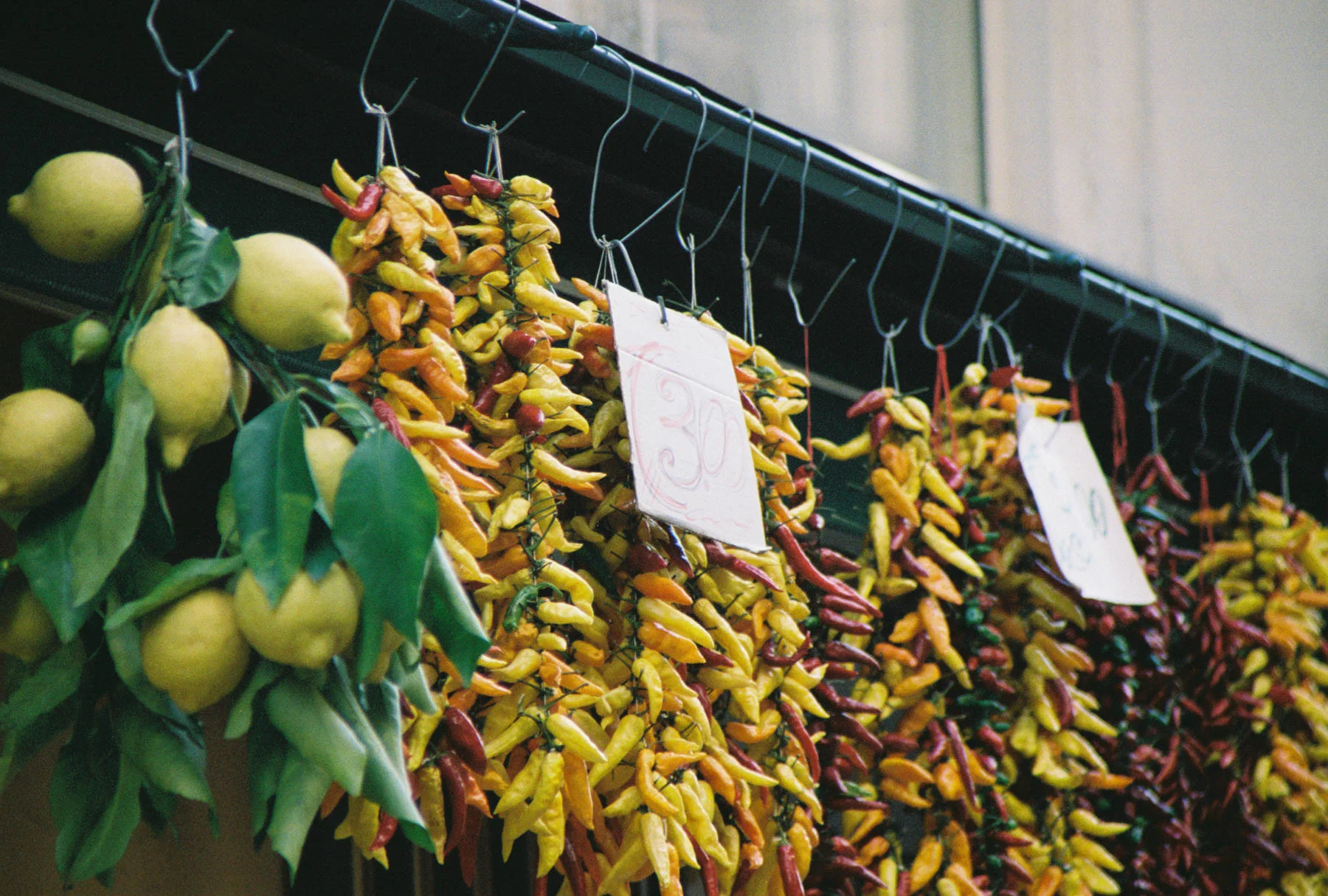
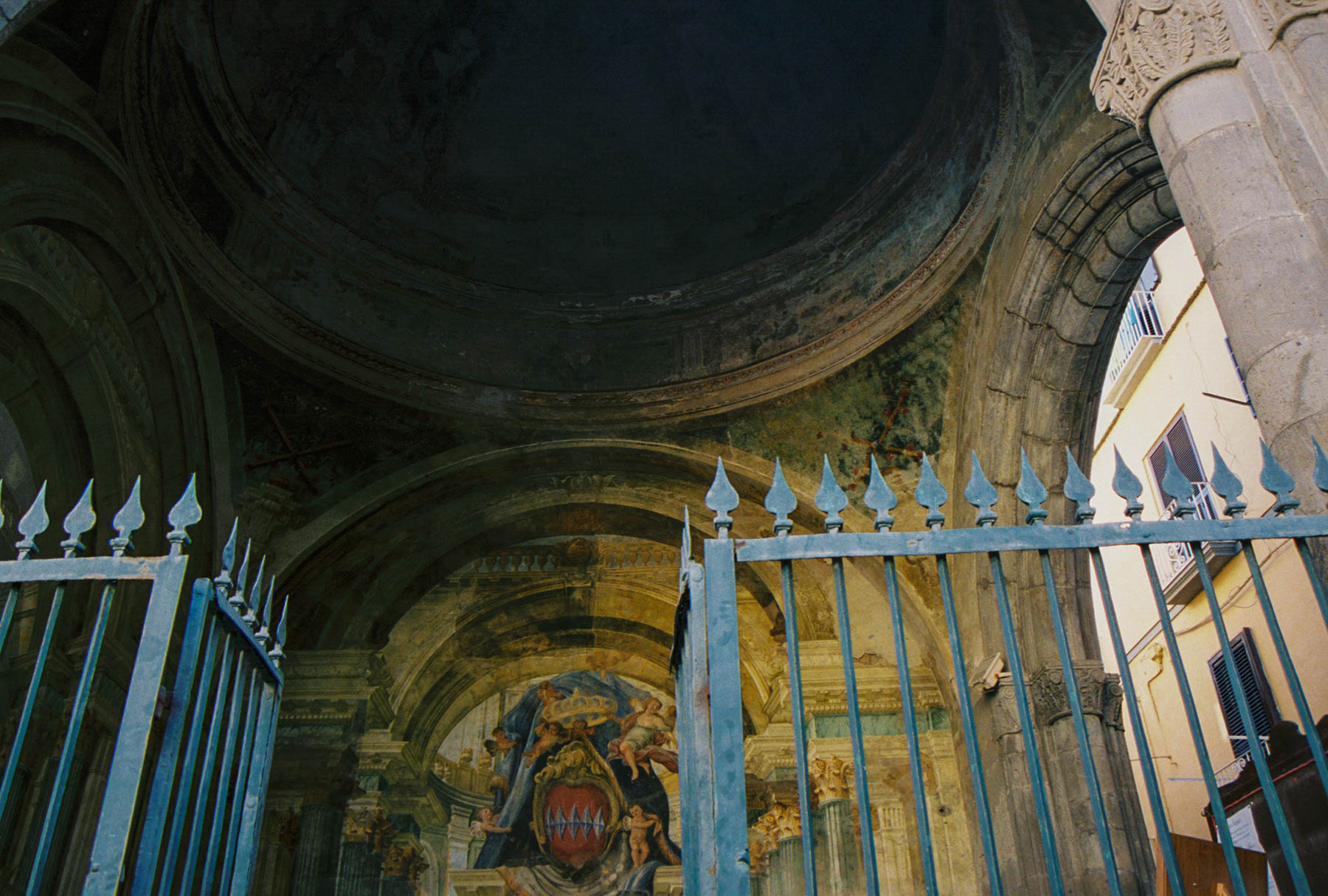
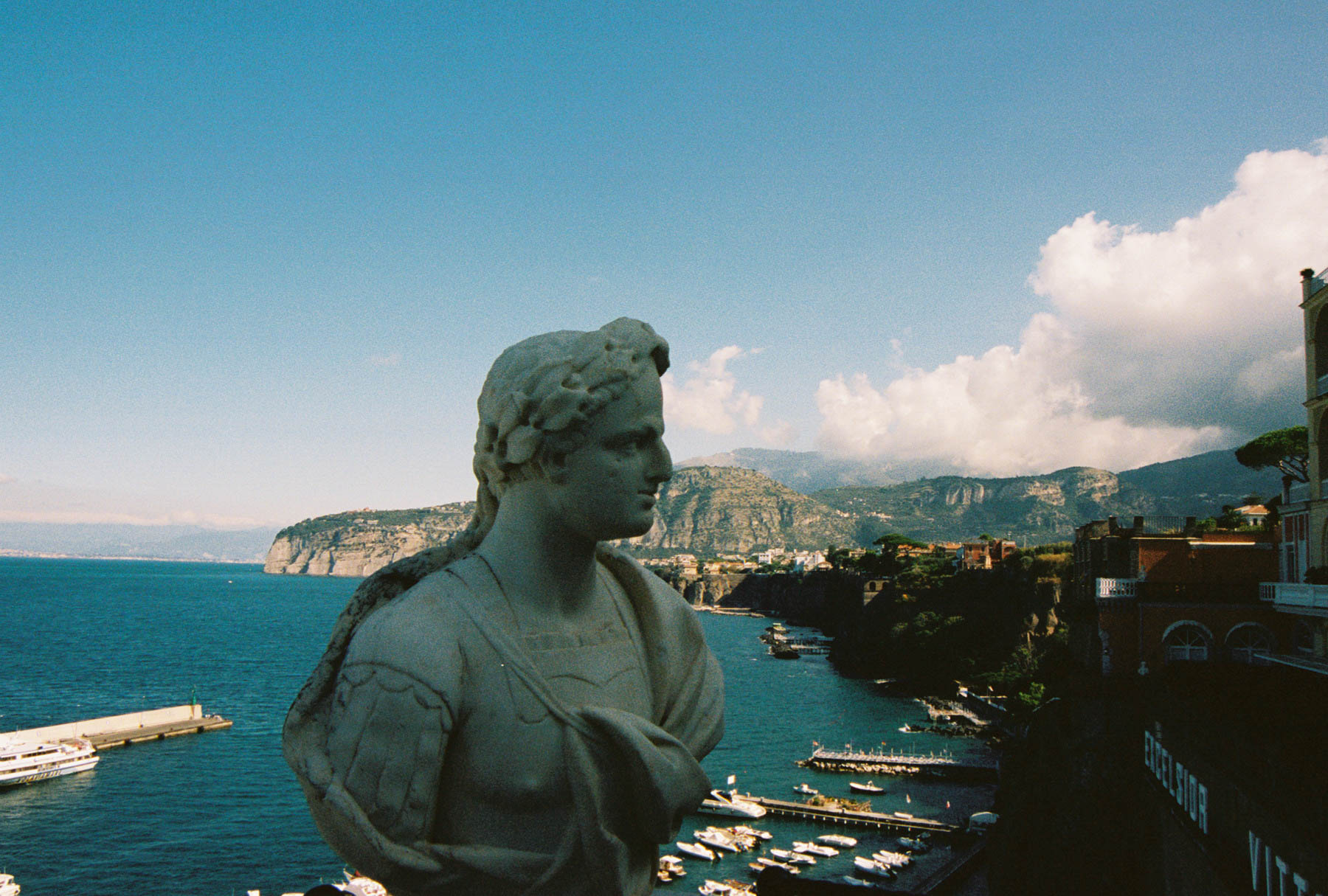
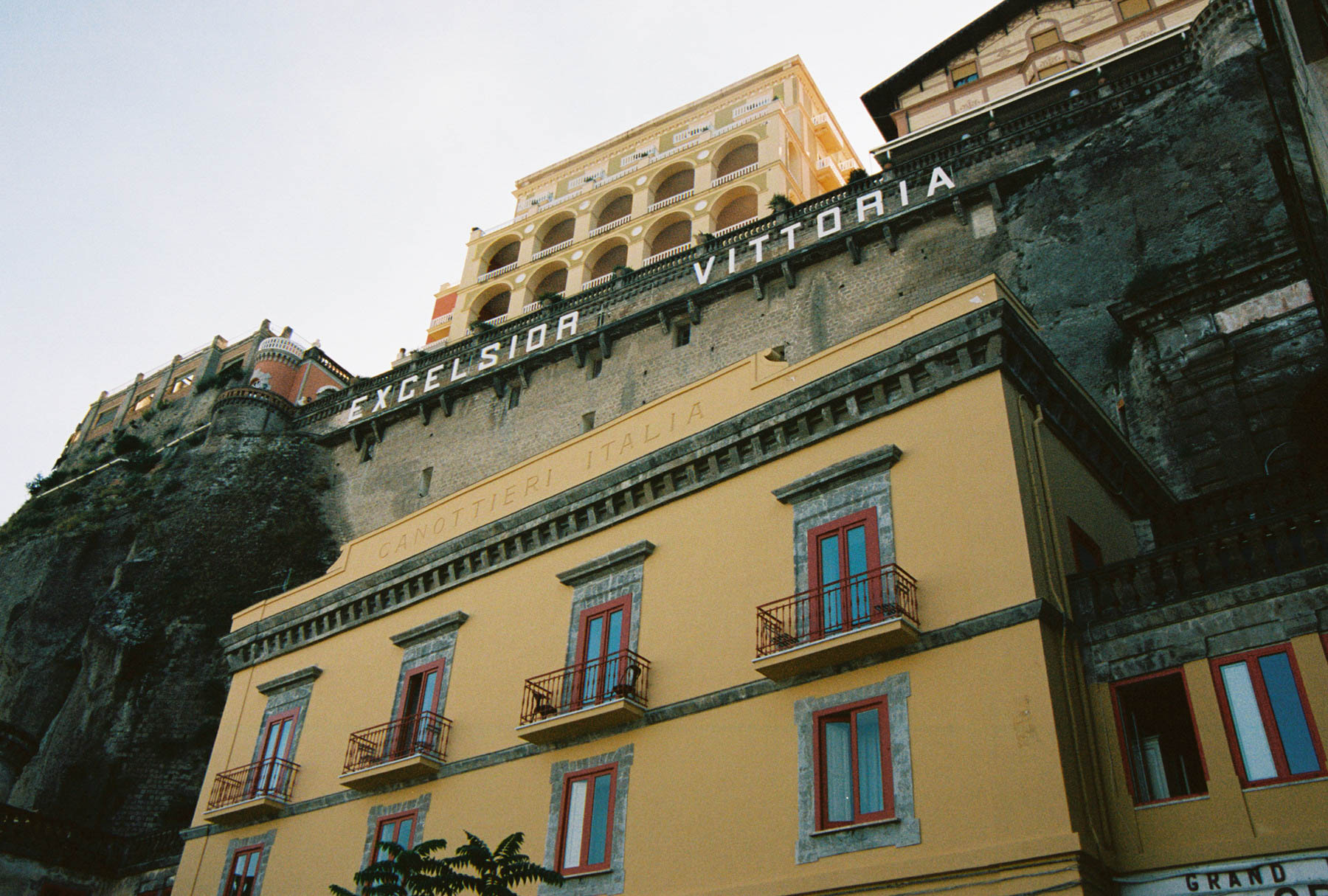
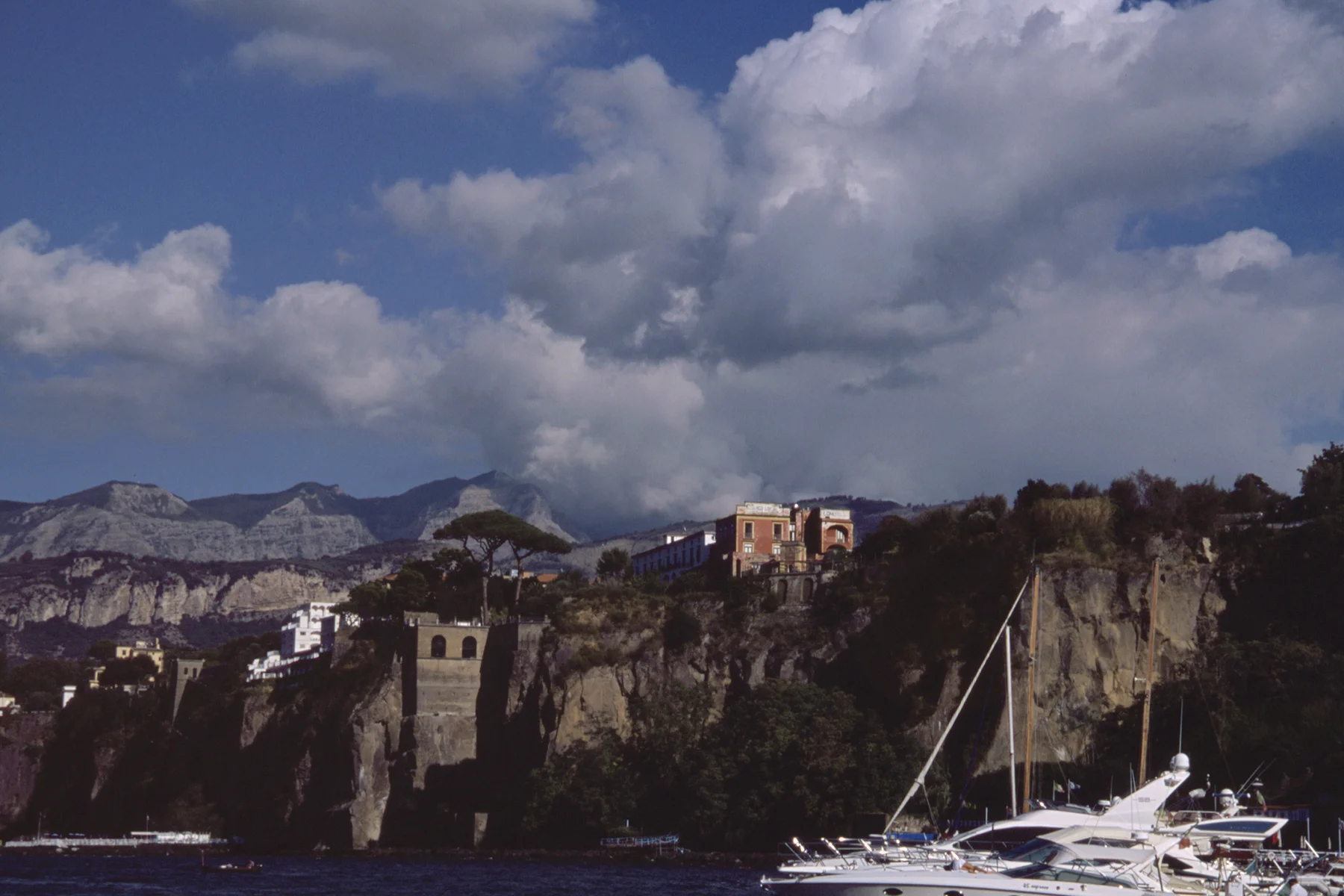
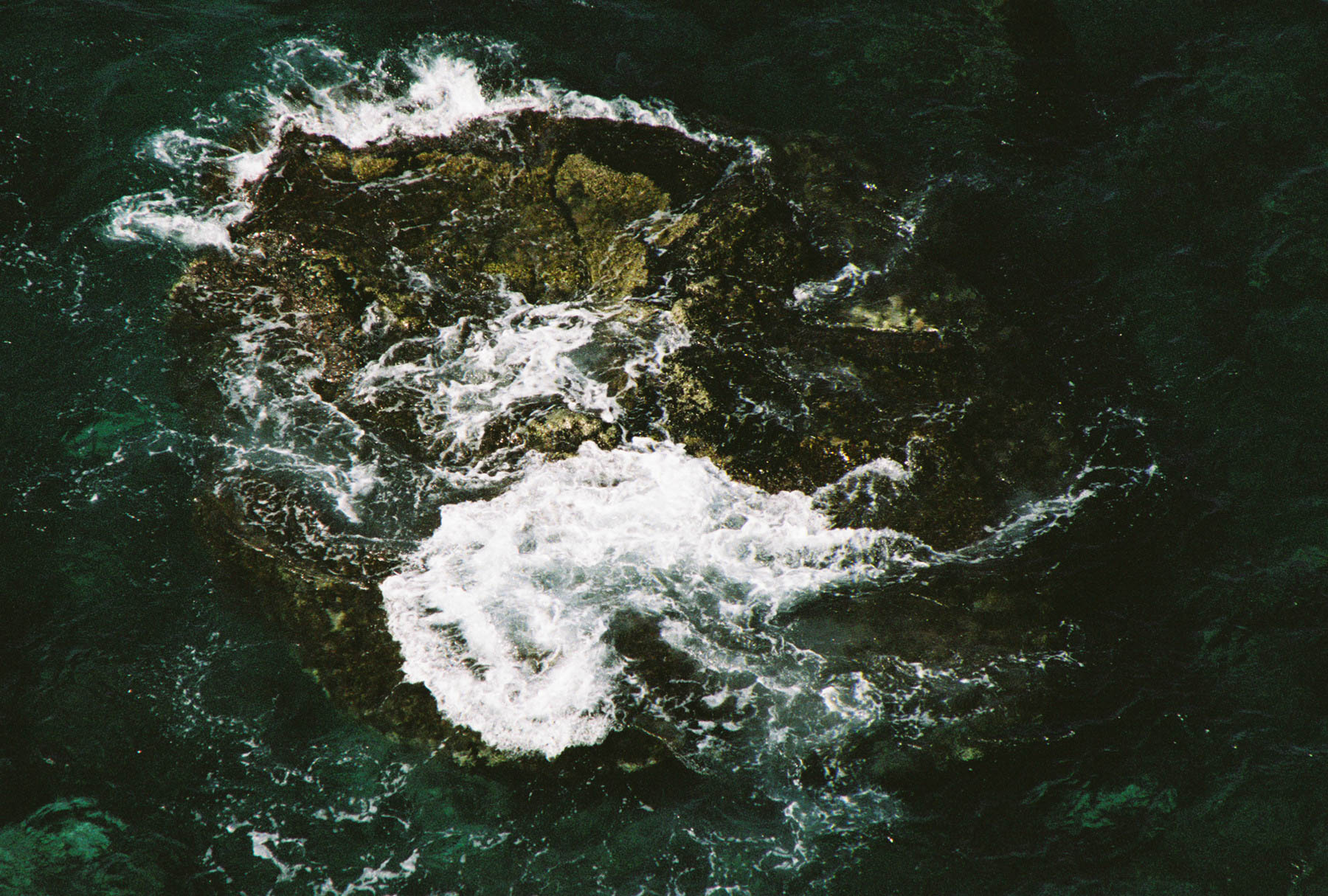
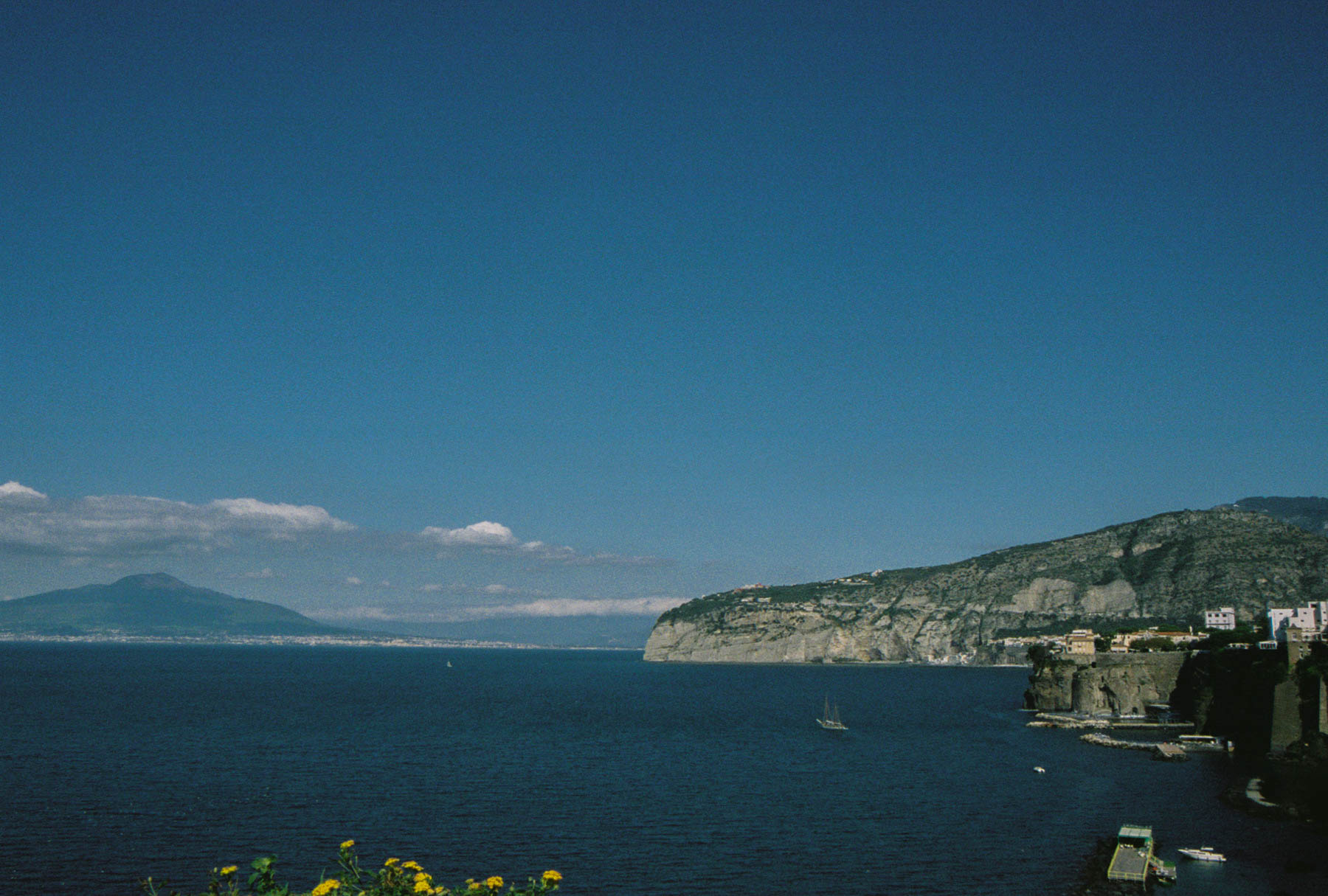
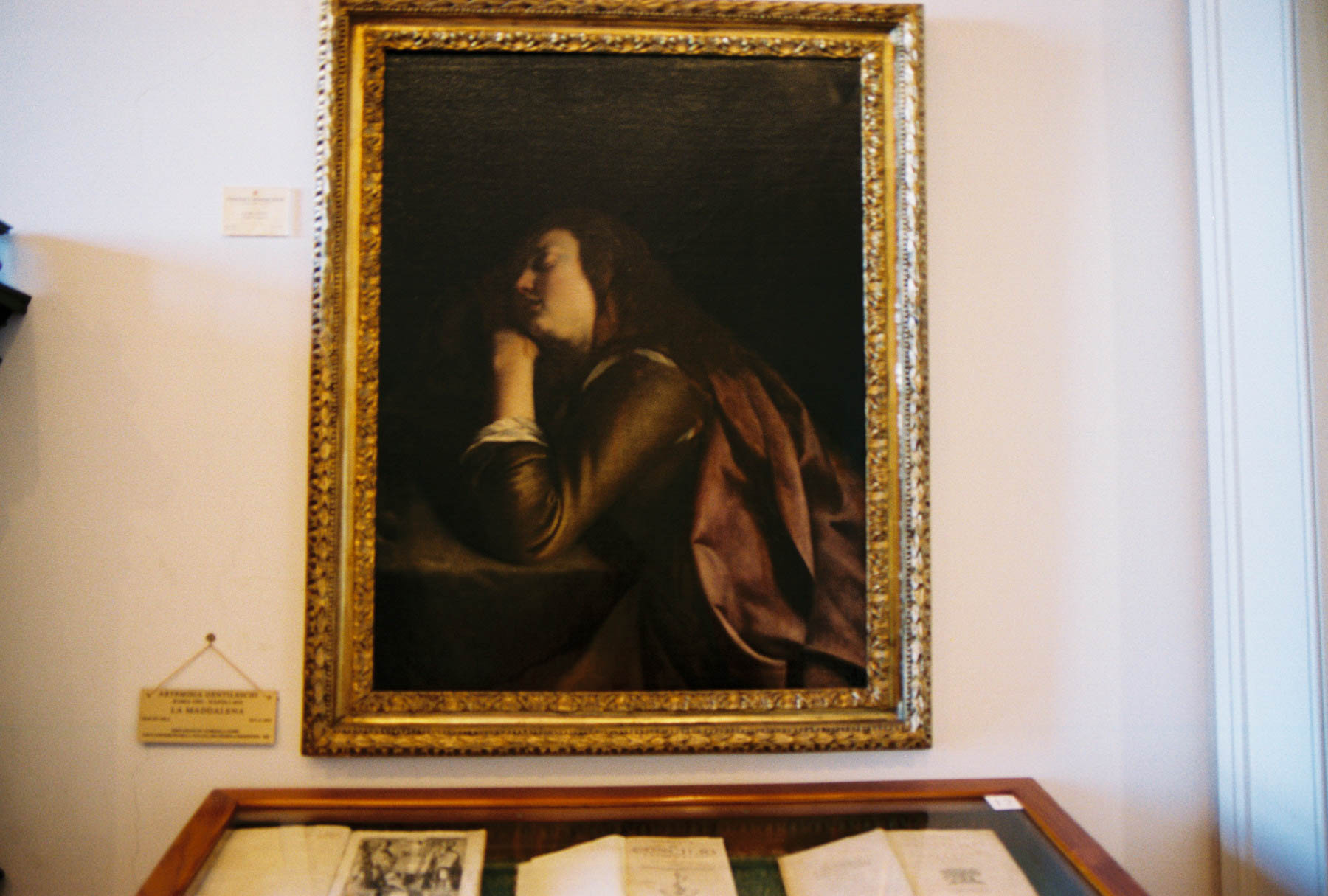
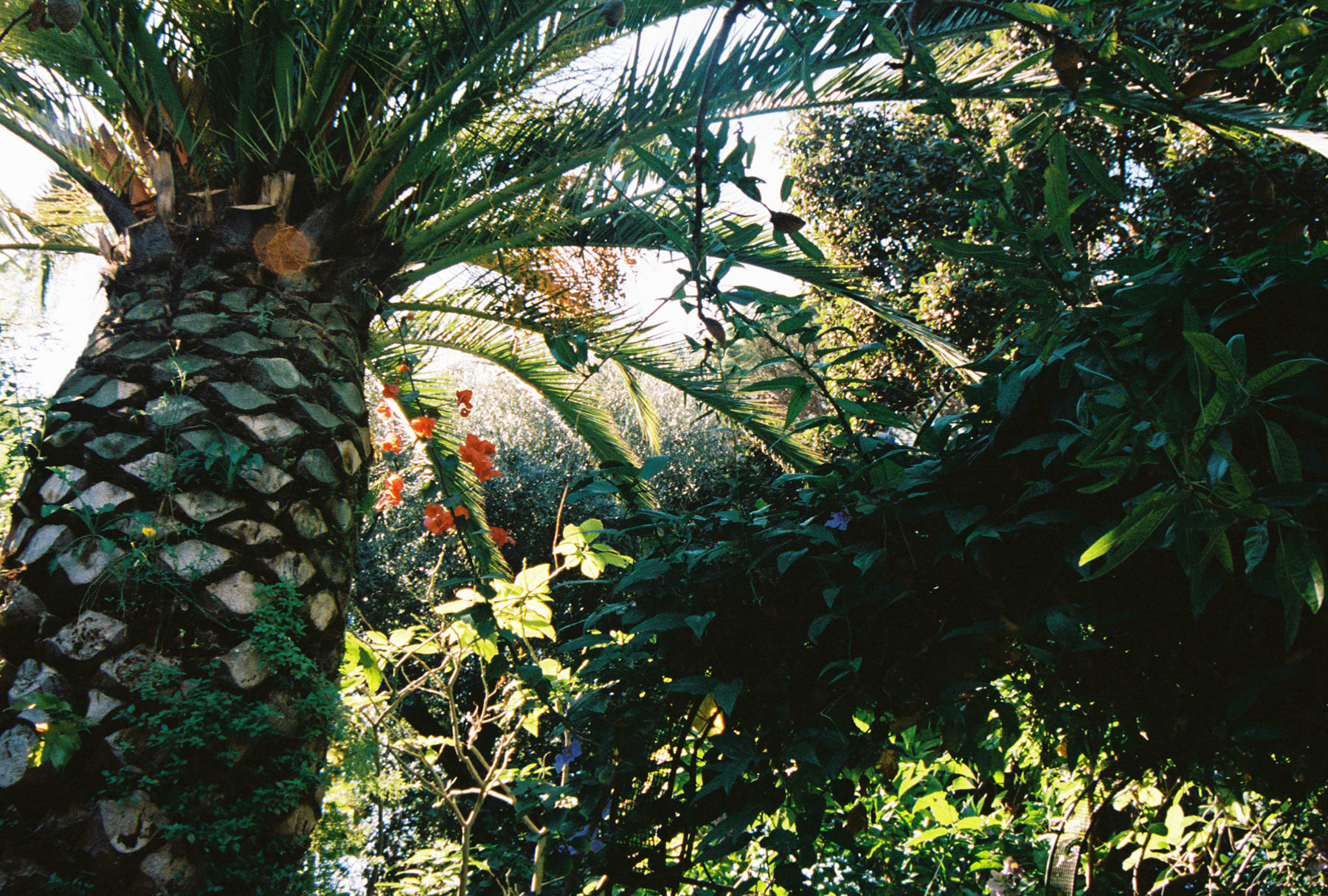
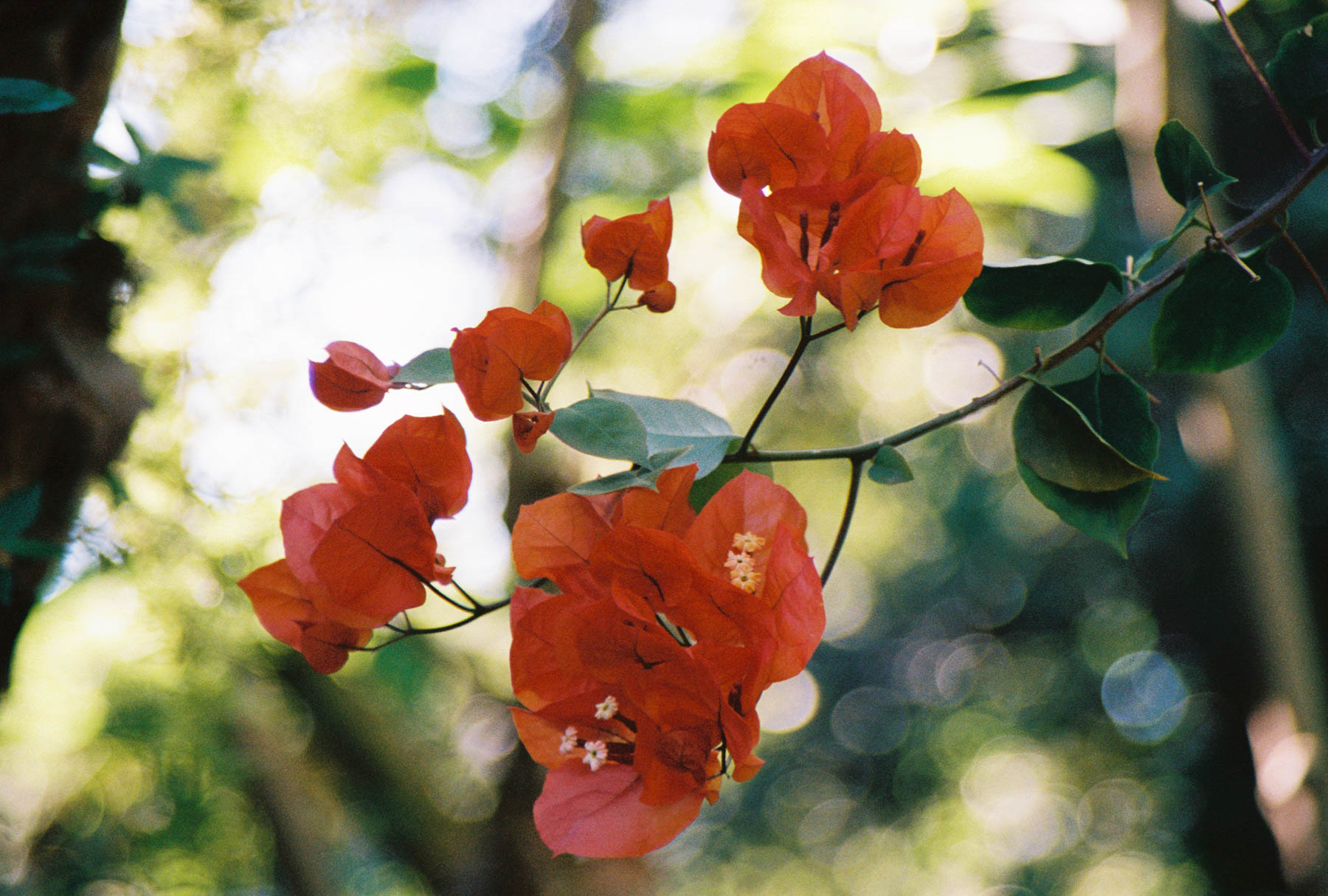
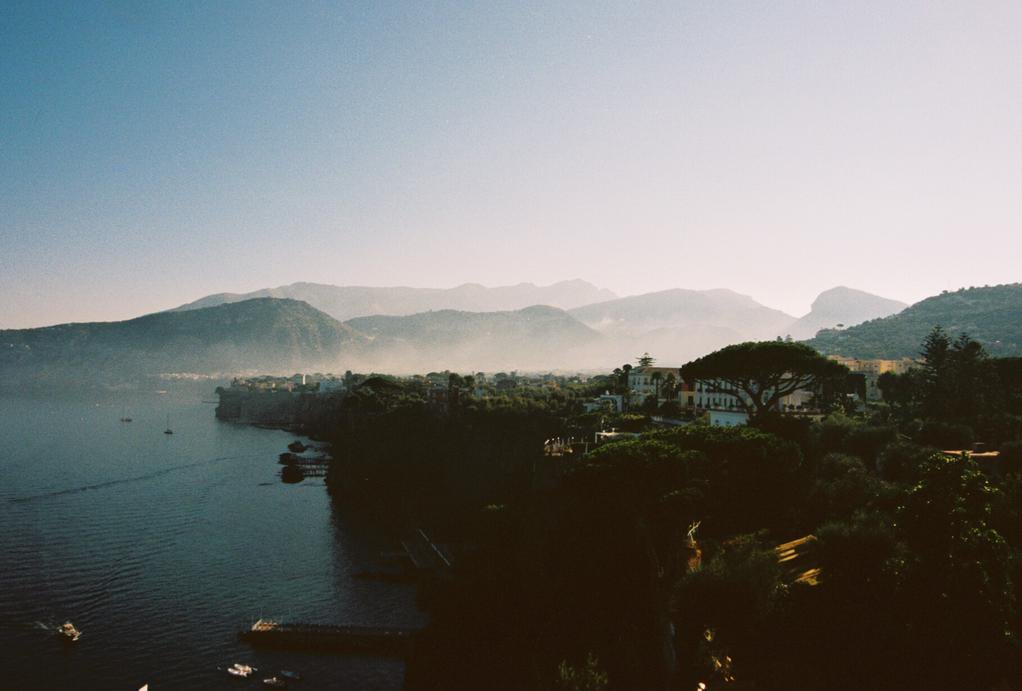
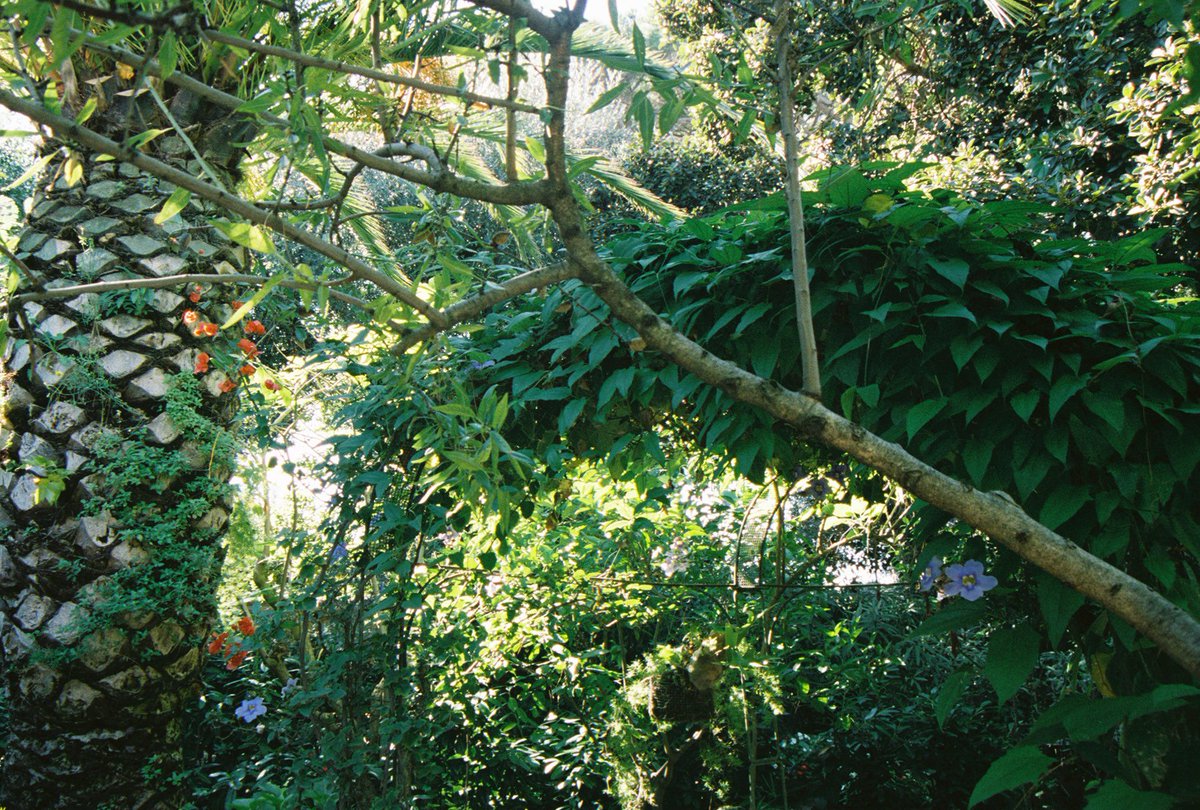
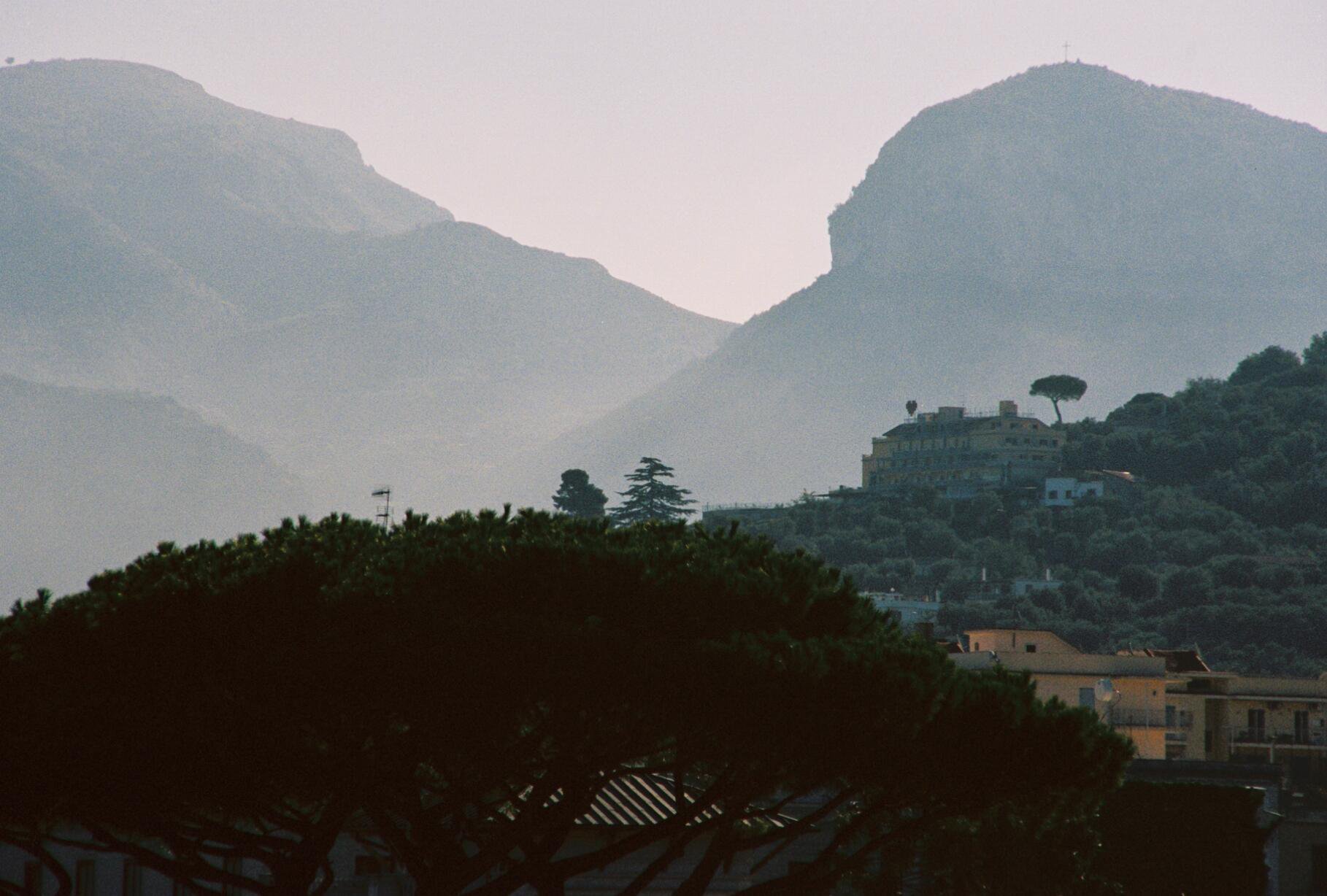
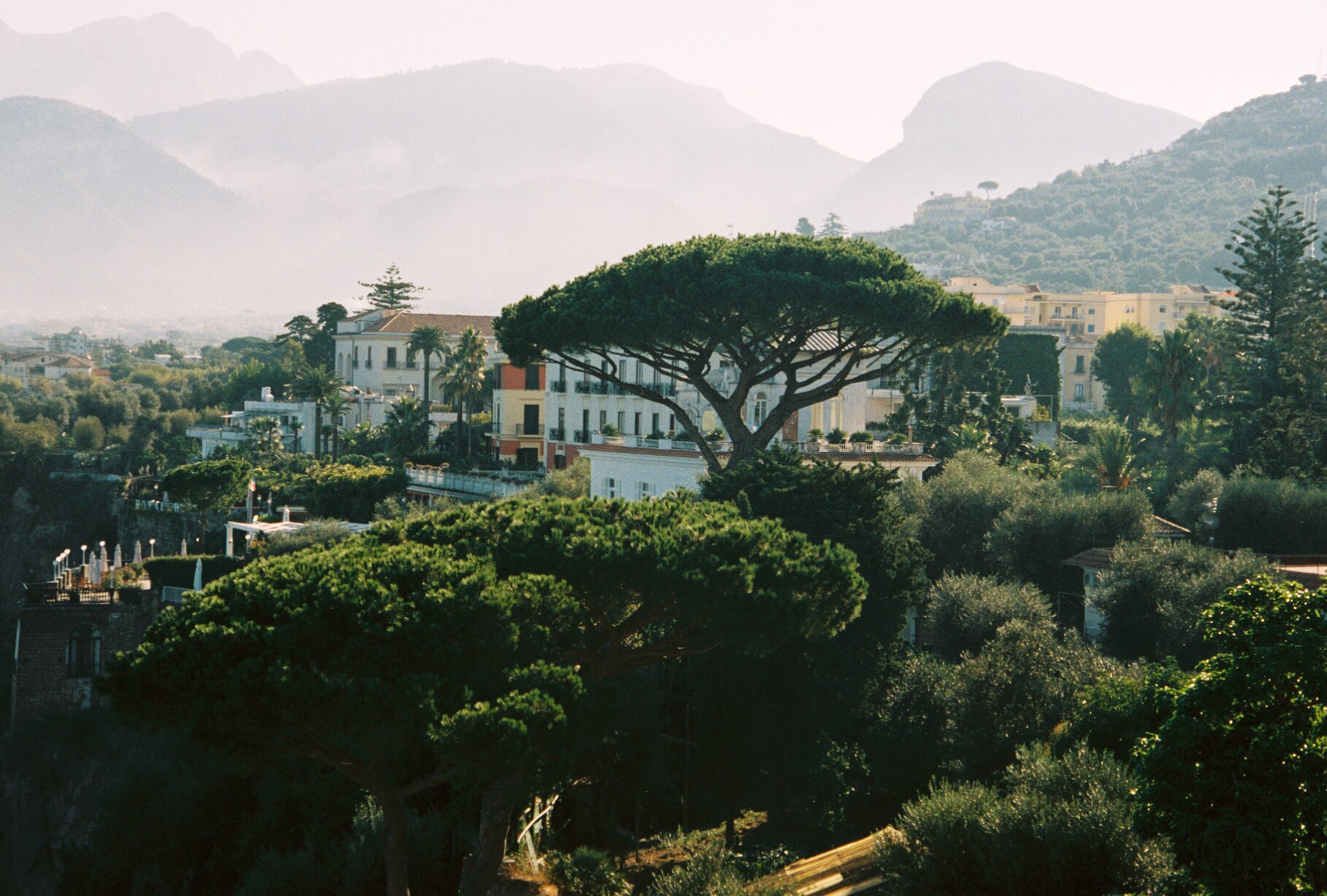
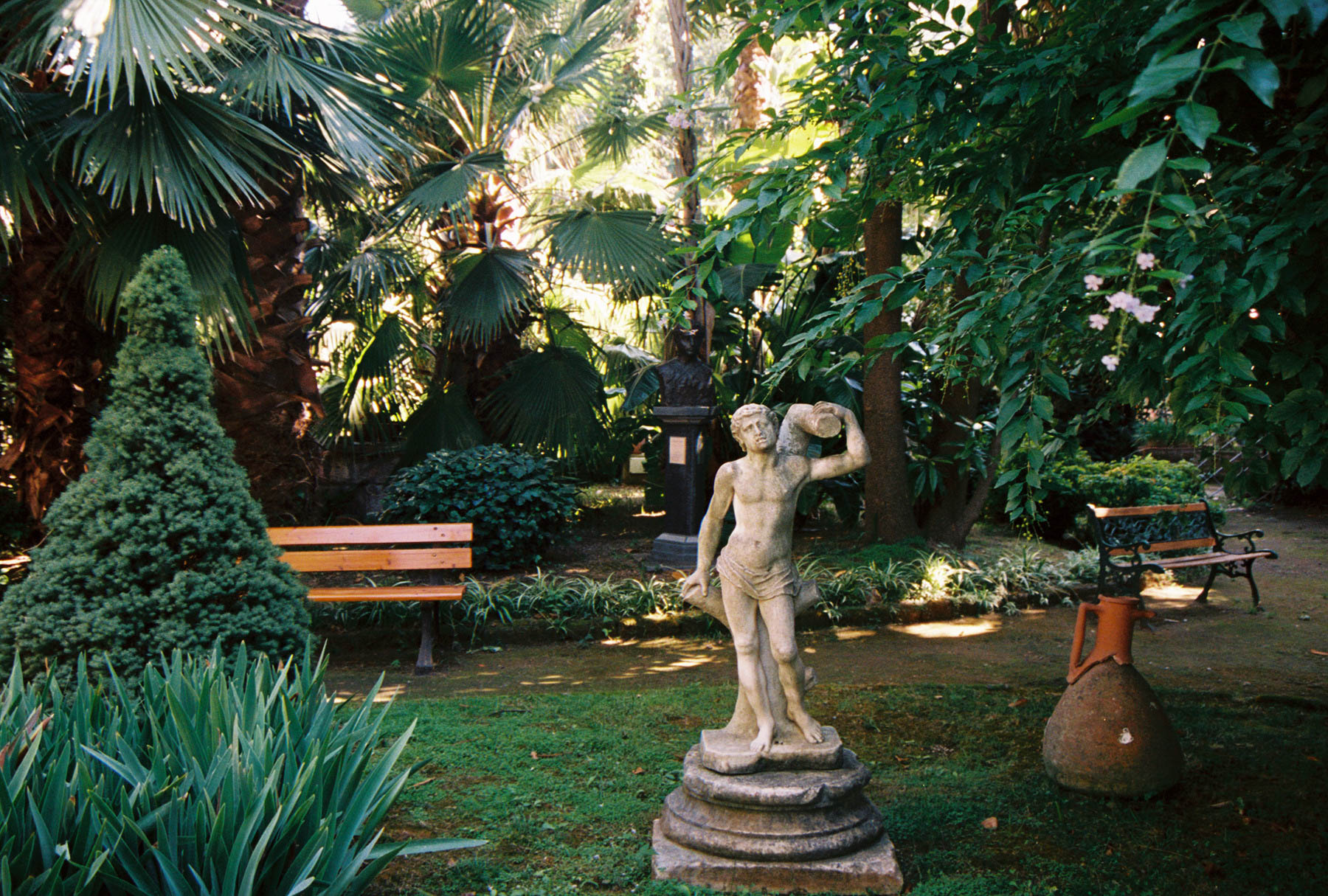
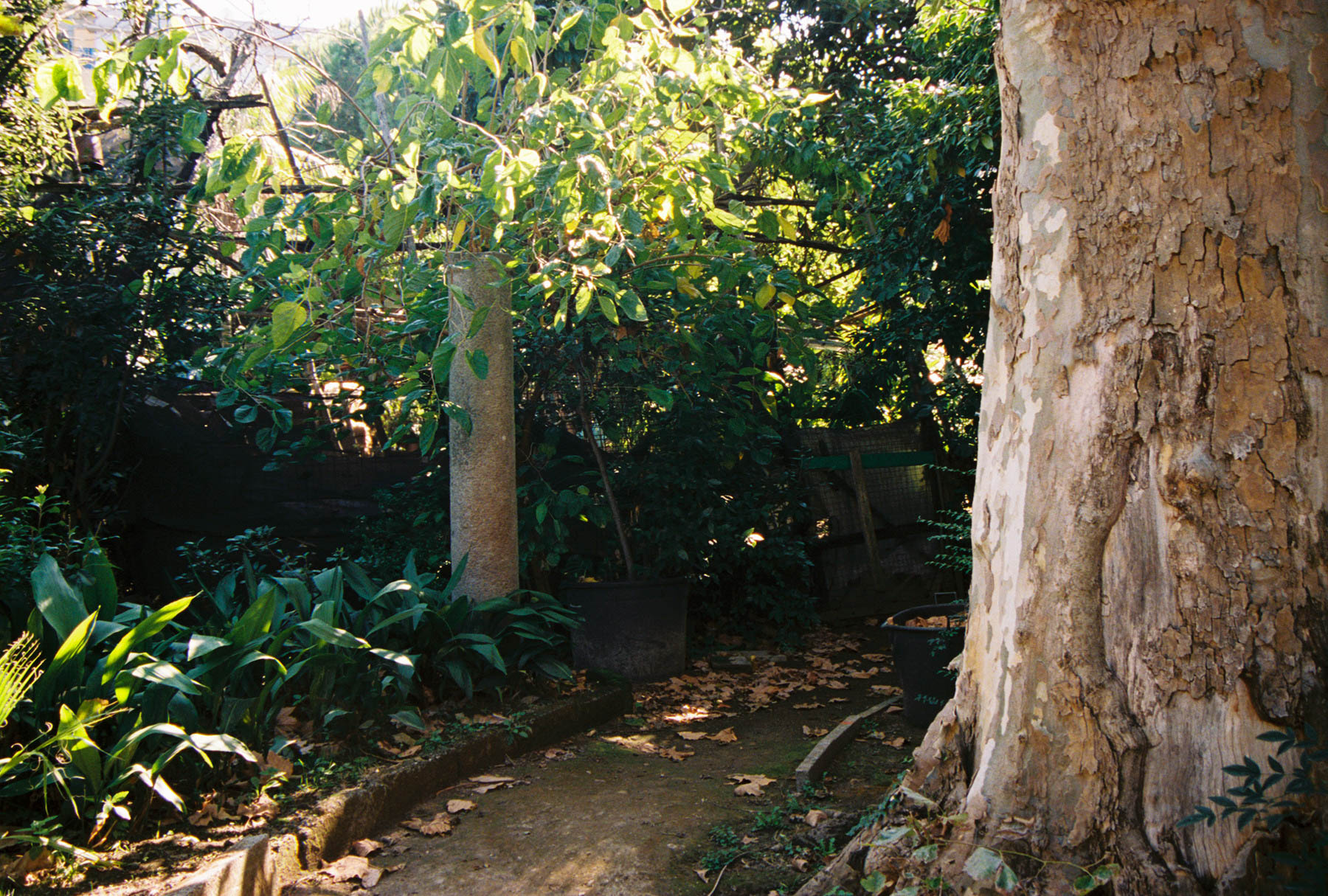
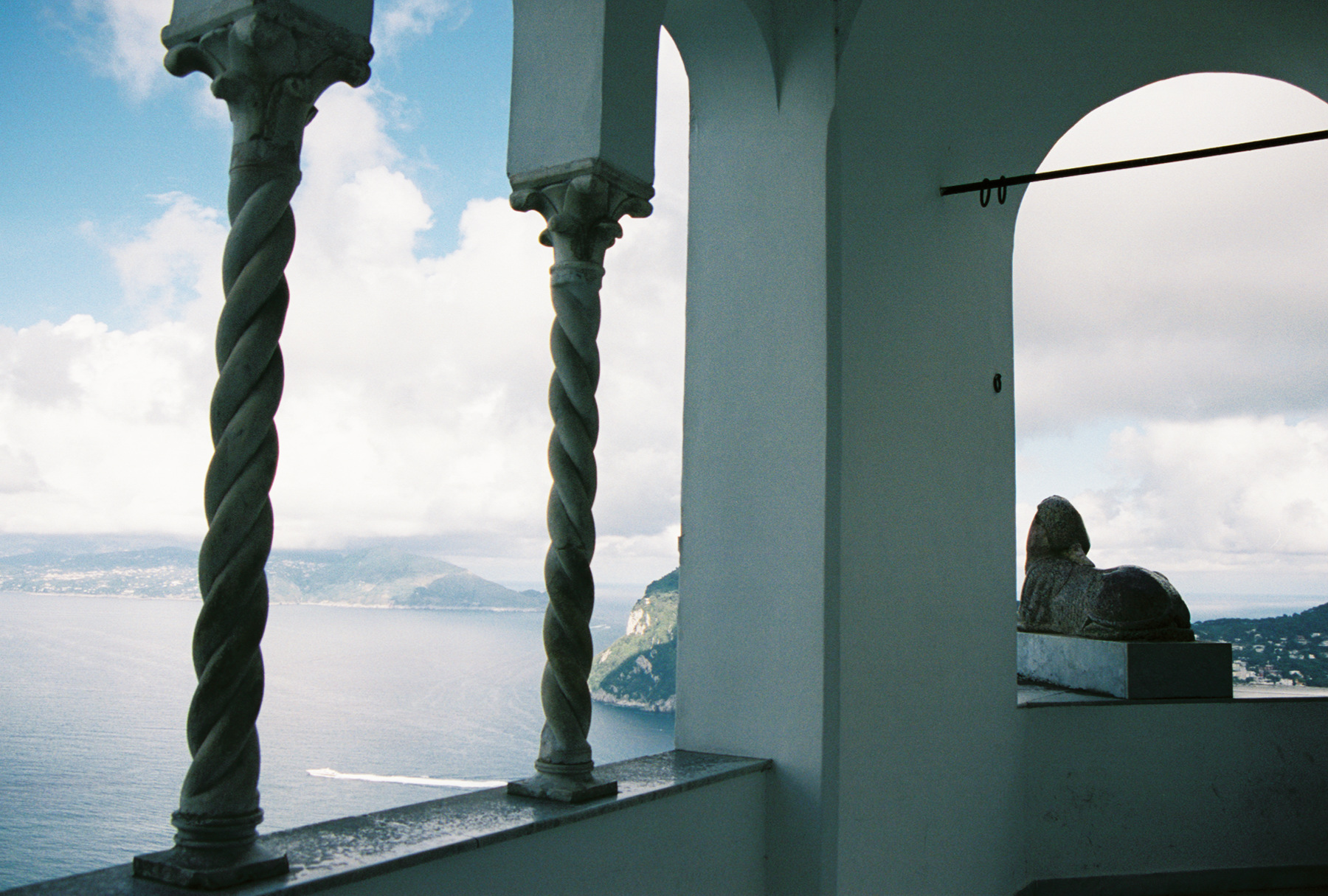
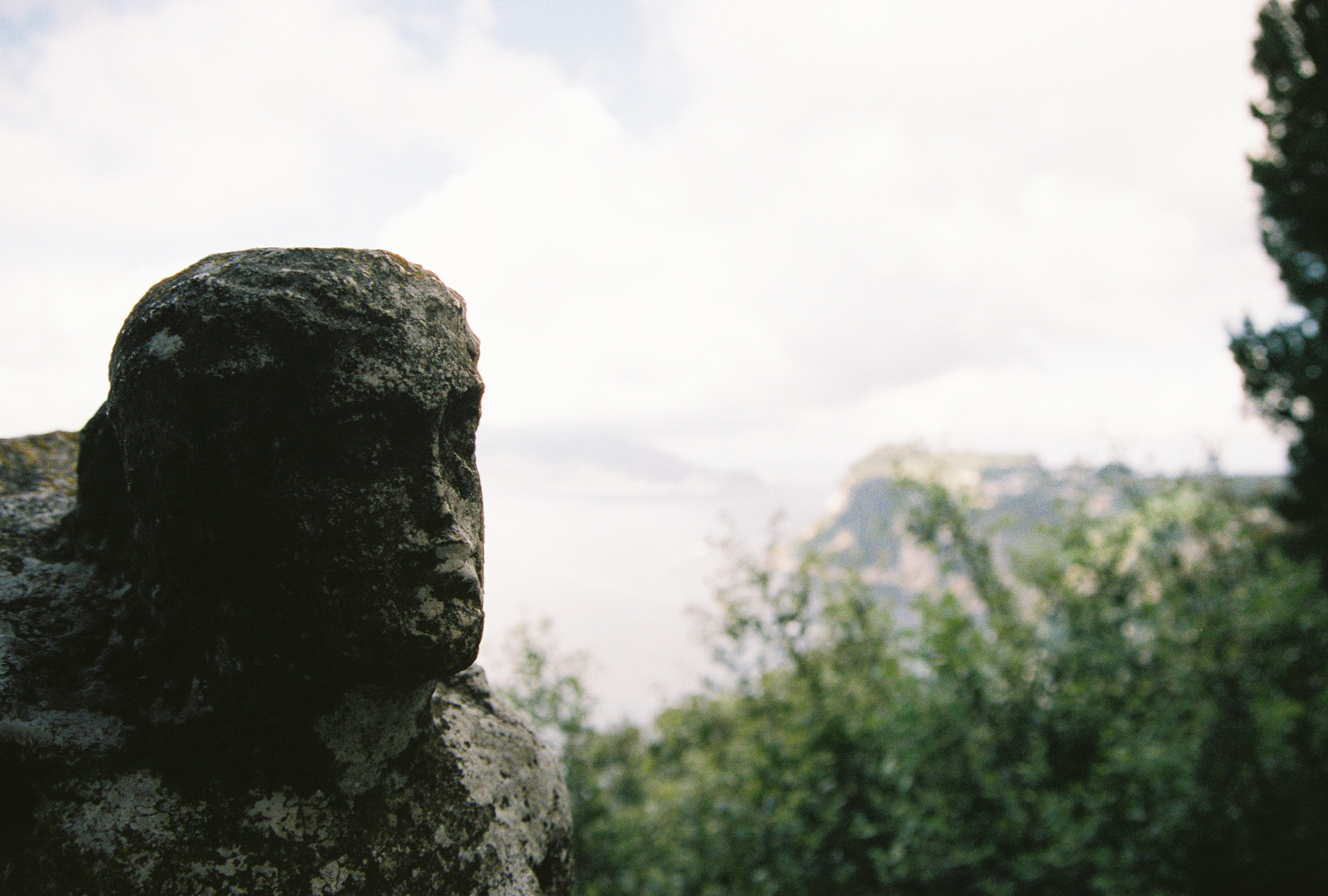
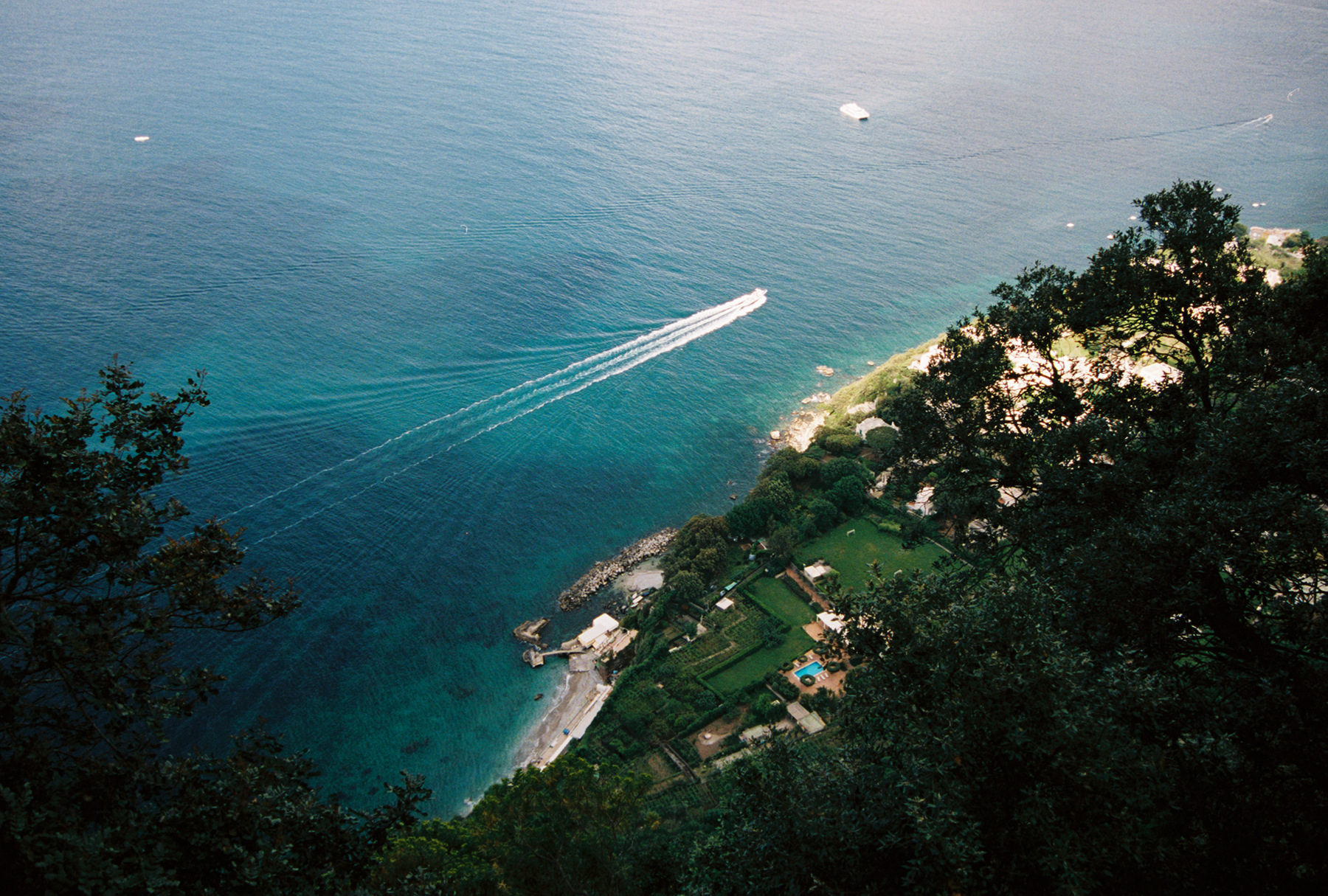
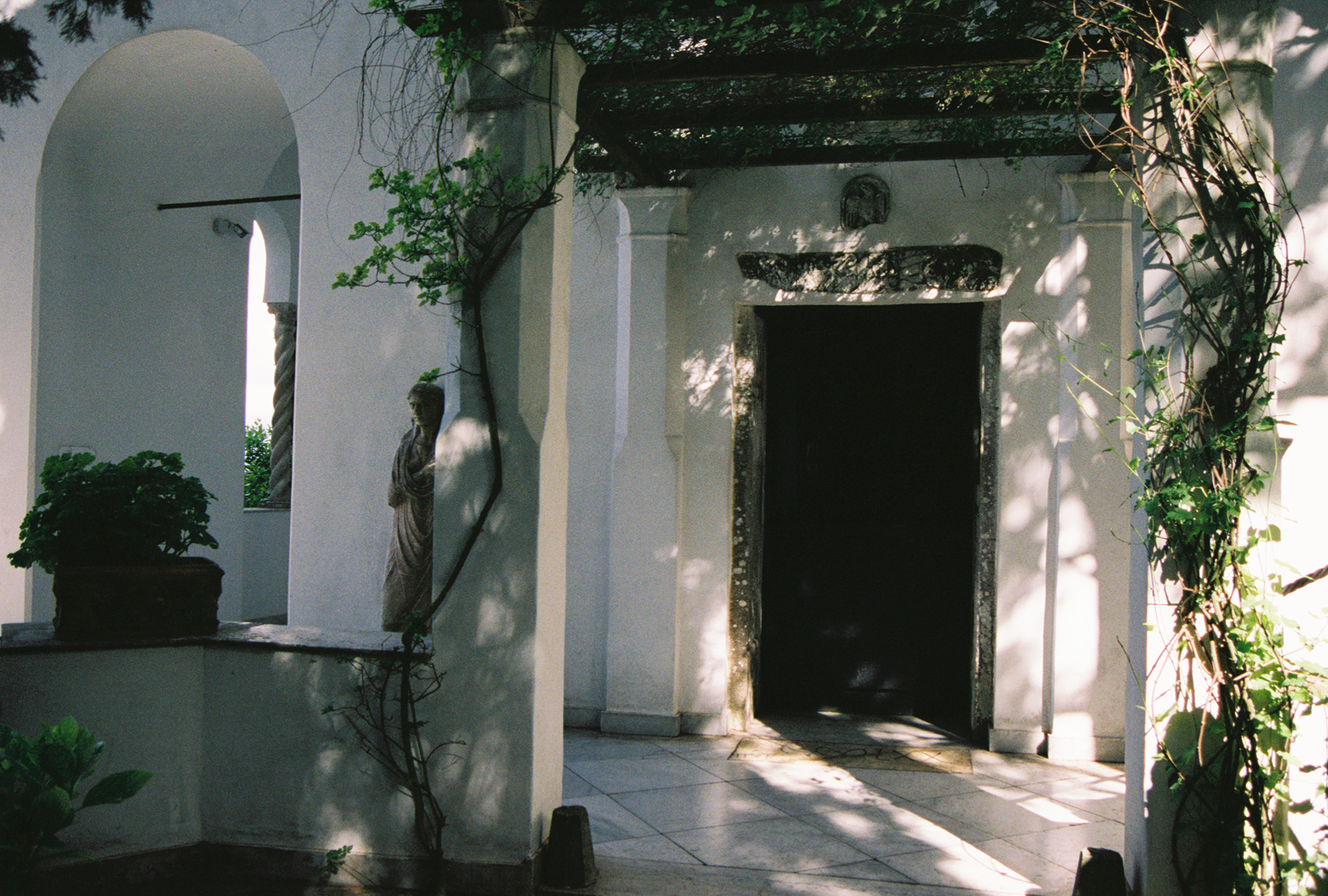
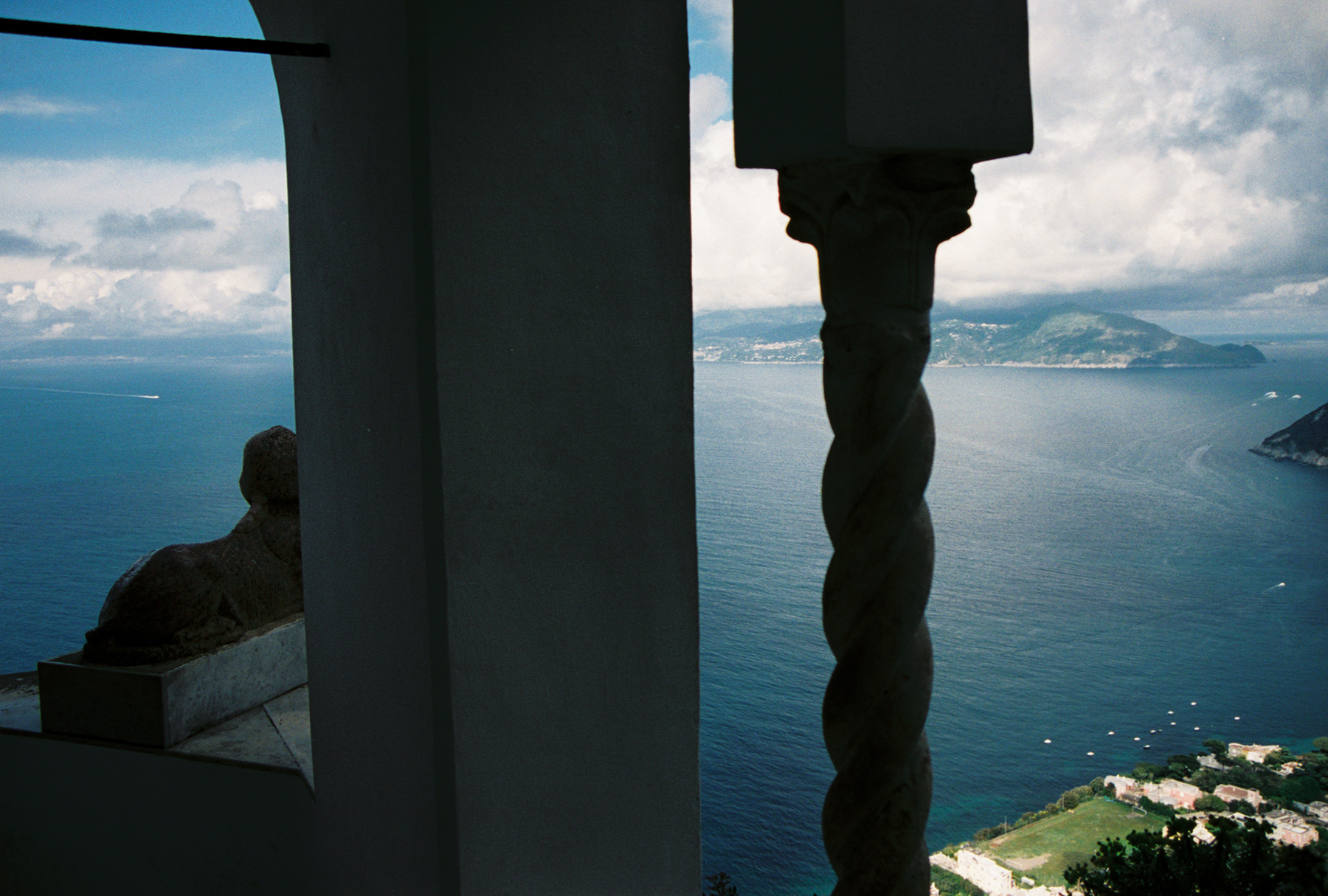
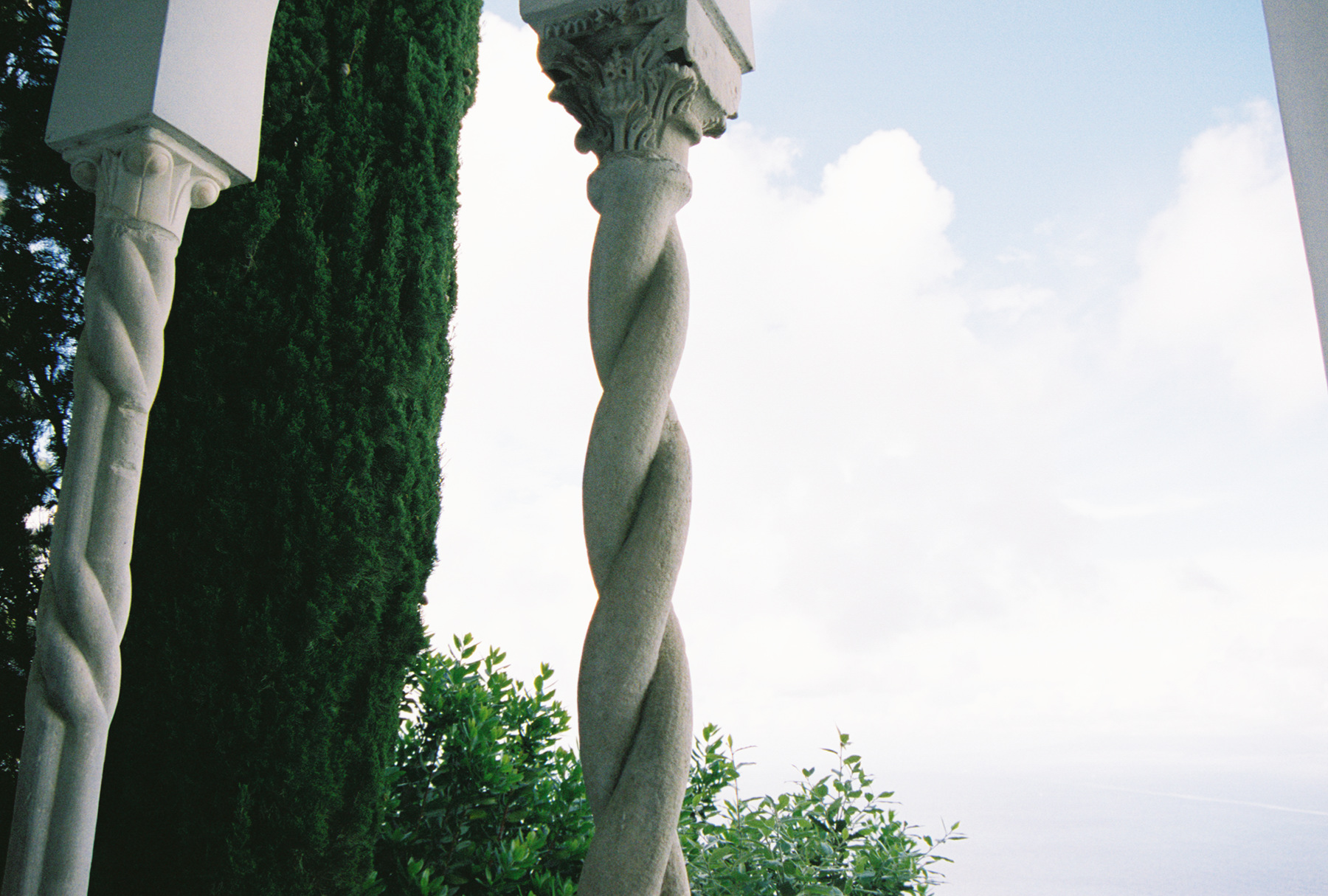
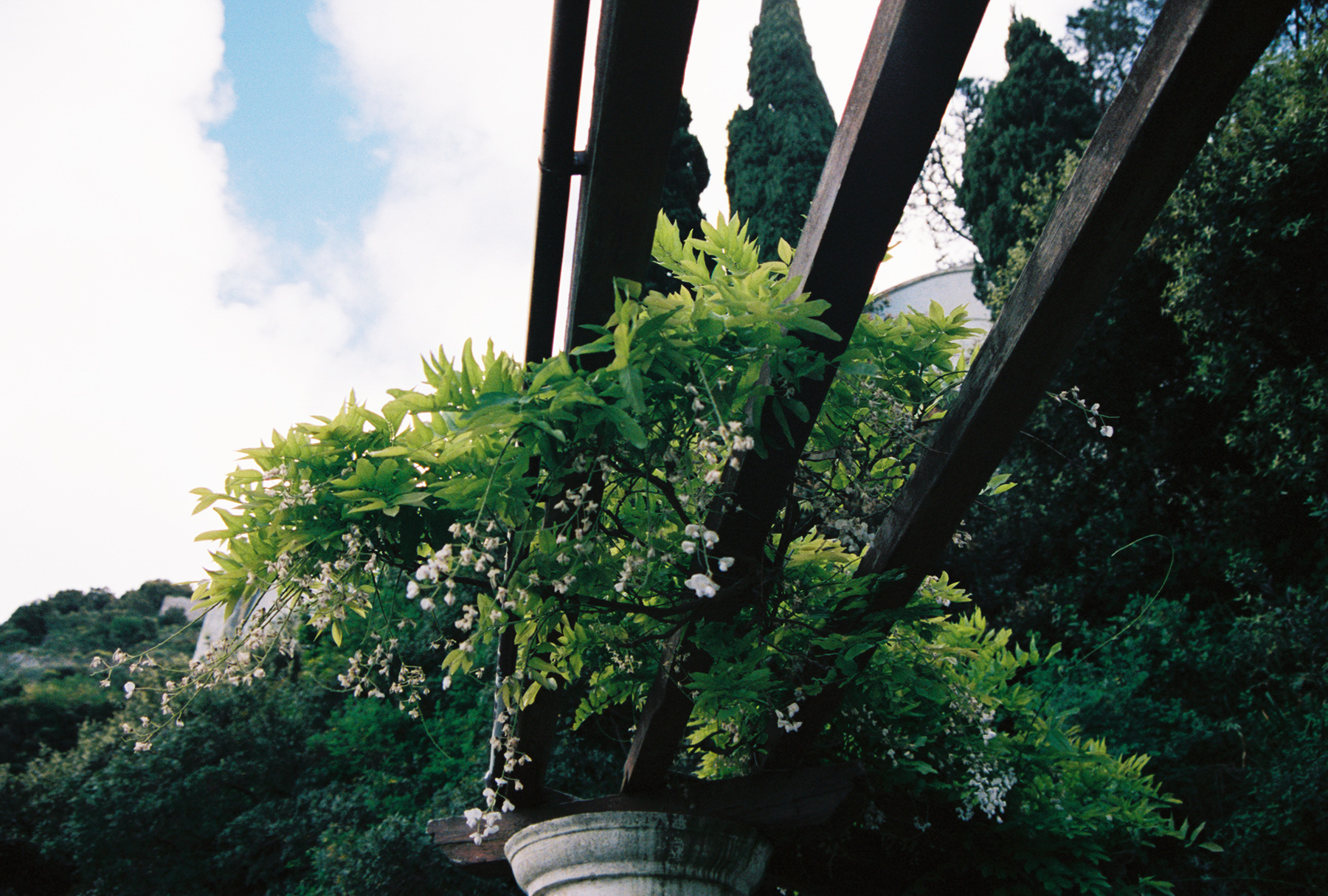
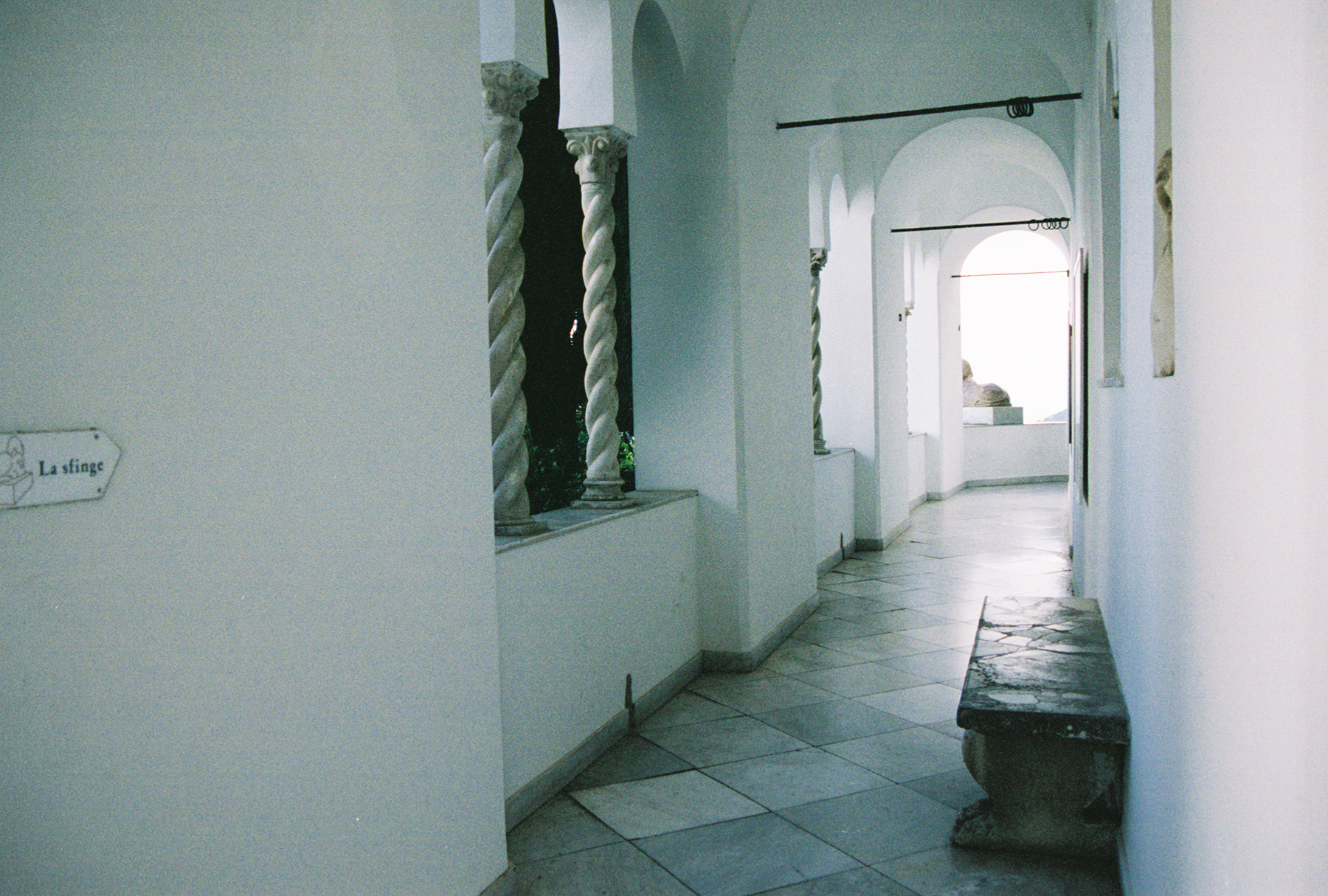
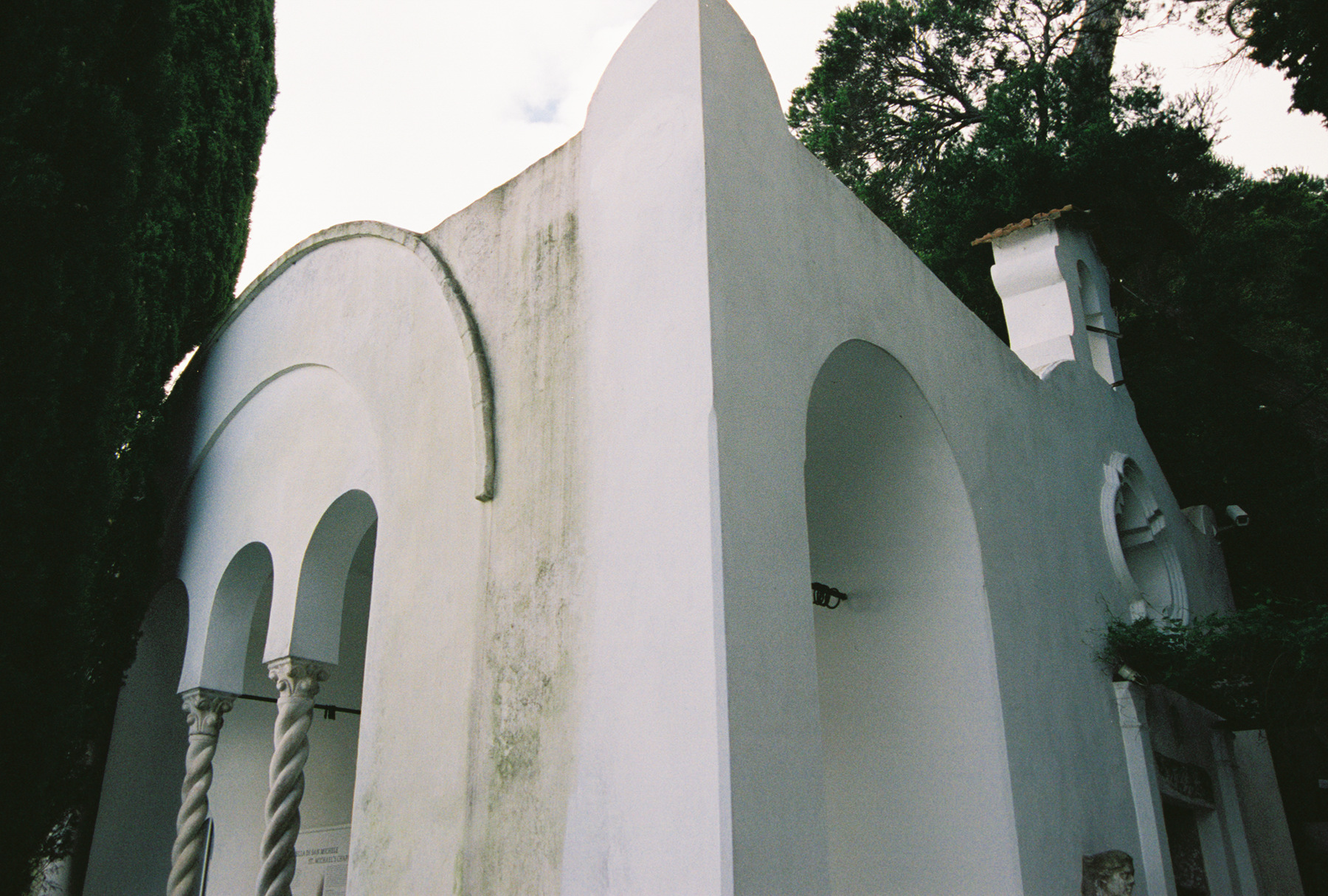
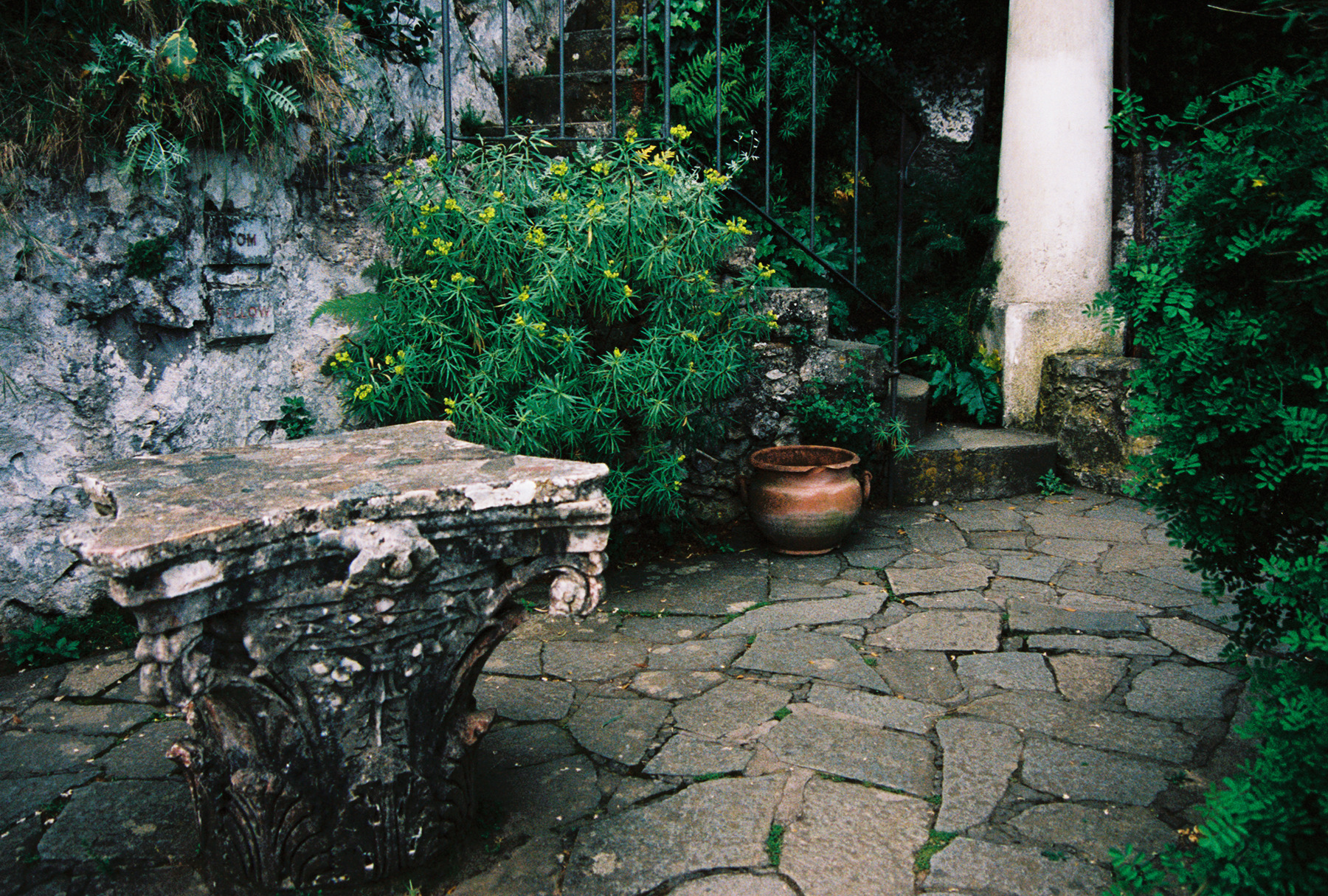
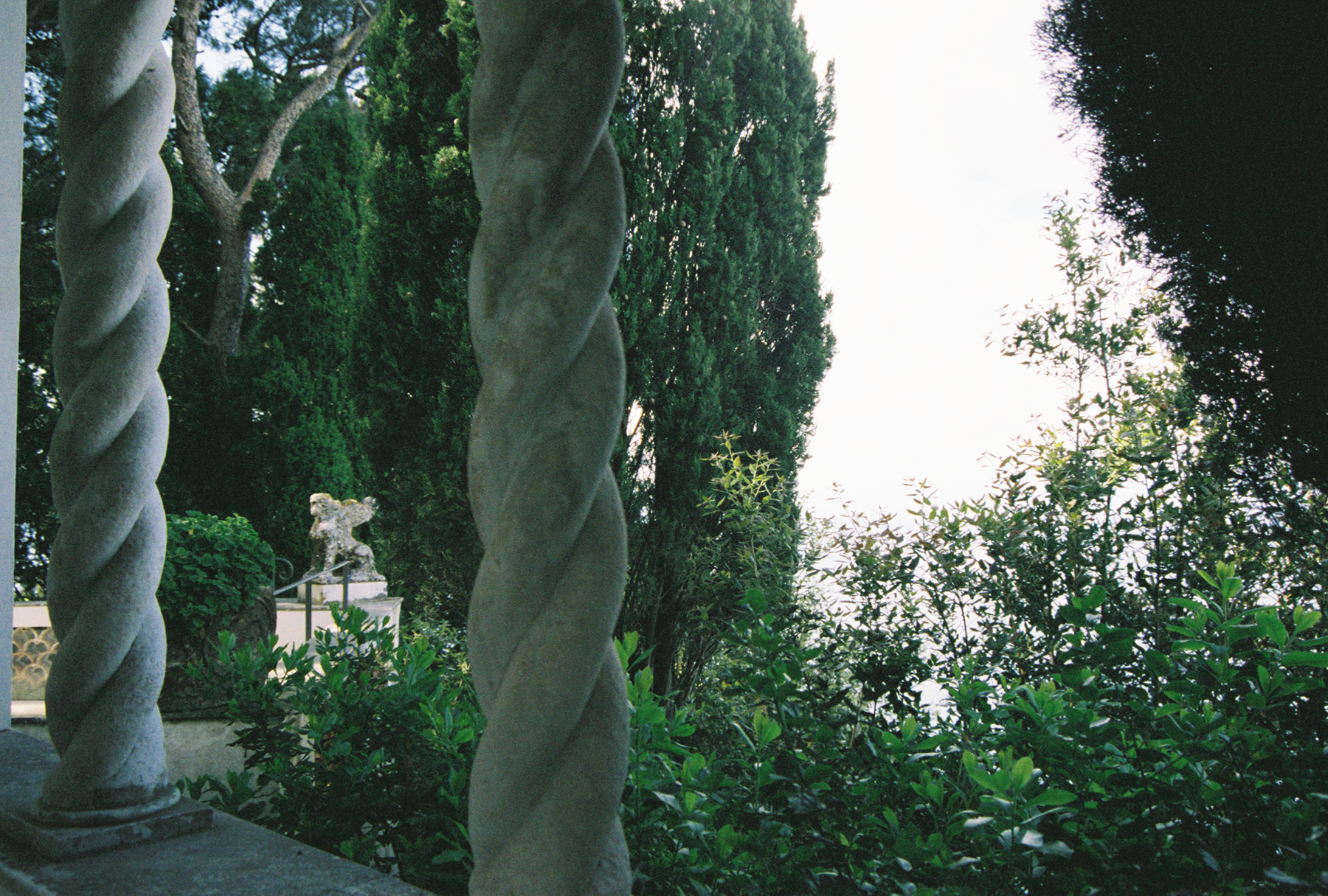
First gallery of Naples, Italy shot on Velvia film slides.
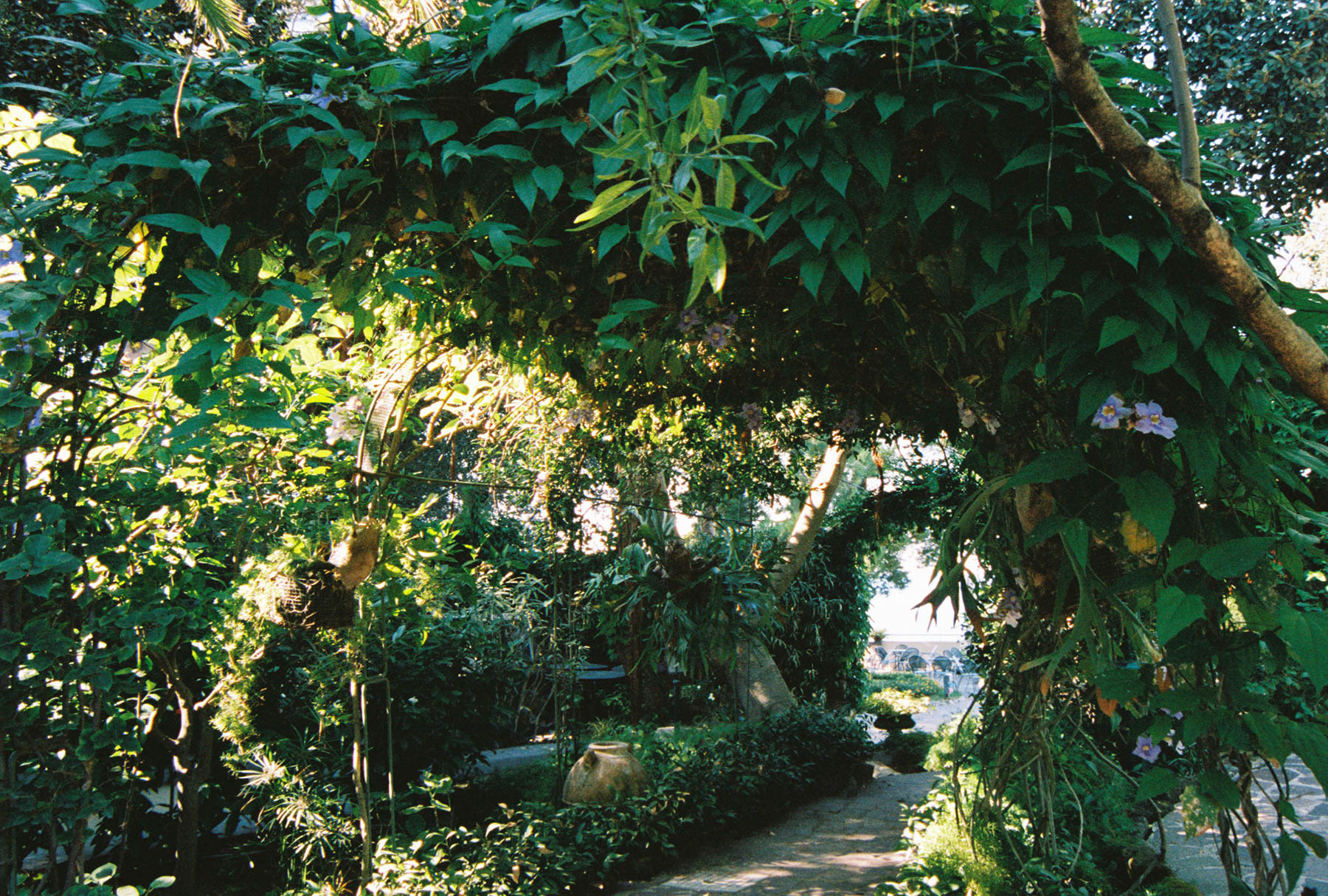
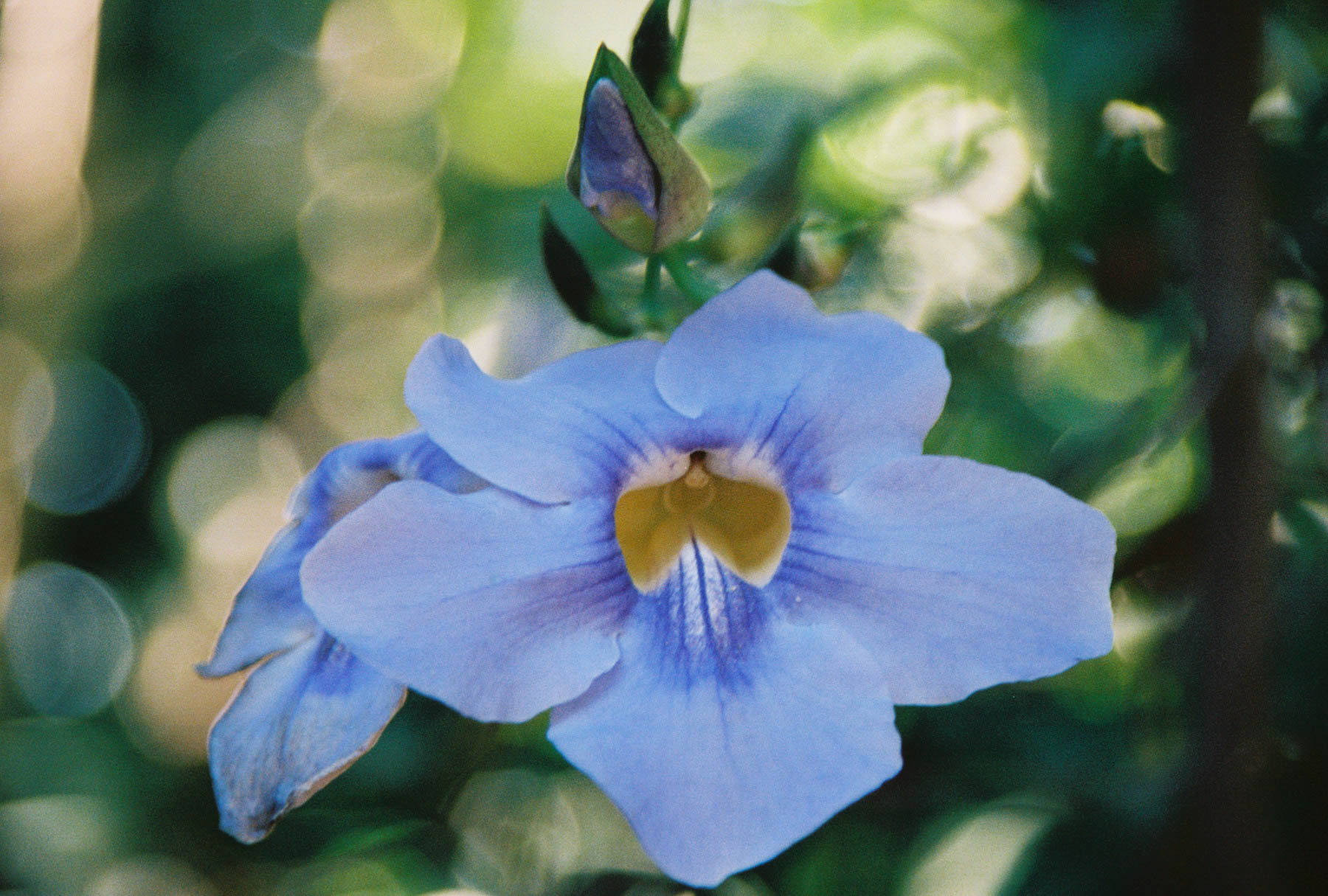
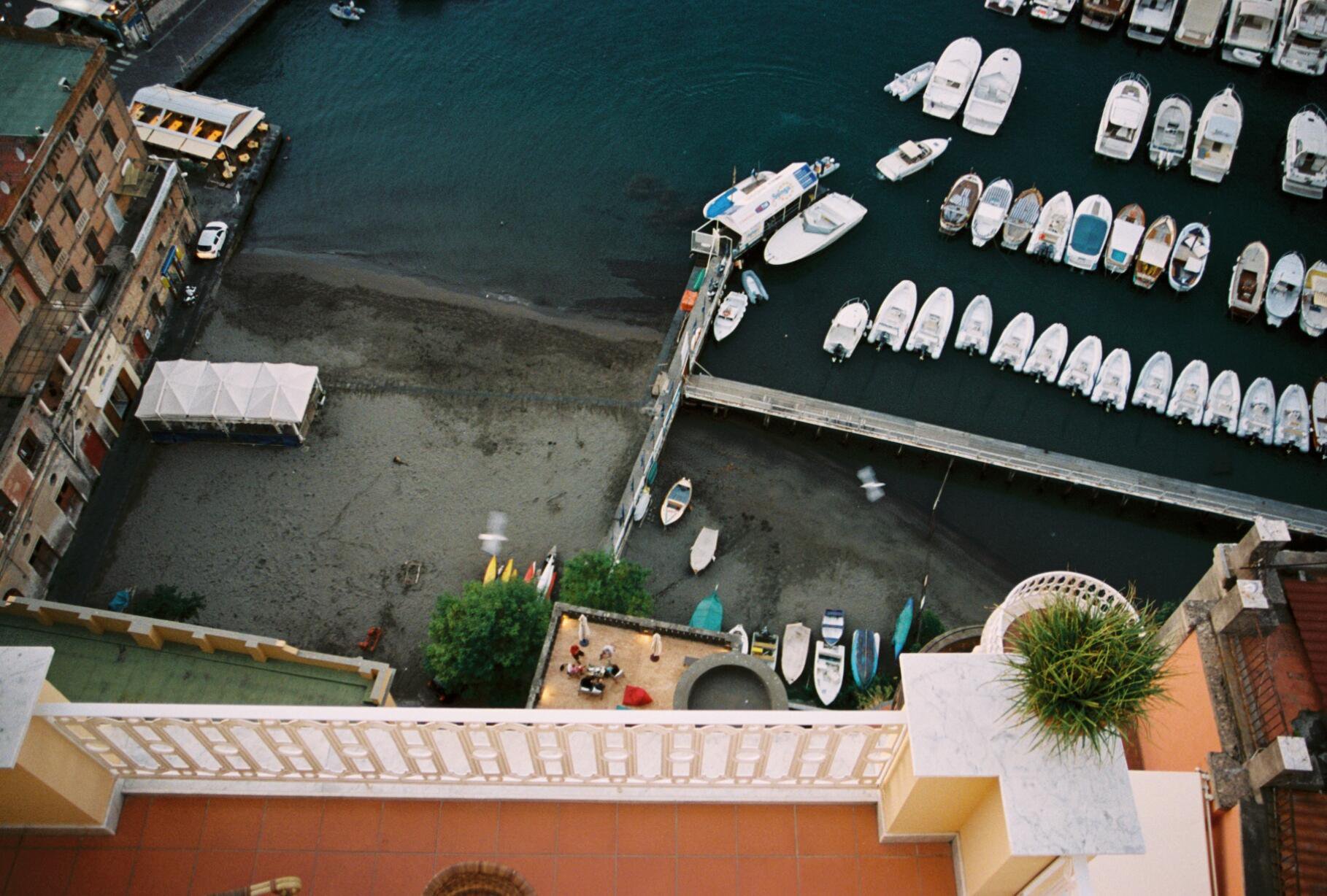
Second gallery of Sorrento, Italy shot on Velvia film slides.
Third gallery of Capri and Anacapri, Italy shot on Portra 400 film.

Posthumous John Keats
A John Keats Pilgrimage in the heart of Rome, Italy
This is the view John Keats had of the world for the last months of his life. Once he was too sick to climb the Spanish Steps to the Pincian Hill view of the sunset over the piazza delle popolo and take in the sweeping view of the renaissance rooftops of cupolas, churches, houses and hotels of Rome – he had one final view, the Bernini fountain outside his room, at the end of his deathbed. He could hear the passersby and the fruit sellers. He could hear the horses hooves and the coaches. He could hear the rushing water of the fountain and smell the scent of the sweetest water in Rome. Sometimes he could drink it, a few shallow sips in a brief moment of respite.
I stood and looked out his window and took this shot with my phone. I stood there for ages alone and stared out the window and looked for John Keat’s ghost or a shadow of his memory, an imprint of him somewhere. I think I found him in the golden glow of dusk which touched everything in Rome for the last hour before sunset and made everything so pretty it hurt to lose it each night.

John Keats’ Rome house is located at the Spanish Steps by the Bernini fountain. On one visit I placed a white rose I brought for John Keats’ Plaque near his grave on the wall to the left of the garden in the Testaccio neighborhood of Rome in the Non-Catholic Cemetery near the Pyramid of Cestius. We recited his poetry and pet cats who slumber in the gardens nearby. The annual pilgrimage to the Protestant Cemetery never fails to give me chills when I read the epithet Keats intended for himself; Here lies One Whose Name Was Writ In Water.
And now these words ache in my own heart for the one companion who always joined me on these sojourns: Rian, now gone into the shadows to blaze his own light in a place or time I cannot see nor touch for I am still rooted to the earth… and the two men who could ensorcell me are now words and memories without touch or sense or feeling. In vast darkness or light, I do not know, but their imprints are still felt in this world of the living. They capture me!
“Forlorn! the very word is like a bell. To toll me back from thee to my sole self! Adieu!”
Each time I followed the sign reading KEATS it felt like a mystery unfolding. No matter how many times I retraced my steps to the back garden, to the memory of him, it felt new again, as though taking holy orders in a hushed silence under a canopy of umbrella pines and sky and garden walls, nature’s cathedral summoning pilgrims with the tolling of a bell nearby echoing on the stone of the tombs and graves and statues.
One evening, alone, over a sparkling golden glass of prosecco at Caffe Greco, in Rome, Italy, in Oct 2012 on a bar napkin I penned these thoughts:
Tonight I looked for Keats’ ghost.
Spotted Byron in the Borghese and heard Shelley was somewhere around the Villa Medici. Caught a glimmer of him.
Goethe kept a respectful distance when I passed him on the Pincio.
Keats silently joined me eventually somewhere on Via delle Magnolie. He slipped out from the shadows and fell into step with me. I felt him quietly by my side for the rest of the night.


